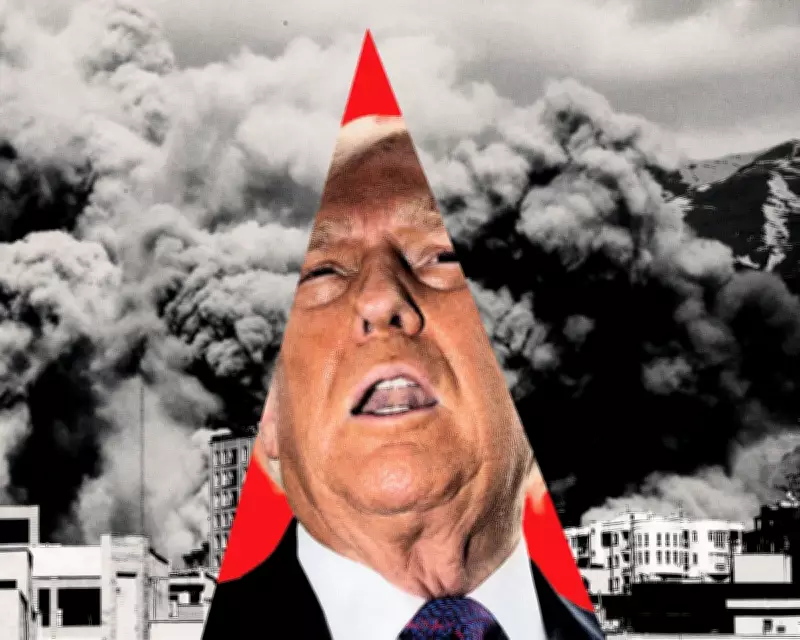
Trump's Iran War and Economic Fallout Threaten His Re-election Prospects
Donald Trump remains buoyant following the capture of Nicolás Maduro, which granted the US control over Venezuela's oil and critical minerals, and enabled pressure on Cuba by cutting its energy access. This success fuels his confidence in the joint venture with Israel against Iran, despite missile and drone attacks. Trump asserts that short-term oil price spikes are a minor cost for global safety, dismissing critics as fools.
Economic Resilience and Insulation
Trump's sense of invincibility is bolstered by the US economy's apparent resilience. Despite tariffs, federal workforce reductions, immigrant deportations, and attacks on the Federal Reserve, economists recently pondered a soft landing from high inflation. The US is relatively insulated from energy price shocks, with crude imports declining due to surging domestic production since the early 2000s. Natural gas, less sensitive to global spikes, now accounts for 36% of energy consumption, up from 30%, while oil's share has dropped to 38%, nearly 10 points lower than during the 1973 oil crisis.
European markets faltered when Iran threatened the Strait of Hormuz, a key oil transit route, and Qatar disrupted liquefied gas facilities. In contrast, the S&P 500 index remains near record highs, reflecting Trump's favored economic gauge.

Public Opposition and Economic Consequences
However, Trump faces potential defeat not from Iran's military but from American public opposition. The war has been deeply unpopular from the start, unusual for a nation typically supportive of military engagements. Economic effects exacerbate this sentiment. Global oil markets dictate prices, affecting the US regardless of domestic production. Regular gasoline has surpassed $3.50 per gallon, its highest since Trump took office, with forecasts predicting a return to 2025 levels only by fall 2027, and diesel prices remaining elevated until at least late next year.
Trucking companies, farmers, retailers, and airlines will pass on higher fuel costs to consumers, impacting food prices and overall inflation. March's inflation reading is expected to rise from February's 2.4% year-over-year increase, hindering Federal Reserve interest rate cuts. Expensive gas may also reduce SUV sales, further straining the economy.
Strategic Challenges and Political Risks
Trump acknowledges these risks, implementing measures to lower oil prices, such as insuring tankers through the Strait of Hormuz, waiving sanctions on Russian oil, and exploring Venezuelan production boosts. Yet, reversing the largest oil price jump in over three decades requires more drastic action: either ending the war or degrading Iran's capabilities to secure oil shipments.
Trump publicly claims he can achieve Tehran's unconditional surrender while deeming the war nearly complete. However, advisors warn that aerial bombardment alone cannot ensure long-term victory, as Iran's Revolutionary Guards and Basij forces are unlikely to surrender. Ground deployment or continued bombing of civilian targets are options, but none offer quick solutions, prolonging economic pain.
Trump may learn that capturing Maduro was easier than defeating Iran, and that military aggression does not guarantee success globally. The economic fallout from this conflict could severely damage his approval ratings and re-election chances.