Trump Set for Tense Encounter with Supreme Court Justices at State of the Union
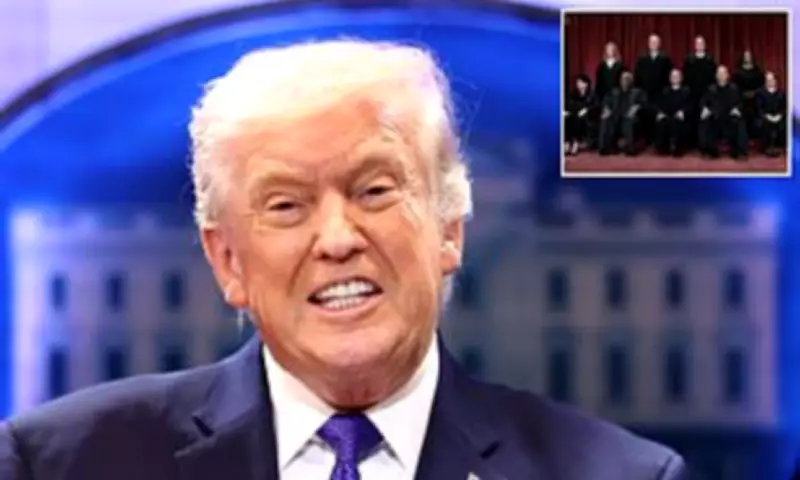
Donald Trump is poised to come face-to-face with at least some of the Supreme Court justices who last week delivered a significant blow to his landmark tariff policy during his upcoming State of the Union address. While it is customary for not all nine justices to attend these joint sessions of Congress, it is rare for the entire bench to be absent, ensuring the president will likely confront those who ruled against him.
Historic Ruling Sparks Presidential Fury
In a dramatic 6-3 decision last Friday, the Supreme Court struck down the majority of tariffs implemented by Trump since his return to office for a second term. The ruling found that the president had overreached his executive powers under the International Emergency Economic Powers Act (IEEPA). Notably, two of Trump's own appointees—Justices Amy Coney Barrett and Neil Gorsuch—joined conservative Chief Justice John Roberts and all three liberal justices in the majority opinion.
The decision left Trump incensed. He promptly convened an emergency press briefing at the White House, where he launched a blistering attack on Barrett and Gorsuch, labelling them 'traitors' and an 'embarrassment to their families.' Trump expressed being 'ashamed' of them and accused the justices of being 'disloyal to the Constitution,' while controversially claiming that conservative justices show less loyalty to Republican presidents than liberal ones do to Democrats.

State of the Union Marks First Post-Ruling Meeting
Trump's sixth State of the Union address to a joint session of Congress on Tuesday evening will mark the first opportunity for him to see the justices in person since the contentious ruling. It remains unclear which specific justices will attend, including those from both the majority and dissenting sides of the decision.
During Friday's press conference, Trump reserved praise solely for Justice Brett Kavanaugh, his lone appointee who sided with the minority opinion that the tariffs should remain in place. Kavanaugh was joined in dissent by conservative Justices Clarence Thomas and Samuel Alito, the latter of whom is rumoured to be considering retirement before the end of Trump's current term, potentially granting the president another nomination.
Presidential Reaction and Social Media Outbursts
Trump's reaction to the ruling was characterised by both defiance and reinterpretation. In the James S. Brady Press Briefing Room, he stated, 'The Supreme Court's ruling on tariffs is deeply disappointing and I'm ashamed of certain members of the Court. Absolutely ashamed for not having the courage to do what's right for our country.' He further alleged, without evidence, that the court had been 'swayed by foreign interests and a political movement.'
Paradoxically, Trump also spun the legal defeat as a victory, asserting that the decision had inadvertently strengthened a president's authority to regulate trade and impose tariffs. 'While I am sure that they did not mean to do so, the Supreme Court's decision today made a President's ability to both regulate trade and impose tariffs more powerful and more crystal clear rather than less,' he claimed.
The president continued his tirade on Truth Social, accusing Gorsuch and Barrett of consistently voting against Republicans 'and never against themselves.' He added, 'At least I didn't appoint Roberts, who led the effort to allow Foreign Countries that have been ripping us off for years to continue to do so — But we won't let it happen. The new TARIFFS, totally tested and accepted as Law, are on their way!' By Monday, Trump escalated his rhetoric further, declaring on social media that he would refer to the Supreme Court in lowercase letters due to his lack of respect for the institution.
Broader Implications and Political Context
This confrontation underscores a remarkable moment in Trump's presidency. With a 6-3 conservative majority on the court—including three of his own nominees—such a rebuke of his policies was widely unexpected. The State of the Union address, delivered at the US Capitol with the Supreme Court building directly opposite, will now serve as a symbolic stage for this ongoing constitutional and political clash.

As Trump prepares to speak, the nation watches to see how this unprecedented tension between the executive and judicial branches will unfold, setting a precedent for future interactions between presidents and the Supreme Court.