

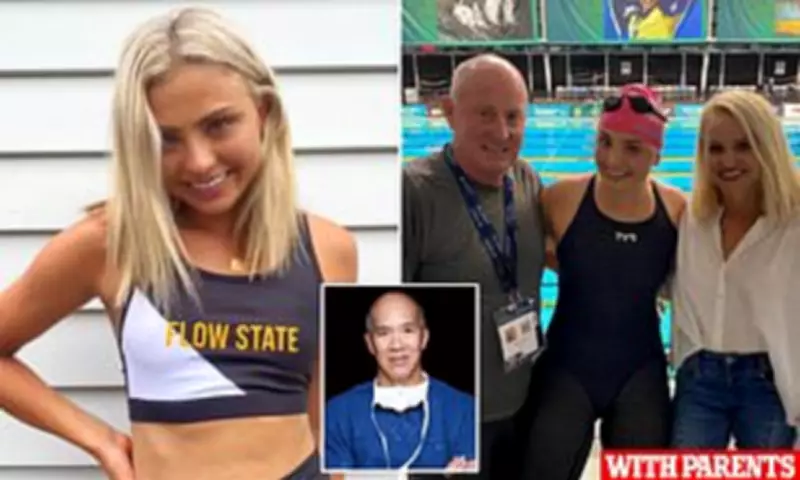
Charlie Teo's Groundbreaking Treatment Aids Paralympian Alexa Leary in Brain Injury Battle
Australia's most controversial neurosurgeon, Charlie Teo, has publicly discussed the profound impact his medical interventions have had on Paralympics champion Alexa Leary, following a devastating traumatic brain injury she sustained in a high-speed cycling accident. Her parents have also shared harrowing details of her health struggles, including a near-fatal suicide attempt and instances of physical aggression towards them.
The Life-Altering Crash and Immediate Aftermath
In July 2021, Alexa Leary was involved in a catastrophic accident during triathlon training on the Sunshine Coast, falling from her bicycle while travelling at approximately 70 kilometres per hour. She was urgently airlifted via LifeFlight helicopter to the Royal Brisbane and Women's Hospital, where she received intensive care for a severe traumatic brain injury that nearly claimed her life. Despite this, the 24-year-old has remarkably gone on to secure two Paralympic gold medals and three world championship titles, all while contending with the ongoing repercussions of the crash.
Teo's Controversial Role and Treatment Methods
Charlie Teo, who is currently practising under stringent restrictions imposed by regulatory authorities, has been providing regular treatment to Leary for four years. Her family attributes significant strides in her recovery to his care, describing the outcomes as nothing short of startling. Teo has been utilising non-invasive transcranial magnetic stimulation (TMS) as part of her therapy, a approach he adopted after being found guilty of unsatisfactory professional conduct by the Health Care Complaints Commission in 2023. This ruling stemmed from complaints related to surgical procedures that resulted in the deaths of two patients, leading to limitations on his operative privileges.

In an interview with News Corp, Teo highlighted the complexities of Leary's condition, noting that while she may appear outwardly normal, her behaviour reveals a lack of inhibition. "There's something very extreme about her, so disinhibited and so raw," he explained. "She’d say things that maybe we all think but aren’t prepared to say, do things we would all like to do but are not prepared to do."
Family Insights and Emotional Struggles
Alexa's father, Russell Leary, credits Teo's treatments with revitalising her short-term memory, which was severely impaired by the accident. He recounted instances where his daughter would frequently misplace items and react with intense anger towards him and her mother, Belinda. "We've seen a major change in her," Russell stated. "She would [yell at us] before, but then she would never say sorry. She now says sorry. Her whole life is changing, and we're feeling and seeing that in her now."
Belinda Leary echoed this sentiment, expressing optimism about Alexa's progress. "We can see that she's kind of navigating her way out of that darkness," she said. "It's really enlightening to see how she's becoming more of the person that she always wanted to be." However, the journey has been fraught with challenges, including a brush with suicide that deeply concerned her parents.
Alexa's Personal Reflections and Behavioural Changes
In her upcoming memoir, Sink or Swim, Belinda details the alarming behavioural shifts Alexa experienced post-injury. She became obsessively focused on perceived shortcomings, such as hair loss, the inability to drive, and diminished social connections. "You can’t tell Alexa not to do something. She can’t help herself; she has to do it. She has never met a rule she didn’t want to break," Belinda wrote. This included defying medical advice by consuming alcohol, with instances of her drinking wine left unattended.
The emotional toll was immense, with Alexa expressing extreme distress during outbursts. "'I hate you. I wish I was dead,' Lex would say during her outbursts. As you would expect, we were seriously concerned about her mental health. Her highs were dizzying, and her lows were ravaging," Belinda revealed.

Despite these struggles, Alexa herself has expressed astonishment at the positive effects of Teo's treatments. "I just can't even believe it because I can feel and know that I'm so much more aware of things and aware of my moods, my anger," she remarked, highlighting a newfound self-awareness and emotional regulation.
Support and Resources
For individuals facing similar mental health challenges, support is available through organisations such as Lifeline at 131 114 and Beyond Blue on 1300 224 636. The Leary family's story underscores the critical importance of accessible care and innovative treatments in navigating recovery from traumatic brain injuries.





