Trump Announces Historic Supreme Court Attendance in Birthright Citizenship Case
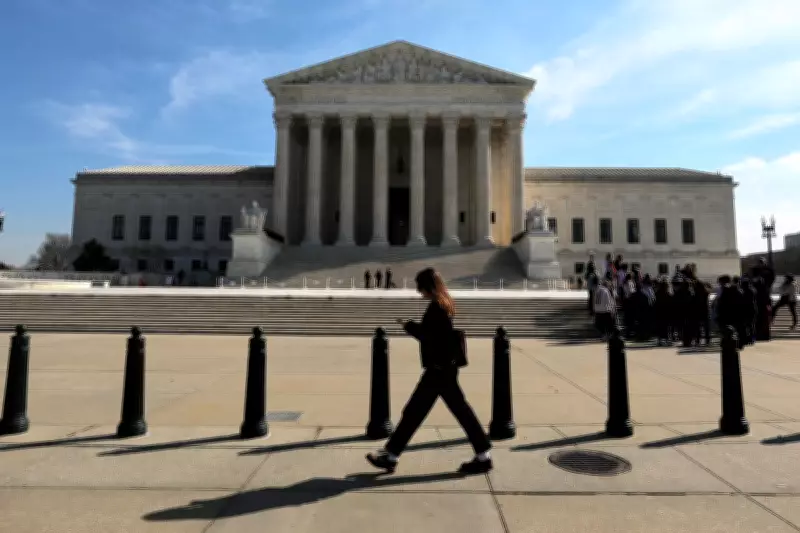
In an unprecedented move, President Donald Trump has declared his intention to attend oral arguments at the Supreme Court concerning a landmark case that could potentially overturn birthright citizenship in the United States. This would mark the first time in American history that a sitting president has attended such proceedings, according to official records from SCOTUS and the Supreme Court Historical Society.
President's Personal Interest in Constitutional Challenge
"I think I'll go," Trump told reporters during a briefing in the Oval Office on Tuesday. "I have listened to this argument for so long." The president's planned attendance comes as the Supreme Court prepares to hear arguments on Wednesday morning in a controversial case that will determine whether Trump can legally deny citizenship to children born to parents who are in the United States illegally or temporarily.
This legal challenge stems directly from an executive order that Trump signed immediately upon returning to office, which aimed to terminate what is commonly known as birthright citizenship. This long-standing constitutional principle has guaranteed citizenship to nearly all individuals born on American soil since its establishment following the Civil War.

Historical Context and Constitutional Foundations
The concept of birthright citizenship was formally enshrined in the Constitution through the 14th Amendment, which states: "All persons born or naturalized in the United States and subject to the jurisdiction thereof, are citizens of the United States." Originally implemented to ensure that former slaves would be recognized as citizens, the provision was legally expanded in the late 1800s to include the children of immigrants.
On his Truth Social platform earlier Tuesday, Trump posted: "Birthright Citizenship has to do with the babies of slaves, not Chinese Billionaires who have 56 kids, all of whom 'become' American Citizens. One of the many Great Scams of our time! President DONALD J. TRUMP."
Legal Arguments and Judicial Precedents
Opponents of birthright citizenship have focused their legal arguments on the specific phrase "subject to the jurisdiction thereof" within the 14th Amendment. They contend that this wording provides constitutional grounds for the United States to deny citizenship to children born to women who are present in the country without legal authorization.
However, the administration has faced significant judicial resistance to its executive order. A series of federal judges have ruled against the administration, with the order being repeatedly suspended by lower courts. The case now before the Supreme Court originated in New Hampshire, where a U.S. district judge determined that Trump's order "likely violates" both the Constitution and existing federal law.
Previous Court Appearances and Judicial Tensions
While this would represent Trump's first attendance at Supreme Court oral arguments as president, he has previously appeared at confirmation hearings for his Supreme Court nominees Neil Gorsuch and Brett Kavanaugh. Additionally, he attended court proceedings in New York during his high-profile hush money trial in 2024, where he was convicted on 34 counts of fraud while still president-elect.
The president's planned court appearance follows recent public criticism he directed toward Supreme Court justices, including some he personally appointed. Trump previously blasted the justices over their rejection of his proposed sweeping global tariffs, going so far as to label them "disloyal to the Constitution." At that time, he had threatened to attend court hearings but ultimately did not follow through.

Judicial Independence and Political Pressure
Several justices, including Chief Justice John Roberts, have recently expressed concerns about personal attacks on the judiciary. During remarks at the University of Houston earlier this month, Roberts stated: "The problem sometimes is that the criticism can move from a focus on legal analysis to personalities. And you see from all over, I mean, not just any one political perspective on it, that it's more directed in a personal way, and that, frankly, can be actually quite dangerous."
The White House has provided no additional confirmation beyond Trump's initial comments regarding his planned attendance. When contacted by The Independent for verification, a spokesperson indicated they had nothing further to add to the president's statements.