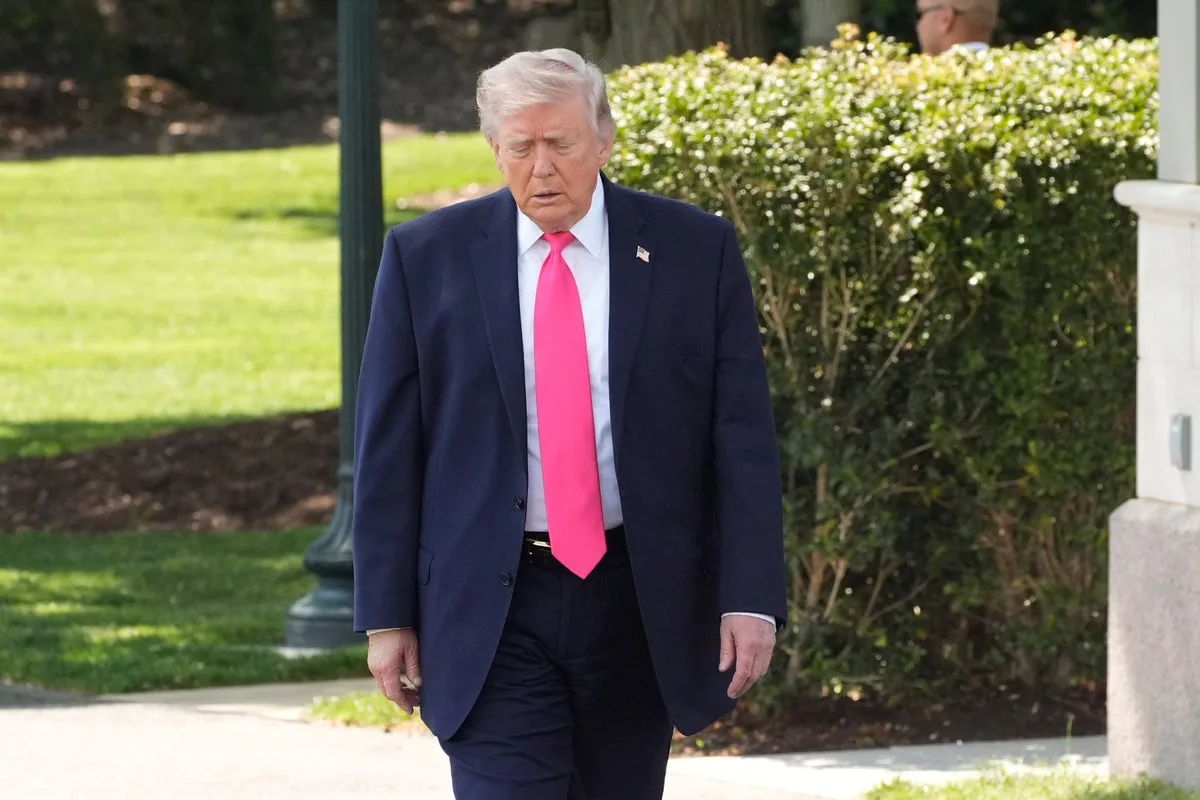
Donald Trump has boasted that he “would have won Vietnam very quickly” had he been president during the conflict, despite avoiding military service through a medical deferment for bone spurs. The comments came during a phone interview with CNBC’s Squawk Box on Tuesday, where the president discussed the ongoing Iran conflict and other topics.
Trump compared the length of the Iran war, which began nearly two months ago, to other American conflicts. “World War I, four years and three months. World War II, six years. Korean War, three years. Vietnam, 19 years. Iraq, eight years — I’m five months [in Iran],” he said, adding, “I would have won Vietnam very quickly. I would have, if I were president.”
The 79-year-old president avoided conscription during the Vietnam War, which lasted from approximately 1954 to 1975 and claimed over 58,000 American lives. In 1968, a podiatrist who rented office space from Trump’s father, Fred Trump, provided a letter stating that Trump had bone spurs in his heels, rendering him ineligible for the draft. Trump also received four student deferments while at the University of Pennsylvania.
Trump’s former lawyer, Michael Cohen, testified to Congress in 2019 that Trump never provided documentation for the bone spur diagnosis. “Mr. Trump claimed (his medical deferment) was because of a bone spur, but when I asked for medical records, he gave me none and said there was no surgery,” Cohen said. “He told me not to answer the specific questions by reporters but rather offer simply the fact that he received a medical deferment.”
The boast comes as the Trump administration prepares for another round of talks with Iranian representatives in Islamabad, Pakistan, to end the war launched nearly two months ago. A temporary ceasefire is set to expire Wednesday evening, and Trump has warned he is unlikely to extend it without a permanent deal. “I expect to be bombing because I think that's a better attitude to go in with,” he told CNBC. “But we're ready to go. I mean, the military is raring to go.”
The talks, which could begin as early as Wednesday, will include Vice President JD Vance, envoy Steve Witkoff, and Jared Kushner. Iran has requested Vance’s presence as a condition for participation, following previous rounds that ended with surprise bombing campaigns. The US has maintained a blockade of Iranian ports despite the ceasefire, and Trump has demanded Tehran refrain from certain actions as negotiations continue.