Trump and Melania Return to Renamed Kennedy Center for Chicago Opening
Former President Donald Trump and former First Lady Melania Trump made a notable appearance at the newly renamed Trump Kennedy Center on Tuesday evening to attend the opening night performance of the Broadway musical Chicago. The event drew a crowd with mixed reactions, highlighting ongoing controversies surrounding the historic venue.
Mixed Reception and Notable Attendees
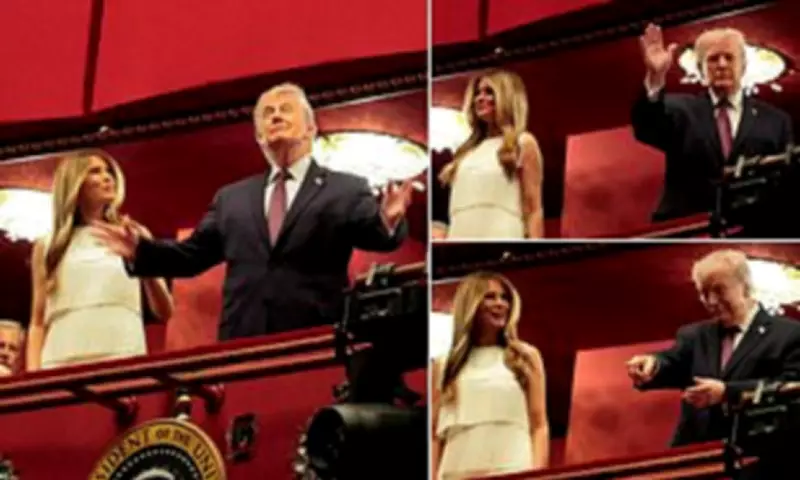
As the Trumps arrived in the President's box, Trump gestured to the audience, while Melania Trump wore a white flapper-style dress, fitting the 1920s theme of the show. The couple received a standing ovation and cheers from some attendees, but also faced boos from others acknowledging their presence. Seated nearby was Jeanine Pirro, the former Fox News host appointed by Trump as the US Attorney for the District of Columbia.
During the performance, White House press secretary Karoline Leavitt announced that Trump would deliver a major address on Iran the following night. This appearance marks the first couple's return to the Kennedy Center since late January, when they attended a documentary screening for Melania Trump.

History of Kennedy Center Visits and Protests
The Trumps have frequented the Kennedy Center in recent months, including attending the Kennedy Center Honors in December, where Trump hosted the event—a first for a president, leveraging his background in reality TV and entertainment. In June, they walked the red carpet for the opening night of Les Misérables, with Melania Trump expressing her fandom to the Daily Mail.
Both longtime New Yorkers, the couple shared that they have seen several Broadway shows, with Trump recalling his first as Cats and Melania citing Phantom of the Opera. However, their visits have not been without controversy. During the Les Misérables performance, drag queens protested in the audience, as LGBTQ-friendly programming has been reduced amid the MAGA influence at the center, originally a memorial for Democratic President John F. Kennedy.
Performers have boycotted events, moving shows elsewhere, and cast members of Les Misérables threatened to skip opening night over Trump's attendance. When asked about the boycott, Trump dismissed it, stating, 'I couldn't care less. Honestly, I couldn't. All I do is run the country well.'
Renovation Lawsuits and Political Backlash
The Kennedy Center is embroiled in legal battles over large-scale renovations planned by Trump. Earlier on Tuesday, a federal judge halted Trump's ballroom project, prompting him to criticize a related lawsuit against the Kennedy Center renovations. The National Trust for Historic Preservation, involved in both lawsuits, aims to stop the renovations, citing concerns over Trump's potential plans to take the venue 'down to the steel' after its closure on July 4.
In a Truth Social post, Trump labeled the National Trust as a 'Radical Left Group of Lunatics,' arguing that the renovations are necessary to fix a 'dilapidated and structurally unsound' building. He contrasted this with other projects, like renovations at the Federal Reserve building and California Governor Gavin Newsom's infrastructure plans, which he claimed were overlooked.
Trump asserted that the Kennedy Center and ballroom projects are 'under budget, ahead of schedule, and will be among the most magnificent Buildings of their kind anywhere in the World.' The National Trust, previously federally funded for 30 years, now relies on private donors, adding a layer of political tension to the dispute.
Future Implications and Public Scrutiny
The full plans for the Kennedy Center renovation remain undisclosed to the public, fueling speculation and opposition. The venue did not host a red carpet for the Chicago opening, with reporters only allowed to capture the Trumps' entrance, indicating tightened control over media access.
This event underscores the ongoing cultural and political divisions surrounding Trump's influence on historic institutions, with the Kennedy Center serving as a focal point for debates over preservation, partisanship, and public memory.