The Trump administration has adopted a distinctive approach to commemorating Easter this year, with multiple federal agencies publicly celebrating the resurrection of Jesus Christ through their official social media channels. This move represents a significant departure from the more restrained traditions typically observed by previous presidential administrations.
Federal Departments Herald Easter on Social Media
While numerous previous presidents have issued statements recognizing Easter Sunday, the Trump administration has taken this practice considerably further. Several key Cabinet departments have actively heralded Christ's resurrection on their official social media accounts, generating thousands of comments and sparking intense public debate.
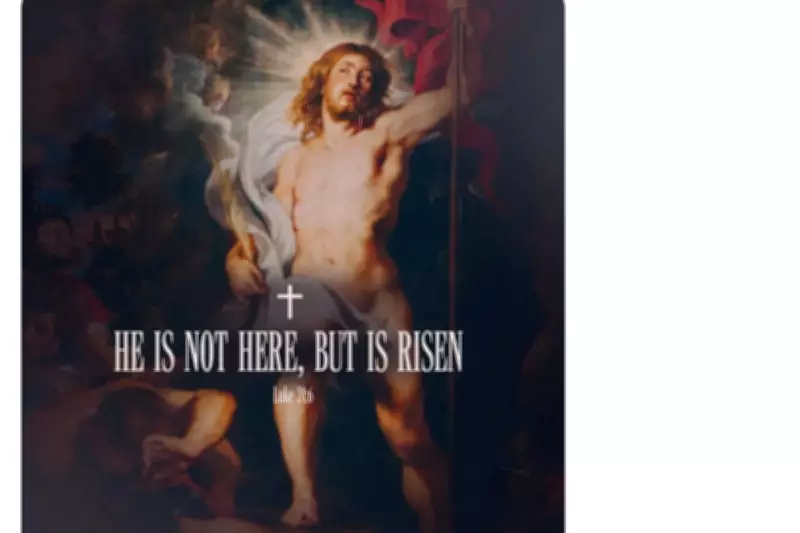
"He is risen," declared both the Department of Homeland Security and the State Department in their Easter messages. The Defense Department shared a post on X from Defense Secretary Pete Hegseth that stated: "The tomb is empty. The promise is fulfilled. Through His sacrifice, we are redeemed. We stand firm in faith, courage, and truth."

Justice Department Weighs In on Religious Liberty
The Justice Department also contributed to the Easter messaging on X, posting: "Today, as millions of Christians gather in their churches across the nation to celebrate the resurrection of Christ, this Department is proud to protect and defend religious liberty." This statement directly connected the Easter celebration with the department's official mission.
The social media posts attracted thousands of comments from the public, revealing sharply divided reactions. Many people expressed joy and appreciation at the departments' open embrace of Christianity, while others voiced outrage, arguing that government agencies should not be promoting the specific doctrine of any particular faith tradition.
Defense Secretary's Evangelical Leadership
Defense Secretary Pete Hegseth has frequently invoked his evangelical Christian faith while leading the armed forces, often depicting America as a Christian nation engaged in spiritual and military conflict against its adversaries. Last week, Hegseth hosted his first monthly Christian worship service at the Pentagon since the Iran war began, a livestreamed event that included specific prayers for military success.
During the service, Hegseth prayed: "Let every round find its mark against the enemies of righteousness and our great nation. Give them wisdom in every decision, endurance for the trial ahead, unbreakable unity, and overwhelming violence of action against those who deserve no mercy." This blending of religious language with military objectives has become characteristic of his leadership approach.
Trump's Contrasting Easter Communications
Former President Donald Trump issued two markedly different statements during the Easter period. On Good Friday, he released a statement that evoked the Iran war only indirectly, declaring: "From the Christian patriots who won and secured our liberty on the battlefield and every generation since, the love of Christ has unfailingly guided our Nation through calm waters and dark storms."
However, on Easter Sunday morning, Trump adopted a much harsher tone in a profanity-laced post on Truth Social. He demanded that Iran open the Strait of Hormuz by Tuesday, warning: "or you'll be living in Hell – JUST WATCH! Praise be to Allah." This statement prompted the Council on American-Islamic Relations, a nationwide advocacy group, to assail what they called Trump's "deranged mocking of Islam."
Historical Context and Constitutional Questions
Statements of faith have long been common in American public life, appearing across political parties and religious traditions. Pentagon aides and defenders of Secretary Hegseth frequently cite historical examples, such as President Franklin D. Roosevelt's support for distributing Bibles to American troops during World War II.

Nevertheless, the predominant tradition observed over many decades has been for presidents and their administrations to honor the constitutional separation of church and state, carefully avoiding any clear-cut favoring of one faith over others. Past presidents have demonstrated various approaches in their Easter messages, with Republican George W. Bush explicitly celebrating Christ's resurrection in 2003, while both Republican Ronald Reagan and Democrat Barack Obama sometimes issued messages recognizing both Easter and Passover simultaneously.
The Trump administration's Easter social media campaign represents a notable intensification of religious expression within official government communications, raising important questions about the appropriate boundaries between faith and state in American governance. This development occurs against the backdrop of ongoing military conflict and heightened political polarization, adding further complexity to the debate over religious expression in public institutions.