Three individuals have been arrested in connection with a static protest and counter-protest for Al Quds Day in London, according to police statements. The Metropolitan Police confirmed the arrests on Sunday, March 15, 2026, as tensions flared during the annual event.
Police Deploy Significant Resources
Scotland Yard had prepared for what they described as a "difficult public order" situation, drafting in at least 1,000 officers to manage the crowds. In an unprecedented move, police used the River Thames as a physical barrier to separate the protest and counter-protest groups, marking the first time such a tactic has been employed for large-scale demonstrations in London.
Details of the Arrests
The Metropolitan Police detailed the arrests in a social media post, stating: "Officers have made three arrests, one for showing support for a proscribed organisation, one for dangerous driving and a third for threatening and abusive behaviour." All protests and counter-protests were confined to the area between Vauxhall and Lambeth bridges, with permission granted only between 1pm and 3pm.

Protest Activities and Controversial Elements
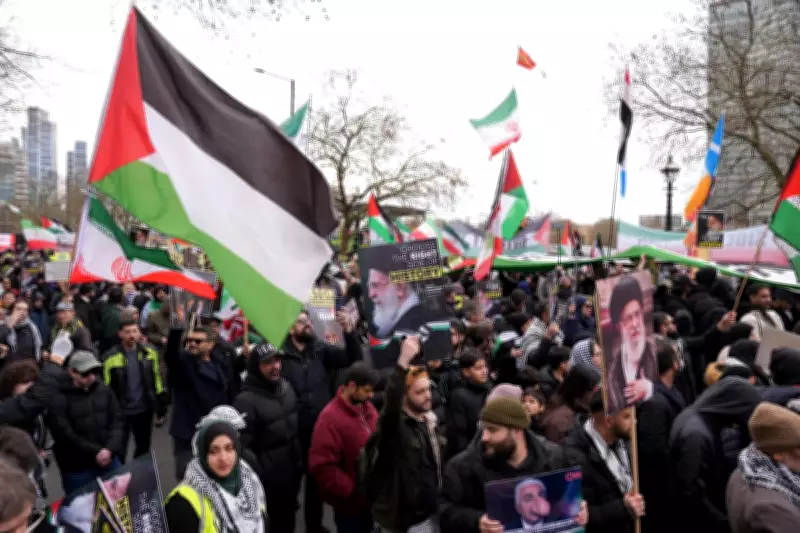
Hundreds of Al Quds Day demonstrators began arriving from 1pm, many carrying Palestine flags and banners with messages such as "Free Palestine" and "No to Israeli occupation." Controversially, some participants held pictures of Iran's late leader Ayatollah Ali Khamenei, accompanied by slogans like "Choose the right side of history."
Chants of "from the river to the sea" and "Israel is a terror state" echoed through the protest area. These slogans have drawn criticism from Jewish leaders, with Chief Rabbi Sir Ephraim Mirvis stating that such phrases "incite hatred" against Jews, particularly in the wake of recent terror incidents.
Counter-Protest Presence
On the opposite side of the Thames, a crowd of counter-protesters gathered under the banner of Stop The Hate. They waved Israeli flags and displayed signs reading "Hamas is terrorist," creating a visible opposition to the main demonstration. Police maintained a significant presence with vans parked along the road and on Lambeth Bridge, plus two police boats patrolling the river.
Government Intervention and Historical Context
Home Secretary Shabana Mahmood had granted police requests for a month-long ban on the annual march traditionally organised by the Islamic Human Rights Commission (IHRC). This represents the first such restriction on protest activities since 2012. However, participants were still permitted to assemble for what authorities termed a "static protest."
The annual Al Quds Day demonstration has faced criticism for apparent support of the Iranian regime, particularly after organisers expressed backing for the country's late leader. Al Quds Day itself is named after the Arabic term for Jerusalem and typically occurs on the last Friday of Ramadan.
Police resources were stretched thin with the dual demonstrations, requiring careful coordination to maintain public order. The strategic use of the Thames as a natural barrier proved effective in preventing direct confrontation between the opposing groups, though tensions remained palpable throughout the permitted protest window.