Third No Kings Protest Draws Millions in Historic Anti-Trump Demonstrations
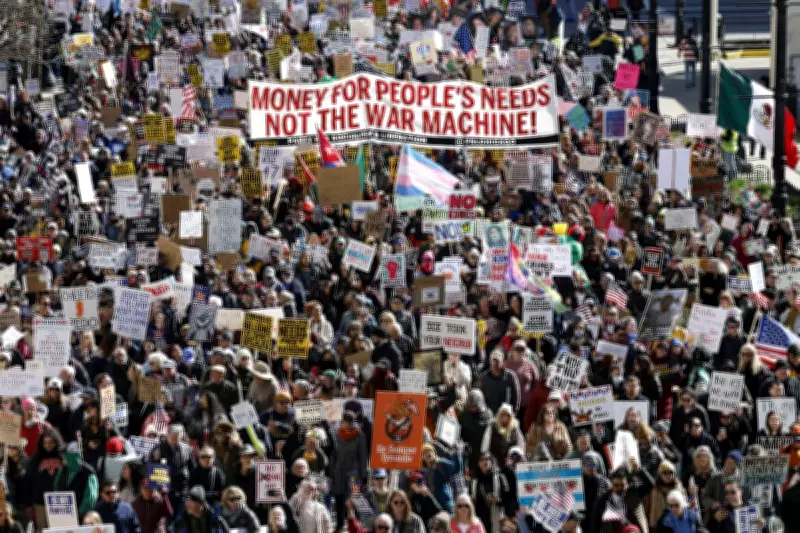
On Saturday, the third No Kings national day of protest saw millions of participants across the United States and in over a dozen countries, marking what organizers anticipate could be the largest protest in American history. More than 3,000 events were held nationwide, coordinated by a coalition including anti-authoritarian groups like Indivisible and 50501, labor unions, and grassroots organizations.
Massive Turnout and Key Events
Ezra Levin, co-founder of Indivisible, stated ahead of the protests, "I would expect March 28 to be the biggest protest in American history." The previous No Kings protest in October attracted 7 million people, setting a high bar for this latest mobilization.
In Minnesota's Twin Cities, Minneapolis and St Paul, around 200,000 people gathered at the state capitol for the flagship event. Speakers included independent Vermont senator Bernie Sanders, who criticized the influence of the ultra-rich in politics, and Bruce Springsteen, who performed his song Streets of Minneapolis, leading chants of "Ice out now!" Governor Tim Walz introduced Springsteen, emphasizing America's need for "no damn kings" while praising state residents for standing up against federal agents linked to the deaths of Minneapolis residents Renee Good and Alex Pretti.

National and International Reach
Protests extended beyond urban centers, with Leah Greenberg, co-founder of Indivisible, noting that more than two-thirds of RSVPs came from outside major cities, including Republican-controlled areas. Events were held in deep-red cities like Lebanon, Pennsylvania; Midland, Texas; and Boise, Idaho, as well as globally in Tokyo, Paris, Berlin, Rome, and Sydney.
In New York City, contingents merged through Times Square and outer boroughs, featuring figures such as state attorney general Letitia James, public advocate Jumaane Williams, actor Robert DeNiro, and Rev Al Sharpton. Marchers carried LGBTQ+ pride and Palestinian flags, with signs and chants focusing on anti-ICE, anti-Trump, and pro-LGBTQ+ rights messages, alongside strong anti-war sentiments.
Diverse Issues and Counterprotests
Organizers highlighted a multiplicity of stressors driving participation, from ICE raids to voting rights threats and economic concerns like rising gas prices and grocery costs. Sarah Parker, executive director of Voices of Florida, stated, "The people of America are pissed." Counterprotesters, including pro-Trump demonstrators in West Palm Beach, Florida, also appeared, though the No Kings coalition emphasized nonviolence and de-escalation training.
Government Response and Legal Context
The White House denounced the events as "Trump Derangement Therapy Sessions," with spokesperson Abigail Jackson claiming they were funded by leftist networks. The Trump administration has previously targeted anti-ICE protesters, with recent convictions in Texas and the killings of Good and Pretti by federal agents. Concerns about ICE presence at protests were addressed by Deirdre Schifeling of the ACLU, who advised attendees to consult "know your rights" materials.
Future Implications
Organizers view No Kings Day as a catalyst for ongoing resistance, with Greenberg asserting, "Our third No Kings Day of Action will happen on Saturday, and Trump will still be in the White House. That is why we see No Kings as not only a powerful day of defiance but an organizing catalyst to support local organizing everywhere." The protests underscore a broad-based push against authoritarianism and policy grievances under the current administration.