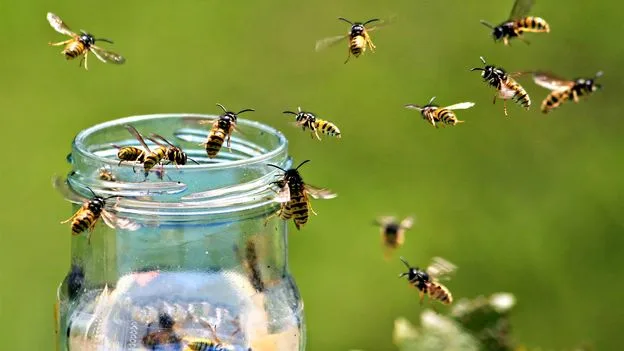
Long summer days call for picnics – but wasps often make an uninvited appearance. One quick trick can stop them from ruining an al fresco get-together, according to experts.
The wasps that usually visit your picnic are typically the common yellowjacket (Vespula vulgaris) and the German wasp (Vespula germanica). A worker wasp is looking for food to feed to her sibling larvae in her mother's nest. She is so focused on her task that she won't notice you watching.
Before you know it, she's off with jaws full of jam or a hunk of ham. She might zigzag away from your table – a sign that she is reorientating for a reliable return. You can use this time to prepare your wasp offering: a portion of whatever she harvested from your plate. Move it slightly away from the rest of your food, and if you let her have her share, you too can dine in peace.

You can gradually move your wasp offering further away from you. This technique is well-tested around the world, whether you're looking to track down a wasp nest or keep customers unbothered at an outdoor restaurant.
Happily, your picnic friend is unlikely to bring a swarm of wasps to your table, because social wasps are poor recruiters. This contrasts with honeybees, which have evolved a communication system to recruit many foragers to a patch of flowers.
Wasps tend to be attracted to a forage source by the presence of other wasps. If she sees a few wasps gathered, then she will investigate. But if there are too many wasps, this puts her off. Enjoy the knowledge that you are helping feed armies of tiny pest controllers, who will soon set to work regulating populations of flies, caterpillars, aphids and spiders.