Swinney's Supermarket Price Cap Pledge Unravels Amid Legal and Political Backlash
John Swinney's flagship election vow to impose caps on supermarket food prices has descended into significant disarray, with the First Minister dramatically watering down his plans following a fierce backlash from retailers and opposition parties. Less than a week after promising to enforce legal price ceilings on up to 50 essential grocery items, Mr Swinney has now proposed a voluntary agreement with retailers instead, marking a stark retreat from his original policy position.
Legal Challenges Force Policy Retreat
The Scottish First Minister openly admitted that his initial scheme faced a substantial risk of legal challenge, compelling the shift in approach. He argued that pursuing voluntary steps with supermarkets would be quicker and more efficient than navigating the lengthy legislative process required to pass a new law. Originally, Mr Swinney had intended to utilise public health powers to set maximum prices for staple foods, aiming to reduce the cost of the weekly supermarket shop for families across Scotland.
Retailers Warn of Competition Law Violations
However, the retail sector has issued stern warnings that even a voluntary arrangement could breach competition regulations. David Lonsdale, director of the Scottish Retail Consortium, which previously labelled the price cap idea a potty gimmick reminiscent of 1970s-style price controls, urged ministers to engage in talks for a more realistic and sensible approach. He cautioned explicitly that any voluntary scheme would almost certainly fall foul of competition rules on collusion and price fixing, regulations designed fundamentally to protect consumers from anti-competitive practices.

Opposition Parties Decry Policy as a 'Gimmick'
Opposition politicians have seized upon the policy reversal, accusing Mr Swinney of promoting a poorly conceived election gimmick rather than a serious attempt to assist struggling households. Scottish Tory business spokesman Murdo Fraser stated bluntly that now that John Swinney can see that his crackpot, back-of-a-fag-packet idea is unravelling, he's trying to row back on it. He asserted the policy was never a genuine effort to aid hard-pressed families but merely an excuse for setting up a fight with the UK government.
Scottish Labour deputy leader Jackie Baillie echoed this criticism, remarking that John Swinney is much more interested in poorly thought-out gimmicks than actually delivering policies that will make a positive difference. Reform UK Scotland leader Malcolm Offord derided the proposal as a 1970s USSR policy already collapsing, while Scottish Liberal Democrat candidate Jamie Greene quipped that John Swinney might have the demeanour of a bank manager but not the skill with maths.
Swinney Insists on Voluntary Approach Amid Contrast with UK Labour
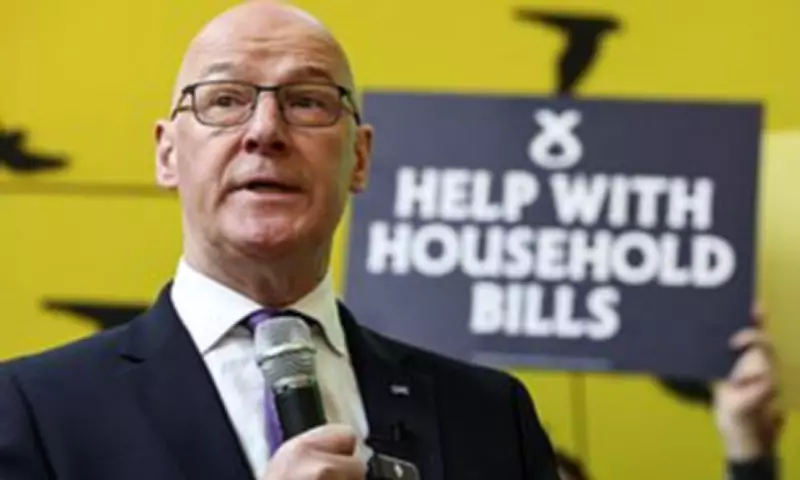
Speaking at an election event in Edinburgh, Mr Swinney remained defiant, insisting the plan could still be implemented this year if we got voluntary agreement about that. He contrasted his own reliable, experienced and trusted leadership with what he described as the chaos of UK Labour, attempting to frame the debate around broader political stability. Nonetheless, the rapid unravelling of this key election pledge has exposed the policy to accusations of being a cynical political manoeuvre designed to whip up nationalist grievance rather than address substantive economic concerns.
The episode underscores the significant practical and legal hurdles facing ambitious price control policies in a competitive market economy, leaving Swinney's commitment to tackling food inflation in a state of considerable uncertainty and political vulnerability.