Supreme Court Justices Show Doubt Over Trump's Birthright Citizenship Order
The US Supreme Court on Wednesday appeared poised to uphold birthright citizenship, a longstanding constitutional right, dealing a potential blow to a key immigration policy of former President Donald Trump. During oral arguments, a majority of justices expressed skepticism about the government's attempt to overturn the policy, which grants citizenship to babies born in the United States. Trump attended the hearing in person, marking a rare appearance by a sitting president in the courtroom's public gallery.
Legal Arguments and Judicial Scrutiny
D John Sauer, the solicitor general representing the Trump administration, argued that the 14th amendment's citizenship clause presupposes "domicile," meaning permanent residence, and should not apply to children born to parents unlawfully or temporarily in the US. He claimed that unrestricted birthright citizenship contradicts global norms and encourages illegal immigration. However, justices from across the ideological spectrum questioned this interpretation, probing the concept of domicile and the amendment's phrasing.
Chief Justice John Roberts described part of the government's argument as "very quirky," while Justice Elena Kagan noted the use of "pretty obscure sources." Justice Ketanji Brown Jackson raised practical concerns, asking how parents could prove intent for permanent residency, quipping, "So are we bringing pregnant women in for depositions?"

Potential Impacts and Broader Implications
If birthright citizenship is overturned, hundreds of thousands of children born annually could be denied US citizenship, creating what the American Civil Liberties Union (ACLU) calls "a permanent subclass." Cecillia Wang, arguing for the ACLU, warned that Trump's executive order, if reinstated, could immediately strip citizenship from thousands of babies and call into question the status of millions of Americans. The order, issued on Trump's first day in office in 2025, seeks to reinterpret the 14th amendment, overriding more than 125 years of precedent.
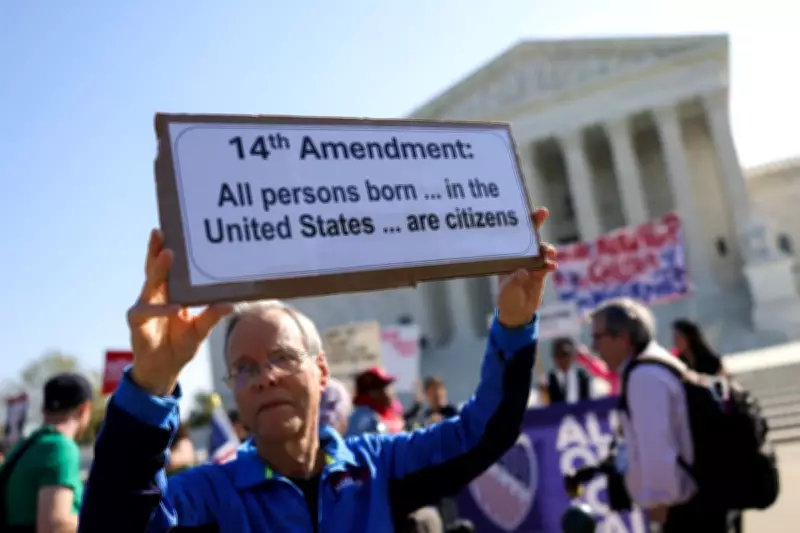
Outside the court, hundreds of protesters demonstrated in support of birthright citizenship, highlighting the policy's significance in American society. The Migration Policy Institute estimates that ending birthright citizenship could increase the unauthorized immigrant population by 2.7 million by 2045, based on an average of 255,000 affected births per year.
Historical Context and Political Ramifications
The 14th amendment, adopted in 1868 during Reconstruction, was designed to secure rights for Black Americans and reverse the Dred Scott decision. The Trump administration argues that the phrase "subject to the jurisdiction thereof" excludes children of non-citizens, but critics contend this misinterprets historical intent. The administration's legal stance has drawn on arguments from controversial figures, including a late 1800s white supremacist and John Eastman, a lawyer involved in efforts to overturn the 2020 election.
A decision is expected this summer, and if the court rules against Trump, it would represent a major setback for his immigration agenda, following previous defeats on tariffs. Democratic attorneys general from 24 states have filed lawsuits against the order, expressing optimism that the Supreme Court will uphold the constitutional right.