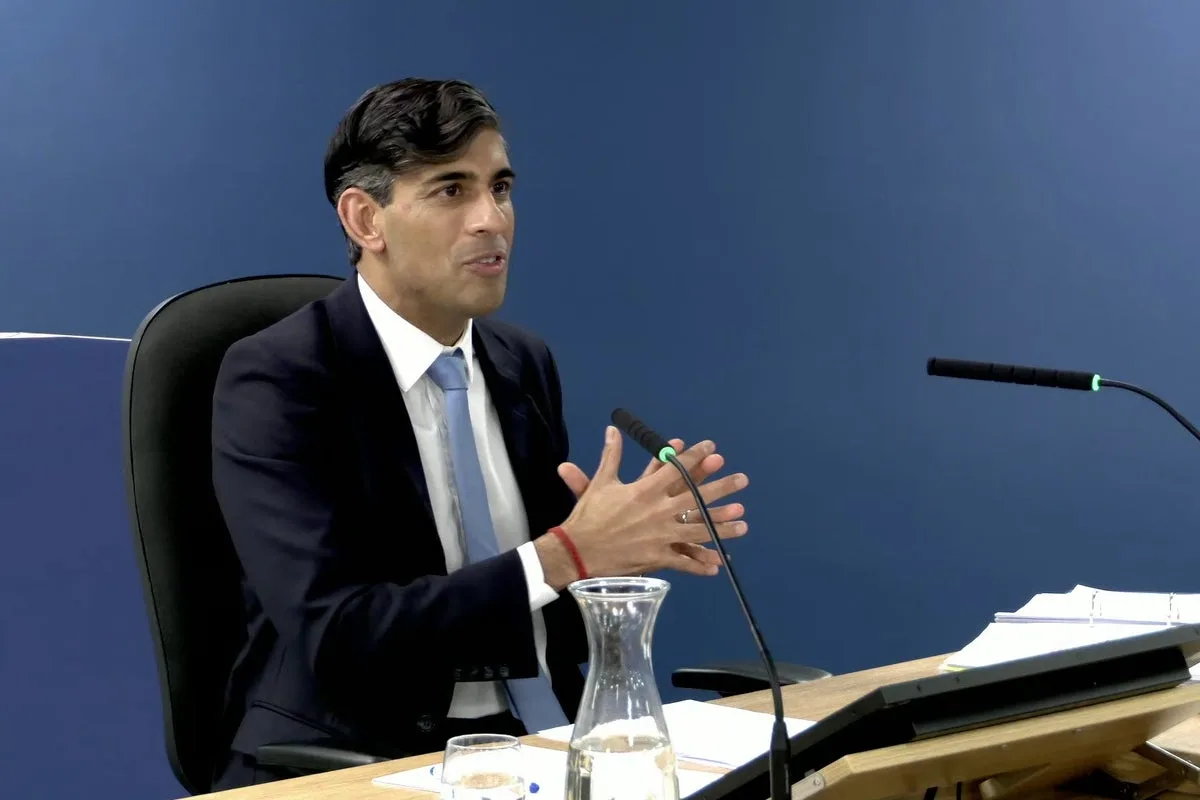
Former Prime Minister Rishi Sunak has proposed phasing out national insurance contributions to help young people whose jobs are threatened by artificial intelligence. Speaking to BBC Newsnight, Sunak argued that the current tax system disadvantages human workers compared to AI, as employers face additional costs when hiring people but not when deploying software.
Sunak, who now advises AI firms Anthropic and Microsoft, said many chief executives privately acknowledge that recruitment of young people is stagnating due to AI advancements. He warned that graduates seeking entry-level roles in sectors like law, accountancy, and creative industries are facing justified concerns. 'Flat is the new up,' he said, describing how businesses aim to grow without significantly increasing employment.
To address this, Sunak suggested gradually abolishing national insurance and replacing it with taxes on corporate profits, which he expects to rise from AI-driven productivity gains. He highlighted that employers currently pay national insurance contributions on top of wages, while AI agents incur no such costs, creating an imbalance that should be corrected.

Sunak also emphasised the importance of AI literacy, calling it 'the equivalent of the driving licence for the modern workforce.' He warned that individuals are more likely to lose their jobs to someone using AI than to AI itself, urging people to gain confidence in using these tools. The former PM noted that AI literacy is the fastest-growing skill demanded by employers on LinkedIn.
Despite his concerns, Sunak expressed optimism about the UK's position as an 'AI superpower' and revealed he has collaborated with Labour's Deputy Prime Minister David Lammy to promote investment in the UK tech sector. He stressed that the government must act to ensure AI enhances jobs rather than replaces them.