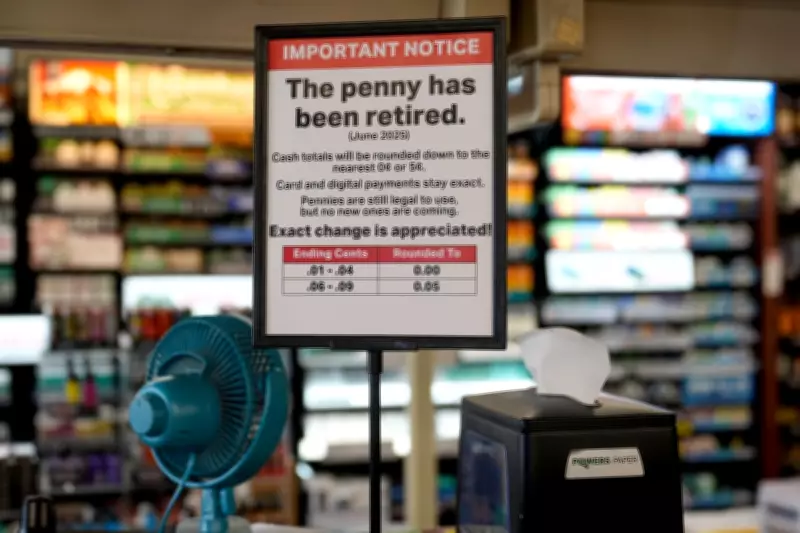
State Legislatures Scramble to Establish Rounding Rules as Pennies Disappear
In the wake of the United States Mint halting production of the one-cent coin, state lawmakers across the country are urgently drafting legislation to set rounding guidelines for cash purchases. This move comes as pennies become increasingly scarce in circulation, forcing businesses and consumers to adapt to a future without exact change.
The End of Penny Production and Its Immediate Impact
President Donald Trump announced the cessation of penny manufacturing early last year, citing excessive costs. In 2024, it cost 3.7 cents to produce each penny, leading to significant financial waste. The decision triggered a shortage of pennies in cash registers last summer, compelling a nationwide adjustment to penniless transactions.
The Treasury Department has committed to continuing the circulation of approximately 114 billion existing pennies for as long as feasible, and these coins must still be accepted as legal tender. However, the dwindling supply has prompted states to seek practical solutions.

Symmetrical Rounding: A Proposed National Standard
One widely discussed solution is symmetrical rounding to the nearest nickel. Under this method, if a final price after taxes ends in one, two, six, or seven cents, the cash payment rounds down. For instance, $1.91 or $1.92 becomes $1.90. Conversely, prices ending in three, four, eight, or nine cents round up, so $1.98 or $1.99 would require a payment of $2.00.
A federal bill introduced last year and passed by the House Financial Services Committee aims to implement symmetrical rounding nationwide. U.S. Representative Lisa McClain, a Republican from Michigan, emphasized in an email that this legislation is crucial to avoid a confusing patchwork of state policies. The bill still awaits a full House vote and must pass the Senate before reaching President Trump's desk.
State-Level Initiatives Gain Momentum
In the interim, numerous states are taking matters into their own hands. Bills addressing penniless cash transactions have passed both legislative chambers and await gubernatorial signatures in Arizona, Florida, Oregon, Tennessee, Virginia, and Washington. These proposals vary, with some states allowing businesses to round cash purchases voluntarily, while others consider making it mandatory.
Indiana recently enacted a law requiring businesses to round cash purchases for transactions not ending in zero or five cents, though a subsequent bill revised this to make rounding optional, effective soon if signed. In Tennessee, legislation provides legal protection for businesses using symmetrical rounding under consumer protection laws but does not enforce it. Republican Representative Charlie Baum explained during floor debate that this offers a safe harbor for private enterprises.
According to an Associated Press analysis using the bill-tracking service Plural, rounding bills have been introduced in about two dozen states since late last year. Additionally, some state agencies have issued guidelines advising that rounding should occur after tax application and ensuring full tax amounts are remitted to the state.
Consumer Concerns and Economic Implications
While cash usage has declined with the rise of electronic payments, a 2024 Federal Reserve survey found that about 80% of U.S. adults still use cash regularly, particularly among older adults and lower-income households. The Treasury asserts that rounding will balance out, with prices rounded down as often as up, thus having no net effect on consumer costs.
However, research from the Federal Reserve Bank of Richmond indicates that prices are more likely to end in eight or nine cents, potentially leading to frequent rounding up. This could result in millions of dollars collectively gained by businesses and lost by consumers, albeit amounting to just a few pennies per person annually.

Public Perception and Practicality
As businesses adopt rounding practices, some Americans have expressed frustration on social media, feeling shortchanged by small increments. Nikki Capozzo-Hennessy, a 50-year-old Connecticut resident, shared her grocery receipt online after noticing a rounding adjustment saved her three cents on an $8.73 purchase. She acknowledged that while losing pennies repeatedly might feel burdensome, consistency in rules is practical for her food truck business, where she plans to use symmetrical rounding.
Washington state Representative April Berg, who sponsored a rounding bill, sympathizes with consumer frustrations but notes that the elimination of physical pennies leaves few alternatives. Her legislation ensures that consumers can still pay the exact amount owed when possible.
The Nickel Dilemma and Future Considerations
The Treasury estimates that ending penny production will save $56 million annually, but rounding may increase demand for nickels, which are also costly to produce at nearly 14 cents each in 2024. The proposed federal legislation includes a provision allowing the Treasury to alter the nickel's composition to cheaper materials like zinc and nickel, replacing copper and nickel, as a potential cost-saving measure.
This ongoing transition highlights the broader challenges of modernizing currency systems while balancing economic efficiency with consumer fairness in an increasingly digital economy.