Starmer's Leadership Crisis: A Prisoner of His Own MPs Amid Iran Conflict
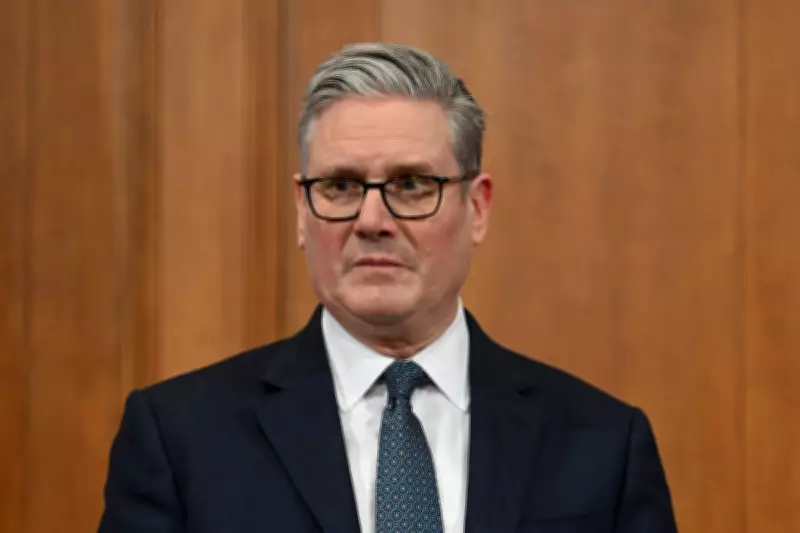
In the tumultuous wake of Donald Trump's repeated military actions against Iran, Prime Minister Keir Starmer finds himself navigating a political minefield. His careful, middle-of-the-road approach to the conflict—initially refusing UK involvement or permission for US use of British bases, then authorising defensive actions—has placed his leadership under intense scrutiny. While this stance may be strategically sound, it has inadvertently revealed Starmer's precarious position as a leader seemingly held captive by his own parliamentary party.
The Collective "We" Versus Individual Leadership
The words of Dame Emily Thornberry, Labour chair of the Commons foreign affairs committee, proved particularly enlightening. Urging Starmer not to lose his nerve regarding Iran, she told The Independent: "We have to stick to what we believe is right." Notably, she employed the collective "we" rather than referring to the Prime Minister himself. This linguistic choice underscores a fundamental reality: this appears to be a government operating on the collective opinion of its MPs rather than the individual judgement of its leader.
Thornberry's comments, perhaps unintentionally, highlighted Starmer's central dilemma. The more Labour MPs publicly endorse his decisions as correct, the more he resembles their political prisoner. This dynamic was starkly illuminated during his statement to the Commons, which received almost universal approval from Labour backbenchers—a level of enthusiastic unity rarely seen throughout his premiership.

Revelations From the National Security Meeting
The political landscape shifted dramatically following a leak from a national security meeting published in The Spectator. The revelation indicated that Sir Keir had initially wanted to permit Trump to use UK bases at Diego Garcia and RAF Fairford for launching attacks against Iran. Crucially, he was reportedly prevented from doing so by four cabinet ministers, including potential leadership rival Ed Miliband.
Given Starmer's politically precarious position, he could not have survived the resignation of four senior ministers and the inevitable backlash from Labour backbenchers. Such an event might have already triggered a leadership contest. This leak casts the Prime Minister's subsequent public actions in an entirely different light, reinforcing the perception that he operates as a prisoner of his party.
Historical Parallels and Leadership Comparisons
This pattern mirrors previous policy struggles during Starmer's tenure, including attempts to reform welfare, remove winter fuel payments from pensioners, and maintain the two-child benefit cap. In the latter case, after being forced to end the cap by backbench pressure, Starmer has subsequently presented the move as his own initiative—a tactic that now appears replicated regarding Iran policy.
The situation invites unfavourable comparisons with former Prime Minister Tony Blair, whose Iraq War decision continues to overshadow Labour foreign policy. While Blair's criticism of Starmer's Iran decision-making might provide some political cover, it also underscores a stark contrast in leadership strength. Blair managed to persuade his MPs in 2003 and survived the resignations of Robin Cook and Clare Short—a resilience Starmer currently lacks.
A Premature Leadership Crisis
For a Prime Minister who secured a massive majority just twenty months ago, finding himself in this weakened position is particularly painful. It echoes the predicament Rishi Sunak faced with a divided Conservative Party—but Sunak's challenges emerged after over a decade in government, not within two years of a landslide victory.
The Iran conflict has, at minimum, deferred any immediate decision about Starmer's future until after the local and devolved elections in May. His fate may well be sealed by those results. The fundamental question remains: will his potential successor be another prisoner to Labour MPs, or a leader capable of throwing off the shackles and governing with genuine authority?

As Thomas Hobbes articulated in The Leviathan 375 years ago, "The defence of the nation is the first duty of government." If a Prime Minister cannot make such decisions clearly without having his hand forced by others, his ability to govern effectively remains fundamentally compromised.