Keir Starmer's Defining Moment: Navigating Iran War Tensions with Donald Trump
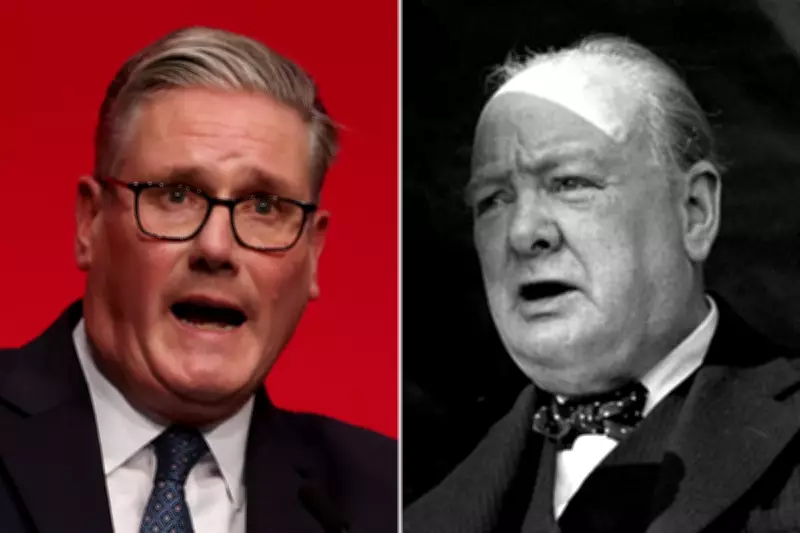
Prime Minister Keir Starmer has found himself at the centre of a political storm, as tensions over the Iran conflict test his leadership and relationship with the United States. In a striking display of defiance, Starmer told the Commons to "pay no attention" to Donald Trump's criticisms, emphasising that the health of the UK-US alliance is demonstrated through joint actions, not verbal sparring. This stance comes after Trump's pointed remark, "This is not Winston Churchill that we're dealing with," which has reverberated through Westminster, setting the stage for a high-stakes political showdown.
The Political Chessboard: Conservatives vs. Labour
Conservative MPs attempted to weaponise Trump's words to portray Starmer as weak on the international stage. However, Labour MPs rallied behind their leader, viewing his response as a bold stand against a figure they deeply oppose. Starmer seized the moment, telling Kemi Badenoch that such crises "define a leader of the opposition," implying she had failed her own test by not addressing her past support for Trump's offensive strikes against Iran. For Starmer, this episode serves a dual purpose: it defines his premiership and distances him from an unpopular US president, aligning him with British public sentiment that largely opposes military intervention in Iran.
Starmer's Strategic Calm and Legal Caution
Insiders describe Starmer as "intensely relaxed" about Trump's attacks, a phrase borrowed from Peter Mandelson, reflecting a calculated confidence. The prime minister has consistently hidden behind legal niceties, refraining from direct criticism of US-Israeli offensive strikes while opposing "regime change from the skies." This cautious approach has allowed him to maintain a principled stance without alienating key allies. At Prime Minister's Questions, backbench Labour MPs, including Uma Kumaran of Stratford and Bow, praised his "leadership" and "cool head on Iran," highlighting his growing support within the party.

Broader Political and Historical Context
The Churchill comparison, while intended as an insult, may not be as damaging as Trump assumes. British history shows that Churchill, though revered, was also seen as an impetuous warmonger by some, only becoming prime minister when the nation's survival was at stake. Recent experiences with Boris Johnson, who fancied himself a Churchillian figure, have further complicated this analogy. Starmer's deliberate pace in allowing US use of British bases for defensive purposes underscores his commitment to legal and ethical frameworks, a stance that resonates with a war-weary public.
International Reactions and Domestic Unity
Even international figures have weighed in. German Chancellor Friedrich Merz claimed to have defended Starmer to Trump after the president criticised the prime minister for making US planes take longer routes. Domestically, figures like Emily Thornberry, chair of the Foreign Affairs Committee, offered support, questioning what Churchill would have made of Trump and noting he is "no Franklin D Roosevelt." Treasury Chief Secretary James Murray bluntly stated that Trump's words would not upset Starmer, reinforcing the image of a resilient leader.
As the Iran crisis unfolds, Starmer's handling of this situation could cement his political legacy. By balancing legal caution with firm leadership, he is positioning himself as a steady hand in turbulent times, leveraging Trump's unpopularity to strengthen his own standing both at home and abroad.