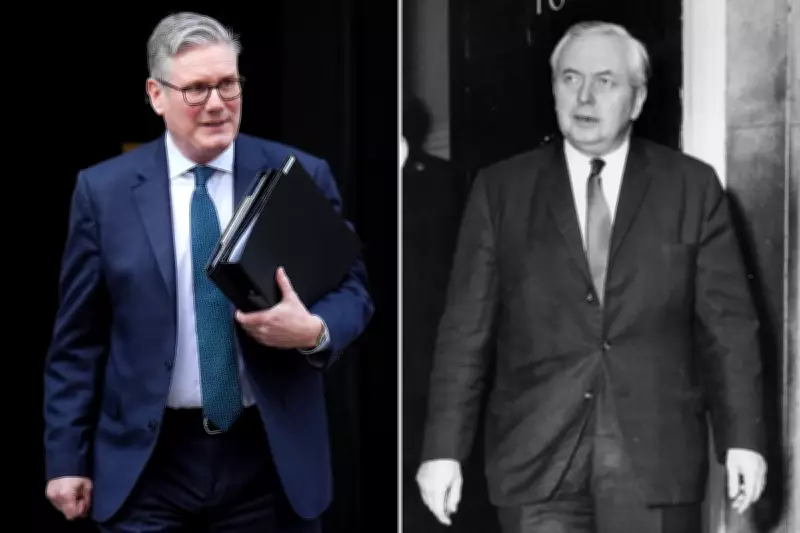
Starmer's Defiance of Trump Mirrors Wilson's Historic Stand Against US Demands
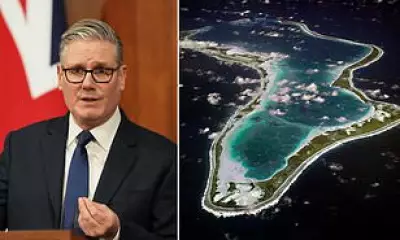
As Prime Minister Keir Starmer faces intense pressure from Donald Trump over Britain's refusal to allow US military strikes on Iran through British territories, a striking historical parallel emerges. According to former Labour cabinet minister and Wilson biographer Alan Johnson, Starmer's approach aligns not with Winston Churchill, as Trump might suggest, but with Harold Wilson, the four-time election winner who famously resisted American calls for British troops in Vietnam.
The Wilson Legacy: Modernisation and Moral Courage
Harold Wilson, who shocked the nation by announcing his resignation 50 years ago this month, left an indelible mark on Britain. His administrations spearheaded transformative reforms, including the first laws against racial discrimination, the legalisation of homosexuality, the abolition of capital punishment, and the creation of the Open University. Under his leadership, a record 400,000 council houses were built in a single year, divorce laws were modernised, and equal pay legislation was introduced for women.
Yet, as Johnson notes, it is what Wilson didn't do that often defines his legacy: he refused to send British soldiers to Vietnam, despite immense pressure from the United States. This principled stance, balancing close Anglo-American relations with a refusal to engage in military adventurism, is now being echoed by Starmer in the current Iran crisis.

Starmer's Diplomatic Tightrope: Learning from Wilson's Playbook
In the face of calls from opposition figures like Kemi Badenoch and Nigel Farage to align with Trump's actions, and from Green party leader Zack Polanski to publicly condemn the US President, Starmer has positioned himself as a measured voice. Like Wilson, he seeks to maintain a strong relationship with America while avoiding entanglement in conflicts he deems reckless.
Wilson's success lay in giving the US everything it wanted—except the one thing it desired most: British troops in Vietnam. He faced criticism from student revolutionaries who overlooked that American loans funded Britain's welfare state, but his anti-war instincts were genuine, not merely pragmatic. This was evident in his handling of Rhodesia, where he rejected military intervention in favour of sanctions, arguing that constitutional issues should not be resolved through disproportionate force.
Historical Precedents and Modern Challenges
Dealing with Lyndon B. Johnson's administration was vastly different from navigating Trump's presidency, but the intensity of American pressure remains comparable. Dean Rusk, Johnson's Secretary of State, once threatened Wilson, saying, "All we needed was one regiment... Well don't expect us to save you again." Today, such rhetoric finds a parallel in Trump's outbursts, yet Wilson's stance has been vindicated by history—America lost 58,000 lives in a war now seen as a tragic mistake, while Vietnamese casualties numbered in the millions.
Similarly, there is a growing consensus that regime change in Iran cannot be achieved through airstrikes alone, and evidence suggests its nuclear capacity could have been neutralised via negotiation. Starmer, despite domestic challenges, has garnered respect on the world stage for his refusal to join what many view as reckless adventurism.
A Fitting Tribute to a Political Hero
Starmer may yet receive credit for upholding Wilson's legacy: staying close to America while avoiding unnecessary military conflicts. As Johnson concludes in his biography, Harold Wilson: Twentieth Century Man, this approach not only honours Wilson's memory but also reinforces the value of principled diplomacy in an era of global uncertainty. By standing firm on Iran, Starmer demonstrates that true leadership involves courage, pragmatism, and a steadfast commitment to moral integrity, much like his political hero.