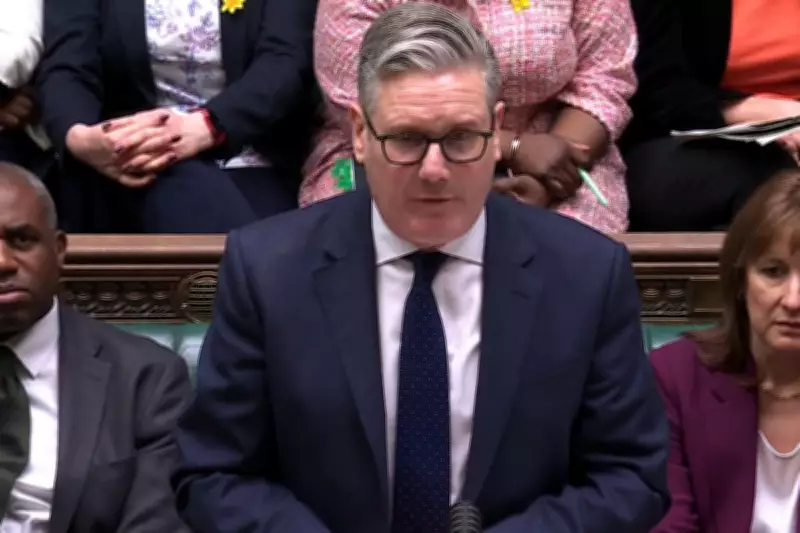
Starmer Insists UK-US Ties Transcend Trump's Criticism Over Iran Policy
Prime Minister Sir Keir Starmer has firmly stated that the United Kingdom's special relationship with the United States does not depend on "hanging on to President Trump's latest words." This declaration comes in response to personal attacks from former US President Donald Trump, who criticised Starmer's initial refusal to permit British military bases to be used for bombing raids against Iran.
Trump's Personal Attack and Starmer's Rebuttal
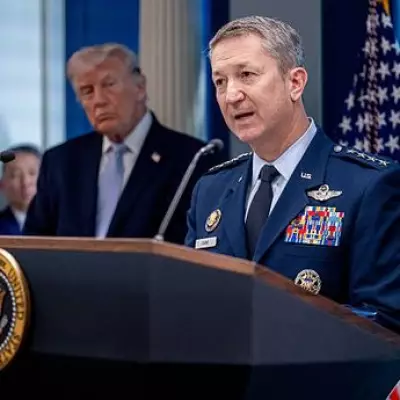
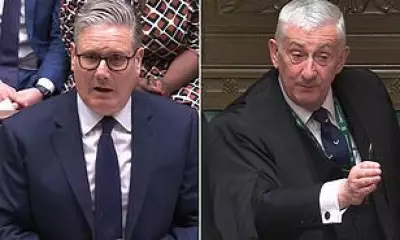
Donald Trump launched a verbal assault on Sir Keir, referencing the Prime Minister's decision to deny US forces access to UK bases for strikes on Tehran. Trump remarked, "this is not Winston Churchill that we're dealing with," implying a lack of resolve. However, Starmer countered this criticism during Prime Minister's Questions, emphasising that the bilateral relationship is built on substantive cooperation rather than rhetorical alignment.
"Hanging on to President Trump's latest words is not the special relationship in action," Starmer told MPs, highlighting ongoing military and intelligence collaboration. He defended his cautious approach, suggesting that authorising the use of British bases for an opening assault on Iran could have been unlawful and lacked a "viable, thought-through plan."

Strategic Decisions in the Middle East Conflict
The Prime Minister outlined his rationale for initially withholding permission for US operations from UK bases, including Diego Garcia in the Indian Ocean and RAF Fairford in Gloucestershire. "What I was not prepared to do on Saturday was for the UK to join a war unless I was satisfied there was a lawful basis and a viable, thought-through plan. That remains my position," he stated.
In response to escalating tensions, Starmer has since granted limited authorisation for US forces to use British bases to target Iranian missile launchers and infrastructure. However, RAF jets have not participated in offensive strikes against Iran. Instead, British aircraft have been deployed to intercept incoming threats and protect joint bases in the region.
Political Fallout and Broader Implications
The Iran crisis has strained Starmer's efforts to cultivate a strong personal rapport with Trump, who has publicly singled out the Prime Minister for criticism. Despite this, Starmer argued that the UK-US alliance runs deeper than individual relationships between leaders. "American planes are operating out of British bases. That is the special relationship in action," he asserted, noting joint efforts in intelligence sharing and defence operations.
Tory leader Kemi Badenoch questioned why the RAF had not taken "offensive action" against Iranian missile sites following attacks on British bases in Bahrain and Cyprus. Starmer responded that protecting UK nationals is the top priority, with actions focused on threat reduction through aerial interceptions and enhanced deployments.
Military Deployments and Regional Developments
The government has faced scrutiny over military preparedness in the Middle East, particularly after RAF Akrotiri in Cyprus was struck by a drone. In response, Starmer announced that Wildcat helicopters with anti-drone capabilities will be stationed in Cyprus this week, and the Type 45 destroyer HMS Dragon will be dispatched to the eastern Mediterranean for enhanced protection.
He detailed pre-emptive measures taken before the conflict escalated, including the deployment of radar systems, ground-based air defence, counter-drone systems, and F-35 jets. "The whole country is worried about the potential for escalation in the Middle East, and we need to act, therefore, with clarity, with purpose, and with a cool head," Starmer emphasised.
Ongoing Conflict and Humanitarian Efforts
Recent developments in the region include:

- A charter flight departing Muscat, Oman, to repatriate stranded British citizens, with two additional government-chartered flights planned.
- Intensified bombing campaigns by the US and Israel against Iran's military infrastructure.
- The sinking of an Iranian warship by a US submarine in the Indian Ocean.
- Continued Iranian attacks targeting Saudi Arabia, Kuwait, and other nations with missiles and drones.
- Turkey's interception of a ballistic munition from Iran using NATO air defences.
- Persistent economic uncertainty due to the conflict's impact on global oil and gas supplies.
Starmer's stance underscores a commitment to lawful and strategic decision-making in international crises, reinforcing that the UK-US partnership remains robust despite political discord.