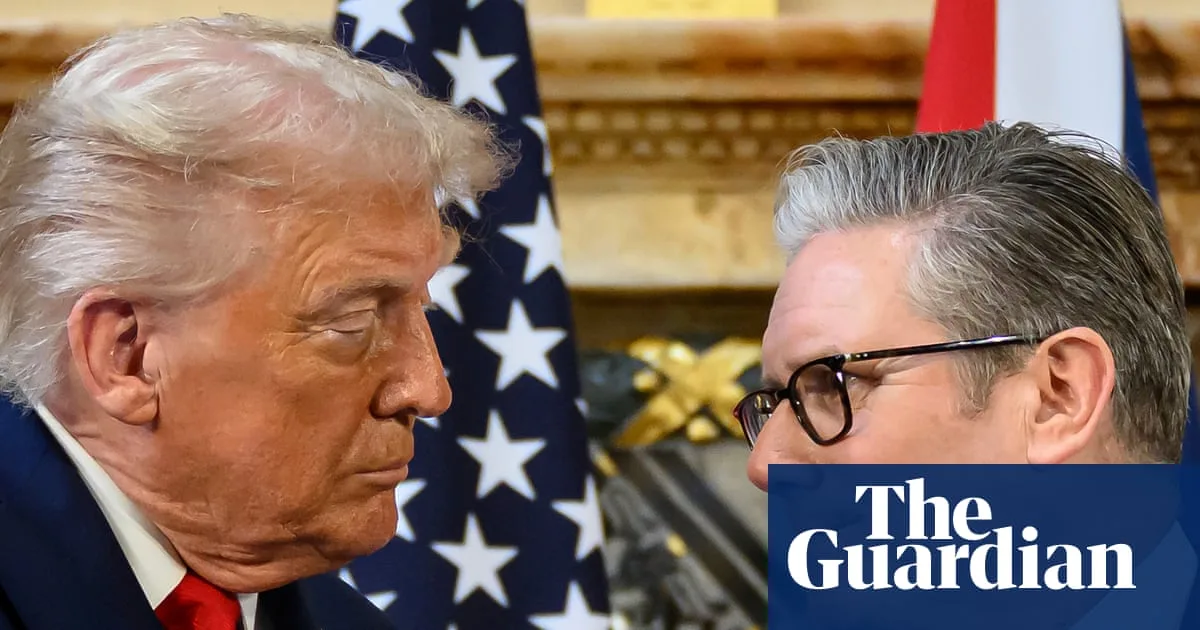
Starmer Challenges Trump's Iran Strategy Amid Special Relationship Tensions
Prime Minister Keir Starmer has openly criticised former US President Donald Trump for lacking a "viable, thought-through plan" regarding military action against Iran, as diplomatic relations between the United Kingdom and United States experience significant strain. The Prime Minister maintained his defiant position regarding the refusal to permit UK military bases to be utilised for offensive strikes, expressing serious concerns about potential "escalation" in the volatile Middle East region.
Political Pressure and Military Deployments
During Prime Minister's Questions, Conservative MP Kemi Badenoch launched a forceful attack against Starmer's administration, accusing the government of failing to adequately protect British military personnel stationed throughout the Middle East. Badenoch further contended that Labour was prioritising social welfare expenditure over essential defence spending increases, creating what she characterised as a dangerous security vulnerability.
The political confrontation intensified following Trump's public condemnation of Starmer, whom he described as "disappointing" and "no Churchill" in scathing remarks that raised alarms about the current state of transatlantic cooperation. The former American president specifically criticised the UK's perceived lack of cooperation regarding military strategy and referenced ongoing controversies surrounding the Chagos Islands territory.
Defensive Posture and Strategic Reconsideration
In response to mounting pressure, Starmer articulated his administration's primary objective: "The protection of UK nationals is our number one priority." The Prime Minister explained that when the Middle East crisis initially erupted, he refused to "join a war unless I was satisfied there was a lawful basis and a viable thought through plan," a position he maintains despite evolving circumstances.
Initially, Starmer completely prohibited American forces from utilising UK bases for joint offensive operations with Israel against Iranian targets. However, following intense diplomatic pressure, the government partially reversed this stance, permitting defensive military actions from British facilities. This compromise emerged amid warnings that the United States might simply proceed with base usage regardless of British objections.
Regional Security Concerns and Military Response
The security situation deteriorated significantly when Britain's military base on Cyprus sustained damage from a suspected Iranian proxy suicide drone attack. In what proved an embarrassing comparison, Greece positioned naval vessels to protect RAF Akrotiri days before Royal Navy resources could reach the danger zone. Similarly, French President Emmanuel Macron dispatched a frigate to the region, a move that seemingly prompted accelerated British military planning.
The Ministry of Defence has now deployed Type 45 destroyer HMS Dragon to Cyprus, accompanied by helicopters equipped with counter-drone capabilities. However, the warship requires several days to reach its destination, raising questions about the timing of Britain's military response given that American force movements had been publicly visible for weeks prior.
Political Positioning and Historical Parallels
During an Iftar event marking Ramadan in Westminster Hall, Starmer attempted to distance the United Kingdom from American-led offensive operations while addressing Muslim community leaders. "On Iran, I want to make clear the UK was not involved in the offensive strikes of the US and Israel, and that remains the case," he stated emphatically.
The Prime Minister referenced his opposition to the 2003 Iraq invasion, suggesting the government had learned important lessons from that conflict. However, he acknowledged that Iran's "indiscriminate" responses had shifted the strategic calculus, justifying the revised policy permitting defensive base usage. "What we're now doing is allowing our bases to be used for the defensive purposes of preventing those attacks and protecting innocent lives," Starmer explained.
Broader Political Reactions and Strategic Implications
Reform UK leader Nigel Farage offered a contrasting perspective, arguing that potential British involvement against Iran represented a fundamentally different scenario than the Iraq war. "I would argue in the case of Iran, since October 7 this country has fundamentally changed as a result of terrorism funded by Iran," Farage stated during a central London press conference. He suggested that preventing Iranian nuclear weapon development could justify military cooperation with American forces.
Meanwhile, former Royal Navy head Admiral Lord West expressed profound dismay regarding Britain's delayed military response and the depleted state of naval resources. Shadow Armed Forces Minister Mark Francois echoed these concerns with pointed criticism: "Britannia once 'ruled the waves' rather than being tied up in port." He questioned why naval deployment occurred only after weeks of visible American military buildup, comparing the delayed response to "Nelson turning up to Trafalgar a week late."
The ongoing controversy extends to the Chagos Islands diplomatic arrangement, with Trump's criticism adding pressure on Starmer to reconsider the controversial agreement transferring the British territory to Mauritius while leasing back the Diego Garcia military base. Downing Street maintains that discussions continue regarding the base's strategic value to both British and American military interests, asserting that the two nations remain "staunch allies" despite current tensions.






