Prime Minister Prioritises Domestic Support Over Military Deployment
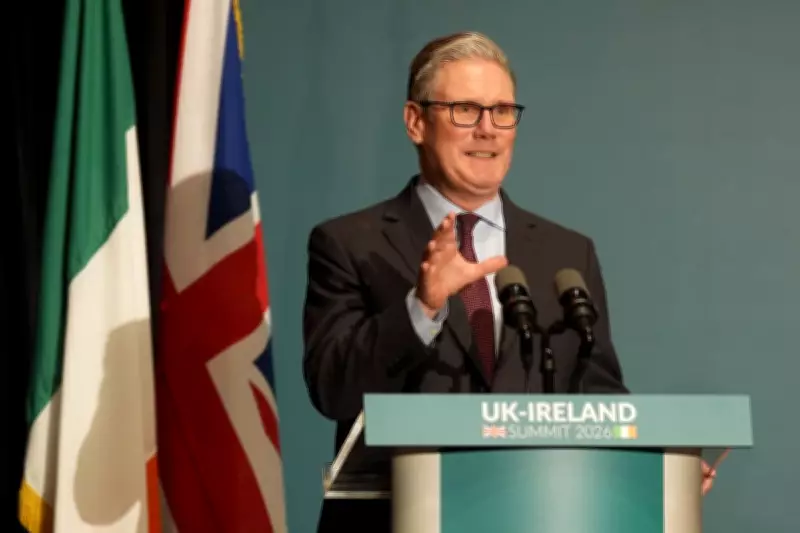
Prime Minister Sir Keir Starmer has firmly placed helping British households with the soaring cost of living as his top priority, following his apparent resistance to former US President Donald Trump's urgent calls for the deployment of warships to the Middle East. In a significant move, Sir Keir will announce a new subsidy scheme aimed at assisting the 1.5 million households across the UK that rely on heating oil, which has seen its price per litre double due to the ongoing conflict in the region.
Deflecting Trump's Warship Request
On Sunday, Sir Keir engaged in his first conversation with Mr Trump since the American leader publicly appealed for international naval support to secure the Strait of Hormuz, a critical global oil trade route currently blockaded by Iran. According to a Downing Street spokeswoman, the two leaders discussed the Middle East situation and emphasised the importance of reopening the strait to alleviate worldwide shipping disruptions that are driving up costs. However, the Prime Minister notably did not respond to Mr Trump's specific request for the UK and other affected nations to send warships to protect the passage.
Instead of committing to a military deployment, the British government is intensively exploring alternative measures to help reopen the route. Defence sources have indicated that the UK is considering sending mine-hunting drones to the region, amid concerns about an Iranian build-up of explosives in the narrow sea lane. This cautious approach reflects the government's focus on de-escalation and domestic economic stability.

Heating Oil Subsidy and Anti-Profiteering Measures
In a press conference scheduled for Monday, Sir Keir will declare that supporting working people through the cost-of-living crisis is his foremost instinct and priority. He is set to announce that Treasury officials, under Chancellor Rachel Reeves, have identified funding to subsidise heating oil costs, which are not protected by the standard energy price cap. The Prime Minister will state, "It's moments like this that tell you what a Government is about. My answer is clear. Whatever challenges lie ahead, this Government will always support working people."
Furthermore, Sir Keir will address alarming reports that some heating oil suppliers have cancelled orders only to subsequently jack up prices. He will issue a stern warning against profiteering, asserting, "I will not tolerate companies trying to exploit this crisis to make money from working people... if the companies have broken the law, there will be legal action." This follows a meeting last week between Chancellor Reeves, Energy Secretary Ed Miliband, and oil industry executives to discourage such practices.
Broader Regional and Humanitarian Context
The Prime Minister will insist that the quickest way to reduce cost-of-living pressures for the British public is through the de-escalation of the Middle East conflict. Meanwhile, Foreign Secretary Yvette Cooper has mobilised over £5 million in aid for humanitarian organisations in Lebanon, where a war between Israel and the militant group Hezbollah is escalating. Cooper expressed grave concern about the developing conflict and its humanitarian impact, highlighting the government's dual focus on domestic support and international humanitarian efforts.
As the UK navigates these complex geopolitical and economic challenges, Sir Keir's administration is balancing resistance to external military pressures with robust domestic interventions to shield households from the financial fallout of global instability.