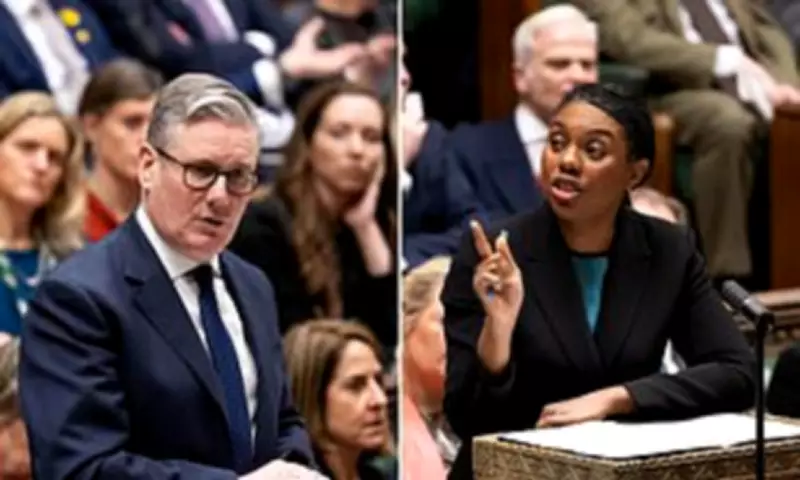
Prime Minister Keir Starmer has signalled a potential reversal of Labour's controversial fuel duty increase, following days of mounting political pressure and soaring pump prices linked to the Iran conflict. During a heated Prime Minister's Questions session on Wednesday, Sir Keir stated he would keep the tax rise "under review," paving the way for what could be his fifteenth major policy U-turn since taking office.
Political Pressure Intensifies Over Fuel Costs
Tory leader Kemi Badenoch delivered a forceful warning to the Prime Minister, cautioning him six times during the parliamentary session that now was not the moment to impose additional financial burdens on drivers. She argued that escalating fuel prices, exacerbated by tensions in Iran, were already causing significant distress for motorists across the nation.
"Some motorists are already having sleepless nights over spiralling pump prices," Ms Badenoch declared, accusing the government of treating drivers as "cash cows" to fund expanded benefits spending.

Chancellor's Ambiguous Stance
Chancellor Rachel Reeves presented a more nuanced position when questioned by MPs on the Commons Treasury committee. While expressing reluctance to use government funds to address market-driven price increases, she acknowledged broader economic concerns.
"I'm very loath to spend government money on something that the market should be doing itself," Ms Reeves stated, emphasizing the importance of competition and pricing transparency. However, she left room for potential policy adjustment, noting that trade disruption from the Iran crisis was "certainly not good for the British economy."
Fuel Price Crisis Deepens
The geopolitical situation has directly impacted global oil markets, with threats from Tehran restricting shipping through the strategically vital Strait of Hormuz. This crucial route handles substantial portions of the world's oil and gas supplies, and its disruption has contributed to significant price increases.
Analysis reveals alarming disparities in fuel costs across the United Kingdom:
- The difference between cheapest and most expensive forecourts has reached £35 per fill-up
- Standard diesel prices ranged from 121.58p to 186p per litre on Tuesday
- A 55-litre family car tank now costs up to £102.30 at premium stations
Motoring organizations have accused some retailers of exploiting the crisis through price gouging, as pump prices experience their most rapid increase since March 2022, shortly after Russia's invasion of Ukraine.
International Response and Market Stabilization
In response to the escalating situation, the International Energy Agency, which includes the United Kingdom among its 32 members, has agreed to release a record 400 million barrels of oil from strategic reserves. This coordinated effort aims to stabilize global markets after prices surged past $100 per barrel earlier this week.
Following discussions with G7 leaders, a government spokesman confirmed the Prime Minister's commitment to international cooperation, stating: "The Prime Minister reiterated the importance of working together to guarantee freedom of navigation in the Strait."
Political Landscape and Future Implications
The fuel duty increase, announced in last year's Budget, represents the first such hike in fifteen years. Scheduled to take effect this September, it would add approximately 5p per litre to fuel costs, increasing the price of a typical fill-up by more than £3.
Both Reform UK and the Conservative Party have pledged to scrap the proposed increase if they secure victory in the next general election, positioning fuel policy as a potential electoral battleground.
As the government continues to monitor the volatile situation, motorists face ongoing uncertainty about future fuel costs, while political tensions surrounding economic policy and international crises remain at the forefront of Westminster debate.