Prime Minister's Authority Erodes as Mandelson Scandal Intensifies
Support for Prime Minister Sir Keir Starmer continued to drain away dramatically on Wednesday as he faced direct challenges from several of his most senior Cabinet colleagues regarding his controversial handling of the escalating Peter Mandelson affair. The political crisis deepened significantly as the first Labour Member of Parliament called publicly for Sir Keir's resignation over the damaging vetting scandal that has completely consumed Westminster in recent days.
Cabinet Confrontation and Whitehall Deterioration
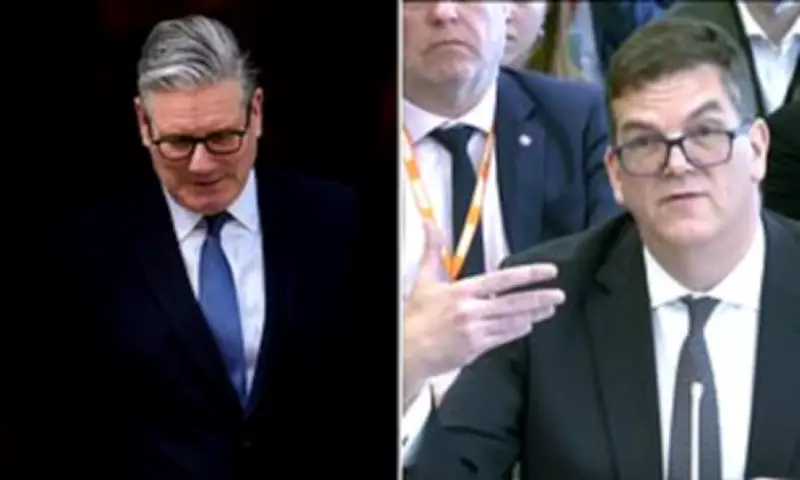
One of Sir Keir's chief political allies notably refused to endorse his judgment in making Sir Olly Robbins the designated fall guy, having sacked the Foreign Office mandarin mere hours after it emerged that he had approved Mandelson's sensitive security clearance against explicit official advice. Relations between the government and Whitehall deteriorated precipitously, with numerous former senior diplomats calling for Sir Olly's immediate reinstatement, while a prominent union leader declared that Sir Keir appeared to be "losing the ability to work effectively with the Civil Service" as he attempted to save his own political skin at the expense of others.
Following another tense Commons showdown during Prime Minister's Questions, there will be absolutely no let-up for the increasingly beleaguered Prime Minister on Thursday when Cabinet Office Permanent Secretary Cat Little faces rigorous questioning by the influential Foreign Affairs Committee, before which Sir Olly Robbins himself gave explosive evidence earlier this week.

Key Witnesses and Parliamentary Investigations
Next Tuesday, Sir Keir's former chief of staff, Morgan McSweeney—a known Mandelson protégé who was reportedly instrumental in securing his appointment as US ambassador—will also appear before the same parliamentary committee. Mr. McSweeney is expected to face intense questioning about allegations that, regarding Mandelson's security vetting, he told Foreign Office officials: "Just f***ing approve it." He is also anticipated to be interrogated about a street mugging last year during which he lost a mobile phone containing potentially revelatory messages exchanged with Peter Mandelson.
Within days, the Prime Minister could potentially face a formal Commons investigation into whether he deliberately misled MPs about this ongoing saga. Opposition MPs were actively discussing with Commons Speaker Sir Lindsay Hoyle on Wednesday night about arranging a possible vote to establish a special inquiry examining whether the Prime Minister told the truth when he claimed that "full due process" had been followed consistently throughout the Mandelson appointment process.
Contradictory Evidence and Cabinet Dissent
This parliamentary move could ultimately lead to a comprehensive investigation by the powerful Commons Privileges Committee, strikingly similar to the probe into claims that former Prime Minister Boris Johnson misled MPs over the Partygate scandal, which ultimately forced his resignation from office. The potential grounds for such an investigation widened considerably on Wednesday when Sir Keir assured the Commons that "no pressure whatsoever" had been applied to officials regarding Mandelson's controversial appointment.
This claim directly contradicted evidence presented by Sir Olly Robbins this week that his office and that of the Foreign Secretary had been "under constant pressure" to formally sign off on the appointment. A senior Whitehall source revealed that Number 10 officials were "panicking" about this unscripted comment, fearing the Prime Minister might soon have to issue a humiliating correction to the parliamentary record.
Senior Ministers Distance Themselves
The Daily Mail revealed on Wednesday that senior government ministers had begun publicly distancing themselves from Sir Keir's handling of the crisis. It subsequently emerged that several Cabinet members had confronted the Prime Minister directly during their weekly meeting around the Cabinet table in Downing Street on Tuesday as the scandal dominated their discussions.

The Prime Minister was explicitly warned that his dismissal of Sir Olly Robbins—which he again defended vigorously in the Commons on Wednesday—risked causing further severe damage to relations with Whitehall, making it substantially harder for the Labour government to enact its policy agenda and effectively killing off any lingering hopes of re-election. Deputy Prime Minister David Lammy reportedly emphasized that the government must avoid creating a damaging "them and us" mentality between ministers and officials, according to sources speaking to The Guardian.
Health Secretary and Chancellor Intervene
Three other senior Cabinet members, including Health Secretary Wes Streeting and Chancellor Rachel Reeves, are said to have urgently advised the Prime Minister against picking unnecessary fights with civil servants and instead to keep them "on side"—a suggestion Sir Keir reportedly agreed to consider. Home Secretary Shabana Mahmood reportedly questioned why Sir Keir had praised Sir Olly Robbins as an outstanding civil servant in recent days, having sacked him just last week for allegedly failing to inform him that Mandelson had initially failed his security vetting.
One political insider told the Financial Times that Ms. Mahmood had pointedly remarked: "If he's such a great public servant, I don't understand why he has been summarily sacked." Government sources insisted that no one had spoken out directly against Sir Olly's dismissal during the Cabinet meeting, and that the Prime Minister had been the first to acknowledge that the mandarin's error of judgment should not detract from the valuable work performed by civil servants generally.
Confidence Erodes Among Senior Figures
In a fresh political blow, one Cabinet minister anonymously admitted to having lost confidence in Sir Keir's leadership. Speaking on condition of anonymity, the senior figure told the i newspaper: "The situation is increasingly bleak. This is fundamentally a question for the entire Cabinet, and colleagues need to come to a collective view. I know precisely what my personal view already is."
During broadcast interviews, another Cabinet minister conspicuously failed to endorse the Prime Minister's judgment. Pat McFadden repeatedly refused to state whether he believed Sir Olly Robbins's sacking had been fair or justified. The Work and Pensions Secretary, traditionally considered a long-standing ally of Sir Keir, would only tell Times Radio: "As a loyal Cabinet member, I support the Prime Minister's decisions." He later added somewhat unconvincingly: "I remain confident that the Prime Minister continues to enjoy the strong support of the Cabinet as a whole."
First Labour MP Calls for Resignation
However, a Labour MP became the first to state publicly that Sir Keir should resign from office. Jonathan Brash, MP for Mandelson's former constituency of Hartlepool, told GB News: "I am completely fed up to the back teeth with this endless psychodrama in Westminster—the constant own goals and damaging controversies emanating from the very heart of this Government. It has genuinely reached the point where I believe that, as far as the Prime Minister is concerned, it's not a question of if he goes, but rather when."
He added emphatically: "Ultimately, we have reached a situation where I don't believe anyone reasonably expects the Prime Minister to lead our party successfully into the next general election." Another Labour MP, Dan Carden, stated that the Prime Minister had been wrong to sack Sir Olly Robbins, declaring: "Reflecting carefully on Olly Robbins's compelling evidence, his sacking for carrying out the political orders of Number 10 was plainly wrong, and its lasting impact will be to further damage the effective running of government—a responsibility that must be shared properly between ministers and civil servants."
Whitehall Backlash and Union Concerns
Polly Billington, vice-chairman of the Parliamentary Labour Party, notably refused to be drawn on whether she still trusted Sir Keir's political judgment. Sir Keir now faces the mounting fury of the so-called Whitehall "blob" for his decision to sack Sir Olly Robbins. Lord Butler, who served as the country's most senior civil servant for an entire decade, told the BBC: "I believe the Olly Robbins episode has already done a great deal of serious harm to the essential relationship between politicians and the permanent civil service."
He acknowledged that Sir Keir had made "some serious mistakes" in his handling of the affair, but added cautiously that a sudden change of prime minister "wouldn't necessarily be in the national interest at this particularly delicate moment." Another former Cabinet Secretary, Lord Sedwill, told The Times unequivocally: "The Prime Minister should immediately retract his damaging accusations against Olly Robbins and reinstate him to his former position without delay."
Union Leader and Political Opponents Weigh In
Dave Penman, general secretary of the FDA union representing senior mandarins, stated that the mood throughout the civil service was "absolutely devastating" and that senior officials now genuinely feared being "thrown ruthlessly under the bus whenever it becomes politically expedient to do so." Meanwhile, Nigel Farage vowed to finish off Sir Keir's troubled premiership by inflicting a heavy defeat in the upcoming local elections next month.
The Reform UK leader declared that the Mandelson "farce" would ultimately force the Prime Minister to resign by the end of May. He told a political rally in Barnsley that disillusioned Labour MPs would eventually desert their embattled leader, adding pointedly: "If you vote decisively for Reform, we will successfully get Starmer out of office, because they will have no choice but to ditch him entirely."