Keir Starmer Defies Trump's Criticism Over Iran Strikes
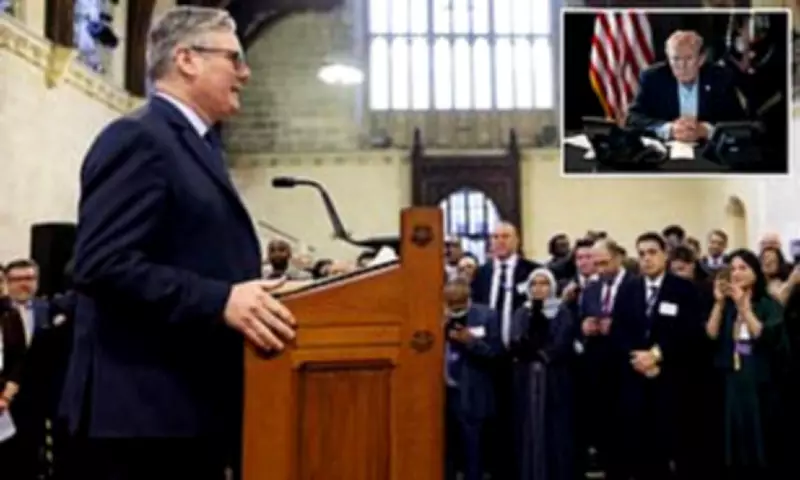
Prime Minister Keir Starmer has defiantly rejected brutal rebukes from Donald Trump, insisting the United Kingdom is "not involved" in offensive strikes against Iran. The premier made his latest attempt to distance Britain from the US president's military campaign during a speech to Muslims breaking the Ramadan fast in Westminster Hall last night.
Political Pressure and Diplomatic Tensions
Sir Keir, who has been desperately trying to shore up Labour's left flank following a humiliating by-election defeat inflicted by the Greens, also emphasized his determination to secure "justice" for Gaza. His comments came after Mr Trump fueled alarm about the state of the Special Relationship by condemning the British leader as "no Churchill."
The former US president was incensed by Sir Keir's initial refusal to permit American forces to use UK bases for joint attacks with Israel. That position was later partially reversed under significant pressure, with "defensive" actions now permitted. There had been warnings that the United States could simply use the bases regardless and dare Britain to intervene.

Military Response and Security Concerns
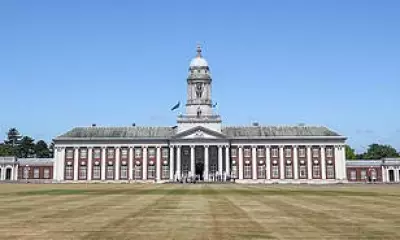
Sir Keir is also facing substantial backlash for failing to protect Britain's strategic base on Cyprus, which was struck by a suicide drone believed to have been fired by Tehran's proxies late on Sunday night. Embarrassingly, military minnow Greece will have warships positioned to protect RAF Akrotiri days before the Royal Navy arrives anywhere near the danger zone.
Emmanuel Macron's decision to order a French frigate to the region seemingly finally prompted Sir Keir into action yesterday. The Type 45 destroyer HMS Dragon is now being dispatched to Cyprus, along with helicopters equipped with counter-drone capabilities, though it will not arrive for several days.
Starmer's Ramadan Address and Policy Justification
Speaking at the Iftar event in Westminster Hall, Sir Keir stated: "The war in the Middle East did not begin last week... in Gaza most of all, we must not lose sight of them and the need for peace, justice and security in Palestine and Israel."
He added: "On Iran, I want to make clear the UK was not involved in the offensive strikes of the US and Israel, and that remains the case." Sir Keir stressed his opposition to the 2003 Iraq war and emphasized that Britain needed to "learn the lessons" from past conflicts.
However, he argued that Iran's "indiscriminate" response had shifted the balance toward allowing bases to be used for defensive purposes. "What we're now doing is allowing our bases to be used for the defensive purposes of preventing those attacks and protecting innocent lives, because that is what we need to do to support our Middle Eastern allies who have asked us for support," he explained.
Trump's Continued Criticism and Chagos Islands Controversy
Mr Trump responded last night: "I'm not happy with the UK. This is not Winston Churchill that we're dealing with. Spain has been very, very uncooperative and so has the UK. The second one is shocking but this is not the age of Churchill."
The former president specifically criticized Britain's handling of the Chagos Islands, stating: "The UK has been very, very uncooperative with that stupid island [Chagos]. That they gave away and took a 100-year lease... what's that all about?" His remarks will increase pressure on Sir Keir to abandon his controversial deal to transfer the British territory in the Indian Ocean to China ally Mauritius, then lease back the crucial military base on Diego Garcia for £35 billion.
Downing Street maintained: "The work on Diego Garcia and the deal continues – we have been very clear about its value as a military asset to both the UK and the US, and that position hasn't changed." Number 10 also asserted that the United States and United Kingdom remain "staunch allies."

Questions Over Military Preparedness
Serious questions have emerged about why British naval assets were not deployed to the Middle East sooner, given that America had been publicly moving its arsenal into position for some time. Former head of the Royal Navy, Admiral Lord West, declared that "Nelson will be spinning in his grave" over Britain's response and the state of the senior service, which has scarcely any active ships or submarines available to deploy to global crises.
Shadow Armed Forces minister Mark Francois criticized: "Britannia once 'ruled the waves' rather than being tied up in port. Why, given the US build-up has already been under way for weeks, are we only just sending one now? Why didn't we dispatch one to the Med a fortnight ago? It's like Nelson turning up to Trafalgar a week late."