Starmer Urges Ambitious UK-EU Partnership in Response to Global Instability
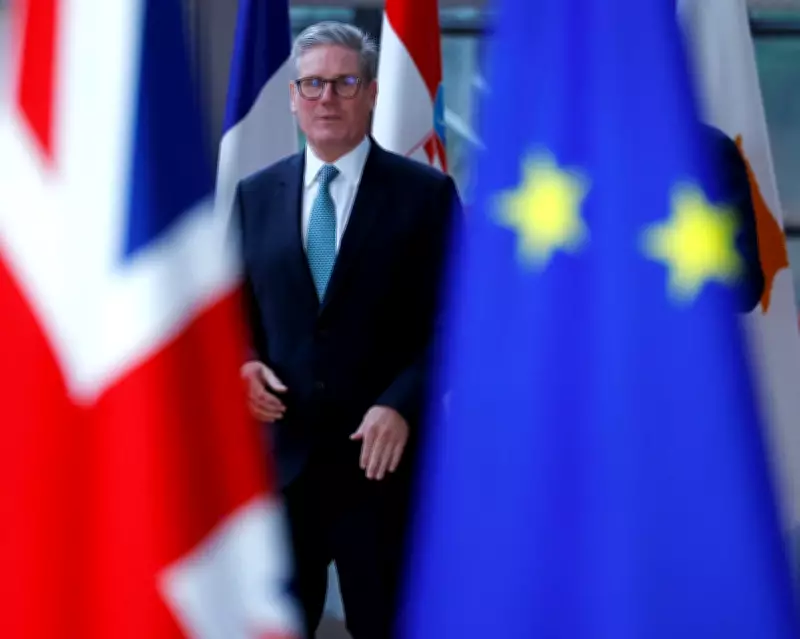
Keir Starmer has declared that the United Kingdom must pursue a more ambitious and deeper partnership with the European Union, emphasising the critical need to strengthen security and reduce living costs amidst a volatile global landscape. The Prime Minister's remarks come as former US President Donald Trump reiterates threats to withdraw the United States from NATO, describing the alliance as a "paper tiger" and criticising European nations for their stance on recent conflicts.
Defence and Economic Cooperation at the Forefront
At a press conference, Starmer outlined his vision for a renewed relationship with Europe, framing it as a "partnership for a dangerous world we must navigate together." He asserted that Brexit has inflicted "deep damage" on the UK economy and that repairing this harm is essential for the nation's long-term interests. A summit scheduled for early summer in Brussels aims to explore enhanced ties beyond the agreements made at last year's Lancaster House meeting.
Starmer stated, "The opportunities to strengthen our security and cut the cost of living are simply too big to ignore." He highlighted plans for closer economic cooperation, including potential alignment with the single market, and deeper security collaboration to bolster European defence capabilities. This pivot signals a strategic reorientation towards Europe and away from the United States, particularly in light of Trump's inflammatory comments and the ongoing US-Israel war with Iran.

Navigating Political Pressures and EU Negotiations
Despite pressure from Trump's NATO threats, Starmer vowed to act in the British national interest, reassuring citizens that the UK would not be "dragged in" to broader conflicts. He emphasised, "Whatever the pressure on me and others, whatever the noise, I'm going to act in the British national interest in the decisions that I make." However, negotiations with the EU face challenges, including stalled talks on youth mobility visas and slow progress on sanitary and phytosanitary deals.
Government sources indicate a desire to remove "Tory Brexit barriers" and pursue pragmatic partnerships, potentially mirroring Switzerland's dynamic alignment framework with the EU in sectors like food, energy, and health. While financial services remain off the table, areas such as medical devices and chemicals are under consideration for regulatory alignment to boost exports and economic growth.
Defence Initiatives and European Reactions
In defence, ministers are keen to discuss bolstering collective European security, especially given the UK's nuclear dependence on the US and France's independent deterrent. The European Union defence commissioner, Andrius Kubilius, has proposed a standing military force and a security council including the UK, but Cabinet Office sources note limited short-term opportunities for involvement.
EU diplomats have responded positively to Starmer's tone, with one embassy source praising the "very positive tones" on economic cooperation. However, experts like Anand Menon of Britain in a Changing Europe caution that the UK must provide specific proposals acceptable to the EU, as frustration grows over vague rhetoric. The Conservatives and Reform UK have criticised Starmer's speech, though the Tories refrained from opposing closer European deals outright.
As the UK prepares for the upcoming summit, the focus remains on forging a resilient partnership that addresses both security threats and economic challenges in an increasingly unpredictable world.