Prime Minister Announces Sweeping Political Donation Reforms
Prime Minister Sir Keir Starmer has confirmed that political parties will be prohibited from accepting donations in cryptocurrencies, implementing a key recommendation from a major review into foreign financial interference in UK politics. The government will simultaneously introduce a £100,000 annual cap on donations from British citizens living abroad who remain on the electoral register.
Immediate Legislative Action on Rycroft Recommendations
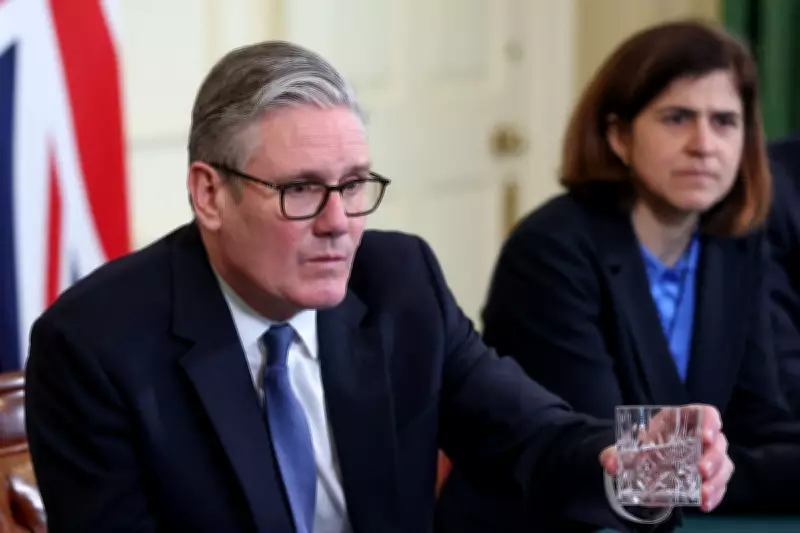
Addressing MPs during Prime Minister's Questions, Sir Keir stated that the Rycroft review had laid bare the "stark threats posed by illicit finance" to British democracy. The two primary recommendations from former top civil servant Philip Rycroft's investigation will be incorporated into pending legislation without delay, while the remaining fifteen proposals will undergo examination in the coming weeks.
"We will act decisively to protect our democracy," declared the Prime Minister. "That will include a moratorium on all political donations made through cryptocurrencies."

Targeting Reform UK and Cryptocurrency Concerns
Sir Keir specifically criticised Nigel Farage, leader of Reform UK, whose party has previously accepted cryptocurrency contributions. "I hope that will be welcomed across the House," he remarked. "There is only one party leader who has shown he will say anything, no matter how divisive, if he is paid to do so."
Mr Farage disregarded the pointed comment, instead challenging the Prime Minister on his record regarding small boat migrant crossings. Following the announcement, Reform UK MPs staged a walkout from the parliamentary session.
Retrospective Application and Regulatory Framework
Communities Secretary Steve Reed confirmed that the new cryptocurrency rules would be applied retrospectively to all such donations received from today. "This moratorium will remain in place until the Electoral Commission and this Parliament are satisfied there is sufficient regulation in place to ensure full confidence and transparency in donations being made in this way subject to parliamentary approval," he explained to MPs.
The measures address growing concerns that digital currencies could be exploited to obscure the origins of political funding. The ban will apply to cryptocurrency donations of any value, including those that would typically fall below existing reporting thresholds.
Overseas Donor Cap and Implementation Details
In line with Mr Rycroft's recommendations, donations from British citizens residing overseas will be limited to £100,000 per year. In practice, local electoral registration officers will need to determine who qualifies as normally resident in the UK when individuals maintain both domestic and foreign addresses.
Political parties will have thirty days to return any prohibited donations received during the interim period once the new rules take effect. Criminal penalties will apply thereafter. These regulations will govern donations for all UK elections, including upcoming English local elections, Scottish Parliament elections, and Senedd elections.
Broader Recommendations and Security Context
Mr Rycroft's comprehensive review also proposed banning foreign-funded online political advertisements and limiting corporate donors from contributing more than their post-tax profits to UK politics in any given year. He urged the government to demonstrate its commitment to countering threats by appointing a permanent secretary to lead these efforts.
The former civil servant emphasised that while attempts to use financial influence to infiltrate politics are not new, they have become "arguably more acute." He clarified that he was "not pressing the panic button" but rather "ringing the alarm bell" on the issue, calling for swift government action on his recommendations.
Heightened Fears of Foreign Interference
The publication of Mr Rycroft's report arrives amid escalating concerns about political meddling by hostile states. Commissioned in December following several high-profile cases of foreign attempts to influence UK politics, the review references the imprisonment of Reform's former Welsh leader Nathan Gill for accepting bribes to make pro-Russian statements.

Mr Rycroft wrote unequivocally that "foreign interference in our politics is real and persistent," identifying Russia, China, and Iran as primary sources of espionage targeting the UK. He even highlighted potential risks emanating from Donald Trump's United States, noting an "emerging willingness of foreign actors and private citizens, including from allies like the United States, to interfere in, and influence, politics abroad in pursuit of their own agenda."
Information Warfare and Democratic Resilience
The report warns that the UK is already experiencing "information warfare" with "worryingly weak" defences. Foreign actors are subverting social media debates "to exacerbate division and increase polarisation with a view simply to destroying the capacity of the UK to function as a well‑governed state."
Fake accounts and bots can disseminate large quantities of disinformation, representing "a new and relatively cheap way" for both state and non-state actors to interfere with other countries' democratic processes. Mr Rycroft cautioned that if persistent exposure to disinformation convinces even a small portion of the population that UK politics is irreparably broken, the risk increases that some may seek resolution through extra-political action.
Political Reactions and Legislative Process
Liberal Democrats Cabinet spokeswoman Lisa Smart stated: "Nathan Gill was happy to stuff his pockets with Russian bribes and it looks like Nigel Farage has shown no remorse whatsoever. Reform taking untraceable secretive crypto donations to fund their Trump-style politics here in the UK should never have been allowed."
Shadow communities secretary James Cleverly acknowledged that the Conservatives largely agree with the proposals but claimed they were being "rushed into" the Representation of the People Bill "without proper consultation, without proper scrutiny, without proper time."
Mr Reed defended the accelerated timeline, asserting it was "necessary to act at speed because of the gravity of the threats." He added: "We had to act quickly to bring forward the provisions, because we could not allow a window of opportunity to open which would allow malign and hostile actors to evade the intent that we're all seeking."