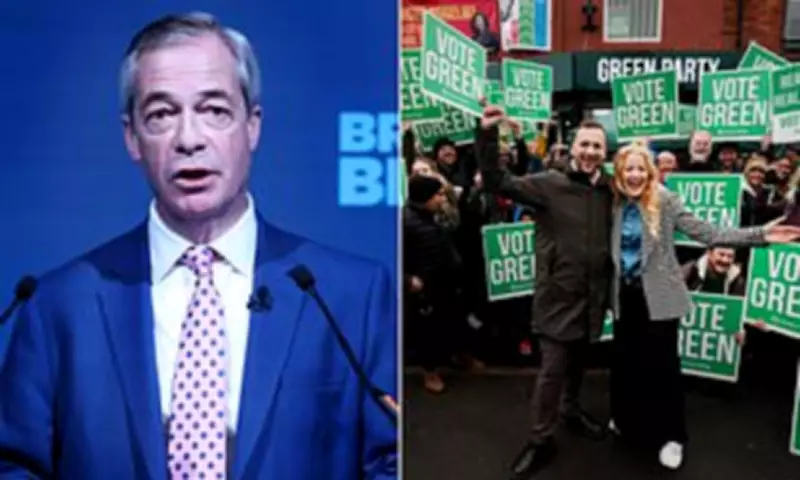
For years, political commentators have issued stark warnings about the looming threat of sectarian voting patterns emerging within British elections. Naturally, these cautionary voices were frequently dismissed by the political establishment, accused of peddling outrageous hyperbole and alarmism. My generation vividly remembers witnessing the violent horrors of sectarianism in Northern Ireland and the profound, lasting impact it inflicted upon communities. Most observers, however, believed such divisive politics could never take root in England. That prevailing assumption was shattered during the last general election, with the election of four pro-Gaza Independent MPs to Parliament. Suddenly, the political class was forced to confront a danger it had long ignored.
The Gorton and Denton By-Election: A Case Study
I am acutely aware that my forthcoming analysis will be viewed by some as mere sour grapes. Nevertheless, I present it because I believe it to be unequivocally true. The events of last Thursday's Gorton and Denton by-election provide the most glaring example to date of the consequences when we fail to address the impact of mass immigration and scrutinise the legitimacy of our electoral franchise. The Green Party's victory in this historically impregnable Labour stronghold was a political earthquake.
Let us be frank: when examining British-born voters alone, Reform UK actually won the Gorton and Denton by-election. The raw demographic data underpinning this result is stark and revealing. A full 10 per cent of the overall constituency's population was born in Pakistan. Delving deeper into the ward-level details exposes an even more extraordinary picture. The constituency comprises 14 wards; in ten of them, more than 20 per cent of residents were born abroad. In the ward of Longsight, this figure skyrockets to 48 per cent.

Campaign Focus and Democratic Implications
Throughout the campaign in Gorton, it was perfectly clear that the Green Party's platform was not centred on local issues—or even pressing national matters directly affecting the area—but was overwhelmingly focused on international issues surrounding Gaza. This represents a profound shift. There could be no greater demonstration of how decades of mass immigration, facilitated by both Labour and Conservative governments, has fundamentally altered the very nature and political atmosphere within many of Britain's cities.
However, the most astonishing issue, which remains scandalously under-discussed, is the entrenched right for Commonwealth citizens to vote in UK elections. Prior to last week, I had not fully comprehended the sheer scale and implications of what I believe constitutes a massive problem for the integrity of British politics. The law is clear: if an individual arrives from a Commonwealth nation like Pakistan and can prove ordinary residence at a property within a constituency, they are granted full voting rights through Commonwealth entitlements. Consequently, a significant portion of those who voted Green last Thursday are not British citizens. In my firm opinion, this is having a terrifying and corrosive effect on the British electoral process.
The Spectre of Sectarian Conflict
Sectarianism, in all its malignant forms, inevitably breeds deeper hostility and division. We witnessed this dangerous dynamic in Manchester itself last October with the murderous attack on a synagogue. Just last week, a man was arrested for allegedly entering a mosque in central Manchester carrying an axe—a worrying incident that appeared to be a tit-for-tat reprisal. If these international conflicts are allowed to be played out through the mechanism of British politics, the effect on our social cohesion and all our communities will be profoundly deleterious.

Addressing Electoral Integrity
How, then, do we tackle this mounting crisis? First, the time has come to confront the extraordinarily dishonest behaviour occurring in our polling stations. Democracy Volunteers, a respected group of independent election observers, reported that in 68 per cent of the polling stations they surveyed in Gorton and Denton, they witnessed so-called 'family voting'. This practice involves individuals entering voting booths with relatives, many of whom speak little or no English, and overseeing them to ensure they vote for the 'correct' candidate. This coercive practice must be outlawed without delay.
This troubling reality also raises serious questions about the level of coercion potentially applied to those receiving postal votes within some Muslim communities in Britain, where women often have far fewer rights than men. I personally doubt that these individuals can exercise their democratic right in genuine secrecy.
The Case for Ending Commonwealth Voting Rights
I believe we must go further. Secondly, the time has come to end the anachronistic practice of Commonwealth voting in UK elections. I acknowledge Britain's historic association with the Commonwealth. However, if we fail to act, the scenario witnessed in Gorton and Denton will inevitably repeat itself in numerous areas during the upcoming local elections in May. The implications are not confined to council seats; they are enormous for the next general election.
I am sorry, but surely it is only right and just that British citizens should be the sole arbiters who vote in British elections on British issues. Our democratic process should not be hijacked by international problems occurring thousands of miles away. The events of the past few weeks in Gorton and Denton have highlighted a deeply troubling direction for our democracy. After nearly three decades in politics, I can state honestly that this was one of the most disturbing by-elections I have ever witnessed. It must serve as a definitive wake-up call to the nation.