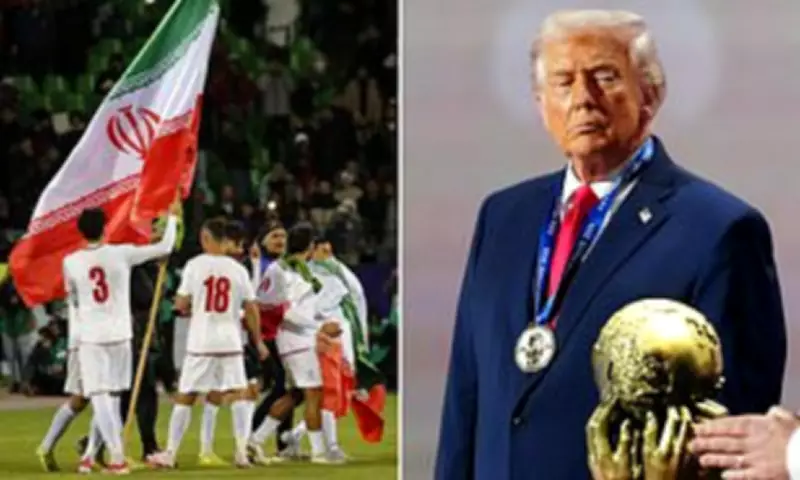
Iran has reportedly threatened to withdraw from this summer's World Cup following devastating US and Israeli airstrikes that killed the country's Supreme Leader, Ayatollah Ali Khamenei. The dramatic escalation occurred after a joint military operation on Saturday targeted major Iranian cities including the capital Tehran, following weeks of intensifying regional tensions.
Diplomatic Breakdown Preceded Military Action
The military intervention came shortly after unsuccessful negotiations between Iran and the United States regarding nuclear weapon restrictions in exchange for sanction relief that has long crippled the Iranian economy. These failed talks appear to have triggered the military response, though Democrats have criticized former President Donald Trump for taking action without congressional authorization.
White House spokesperson Karoline Leavitt stated that the administration had briefed several Republican and Democratic congressional leaders in advance of the operation. The conflict has created immediate repercussions in the sporting world, with Iran's football leadership expressing serious doubts about their World Cup participation.

Football Federation President Expresses Grave Concerns
Mehdi Taj, president of the Iranian Football Federation, cast significant doubt over Iran's participation in the upcoming summer tournament during an appearance on Iranian television network 'Tehran'. According to reports from Marca, Taj stated: 'With what happened today and with that attack by the United States, it is unlikely that we can look forward to the cup.'
He added that 'the sports chiefs are the ones who must decide on that,' indicating that final decisions would come from higher authorities within Iran's sporting hierarchy. The warning comes just 107 days before Iran's national team is scheduled to begin their tournament against New Zealand at SoFi Stadium in Los Angeles.
Potential World Cup Showdown Creates Additional Tension
Should Iran choose to participate despite the political crisis, they could potentially face the United States at the World Cup in Dallas on July 3 if both teams finish second in their respective groups. This possible sporting confrontation adds another layer of complexity to an already volatile international situation.
Iran secured their place in a fourth successive World Cup by finishing atop Group A in Asian qualifying, establishing themselves as one of the strongest teams in the AFC region. They are currently drawn in Group G and scheduled to play Belgium and New Zealand in Los Angeles, with a final group stage fixture against Egypt in Seattle.
FIFA Scrambles to Manage Fallout
FIFA officials are now reportedly scrambling to manage the political fallout just months before the tournament begins across the United States, Canada, and Mexico. Speaking at an IFAB meeting in Wales on Saturday, FIFA general secretary Mattias Grafstrom addressed the developing situation cautiously.
'I read the news the same way you did this morning,' Grafstrom stated. 'We had a meeting today and it would be premature to comment on that in detail,' he continued, as officials weigh up safety considerations for the upcoming summer event. 'But of course we will monitor the developments around all issues around the world.'
Grafstrom emphasized FIFA's commitment to tournament stability, noting: 'We had a final draw in Washington where all teams participated and of course our focus is to have a safe World Cup with everybody participating.'
Logistical Plans in Jeopardy
The Iranian team was slated to be based at the Kino Sports Complex in Tucson, Arizona, for the duration of the World Cup event, but those logistical plans are now in significant jeopardy. The team's preparation schedule and participation arrangements have been thrown into uncertainty by the geopolitical developments.

Regional Escalation Follows Strike
The latest military intervention comes months after thousands of Iranians were reportedly killed by Iran's authoritarian regime in efforts to quell uprisings and protests against Khamenei earlier this year. On Saturday morning, Trump took to Truth Social to confirm Khamenei's death, writing: 'Khamenei, one of the most evil people in History, is dead. This is not only Justice for the people of Iran, but for all Great Americans, and those people from many Countries throughout the World.'
Trump characterized the development as 'the single greatest chance for the Iranian people to take back their Country.' However, Khamenei's death does not guarantee regime change in Iran, and Tehran has responded by launching its own attacks across the Middle East region.
Israeli officials stated that the initial strikes targeted three locations in Tehran where intelligence had indicated top Iranian officials were gathered. The military action represents a significant escalation in regional tensions with immediate consequences extending into international sports diplomacy.