Scottish Labour Leader Sarwar Denounces Reform UK Deal Claims as 'Utter Nonsense'
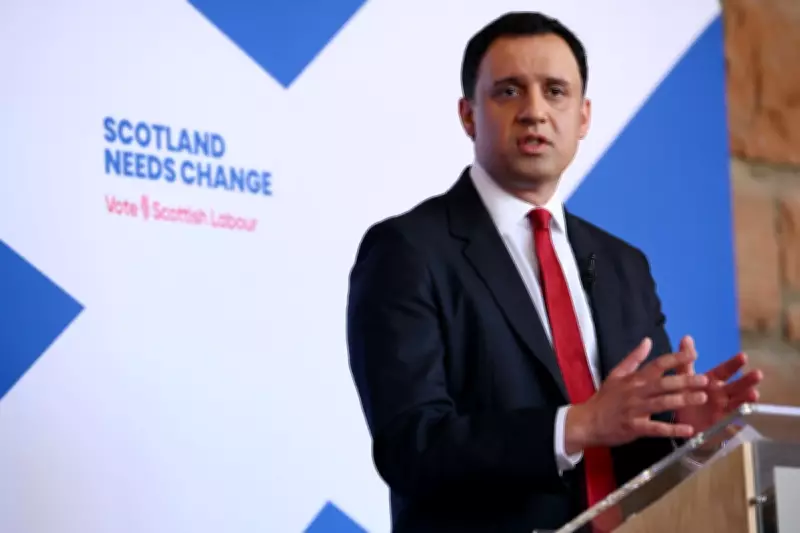
Scottish Labour leader Anas Sarwar has launched a fierce rebuttal against allegations from Reform UK that the two parties could form a deal to remove the SNP from power in the upcoming Holyrood election. Sarwar dismissed the claims as "utter nonsense" and condemned what he described as the "poisonous" politics of Nigel Farage's party.
Reform UK's Allegations Spark Political Firestorm
The controversy erupted after Reform UK's Scottish leader, Malcolm Offord, a former Conservative UK government minister, claimed during a televised election debate that Sarwar had approached him about potential cooperation. Offord alleged that Sarwar came "bouncing up to me in Paisley Town Hall" and suggested "we need to work together, Reform and Labour, to remove the SNP."
SNP campaign director Angus Robertson quickly seized on the claims, asserting that "Anas Sarwar is in cahoots with Nigel Farage and would happily work with Reform if it gave him a whiff of power." Robertson added that this demonstrated "just how desperate Sarwar and Labour are" in their bid to challenge SNP dominance.

Sarwar's Forceful Denial and Counterattack
Campaigning in Wishaw, North Lanarkshire, Sarwar delivered a blistering response to the allegations. "I am desperately keen to change the government in this country, I am desperately keen to change the first minister," he told the Press Association. "But I am also desperately keen that we utterly reject the poison of Malcolm Offord, Nigel Farage and Reform."
The Scottish Labour leader expressed both surprise and anger at Offord's claims, stating he was "visibly angry on the stage" because the allegations were completely baseless. He turned his fire directly on Offord, branding him "a chronic liar" and "a pathetic, poisonous, odious, little man."
Reform UK's Campaign Tactics Under Scrutiny
Sarwar highlighted what he called Reform UK's "poisonous" campaign tactics, citing specific advertisements that he claimed questioned his loyalty to Scotland and another showing a small boat while alleging Glasgow had been "overrun" by migrants. "These showed Reform were not people I would want to work with, be in cahoots with, do a deal with," Sarwar emphasized.
The Labour leader made his position unequivocally clear: "Let me be unequivocal, no deals, no stitch-ups, no coalitions. Nothing with Reform before the election, after the election. These are a poisonous group of people that want to divide our country."
Other Political Leaders Weigh In
First Minister John Swinney, speaking during a visit to Maybole, South Ayrshire, told reporters: "I think it's up to Reform and Labour to explain themselves, because a charge was made last night." He pointed to media reports suggesting possible cooperation between the parties, including a Scotsman newspaper article last month quoting a senior Labour source about Reform MSPs potentially helping Sarwar into Bute House.
Swinney offered his own assurance: "The best way to lock Reform out of any influence in our governance is to elect a majority SNP government. I want to be crystal clear, I will have absolutely nothing to do with co-operating with Reform."
Scottish Greens co-leader Gillian Mackay joined the chorus of condemnation, stating her party would "never do any kind of deal with Reform" and calling on other parties to make similar commitments. "Any government that relied on Reform to get into power would be a disaster for Scotland," she warned, adding that Labour supporters would be "shocked" if their party engaged with Reform.
Sarwar's Vision for Scotland's Future
Amid the political controversy, Sarwar outlined his positive agenda for Scotland, stating: "I want us to reject the poison of Reform but I also want us to have bigger ambitions for our great country, and that means fixing the NHS, it means making life more affordable, it means building a better future for our young people."

Addressing voters directly, he framed the election as "an opportunity to reject Reform, beat the SNP and to change Scotland" with Scottish Labour as the only viable route to achieve this transformation. The Labour leader concluded with a call for higher political standards: "Our politics should be better than this."