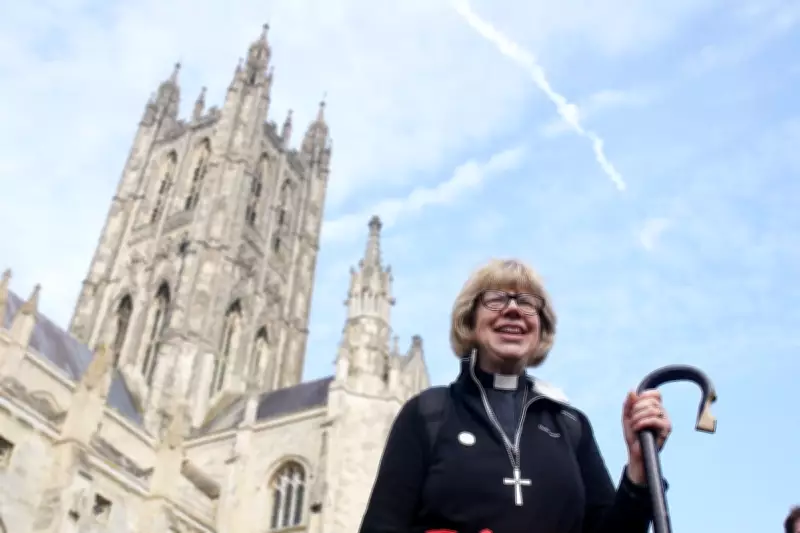
Sarah Mullally Makes History as First Female Archbishop of Canterbury
The Church of England is poised to enter a new era with the historic enthronement of Dame Sarah Mullally as the first female Archbishop of Canterbury. This landmark ceremony, taking place at Canterbury Cathedral on Wednesday, marks a significant milestone in the church's long history, breaking centuries of tradition.
A Trailblazing Appointment
Dame Sarah Mullally, a former chief nursing officer for England and bishop of London, was appointed to this prestigious role in October. She succeeds Justin Welby, who resigned in 2024 following controversies related to church safeguarding failures. Although Dame Sarah legally became archbishop during a service at St Paul's Cathedral in January, the Canterbury ceremony symbolically inaugurates her ministry as the 106th Archbishop of Canterbury.
In her remarks, Dame Sarah expressed gratitude to "all women that have gone before me", acknowledging the path paved by previous generations. Her background in healthcare and leadership positions her uniquely to guide the church through contemporary challenges.

The Historic Ceremony Details
The enthronement service follows Dame Sarah's six-day pilgrimage from London to Canterbury, which concluded on Sunday. The ceremony begins with her knocking on the cathedral's West Door, where she will be welcomed by children from John Wallis Academy in Ashford.
During the 90-minute service, several traditional elements will be observed with modern adaptations:
- A mandate from King Charles III will authorize the installation, though the monarch will not attend in person.
- Dame Sarah will renew her ministerial vows and commitments.
- For the first time, the oath will be sworn on the St John's Bible, a hand-illuminated Benedictine Bible gifted to the cathedral in 2023, replacing the fragile Augustine Gospels used previously.
- She will be seated in two significant chairs: first the Diocesan cathedra from 1844, then the ancient Chair of St Augustine dating from the early 13th century.
Distinguished Guests and Global Representation
Approximately 2,000 guests will witness this historic event, including prominent figures from across British society and the global Anglican community. The Prince and Princess of Wales will attend, with Prince William representing his father as future Supreme Governor of the Church of England.
Political leaders including Prime Minister Sir Keir Starmer and Conservative party leader Kemi Badenoch will be present. The ceremony also features broad international representation, with 32 out of 42 Anglican Communion provinces expected to send delegates.
Other notable attendees include:
- Bishops and clergy from throughout the Church of England
- Faith leaders such as Cardinal Kurt Koch representing the Pope, Imam Qari Asim from the British Muslim Network, and Phil Rosenberg from the Board of Deputies of British Jews
- Charity representatives and healthcare workers from Canterbury hospitals and hospices
- Schoolchildren from local communities
Symbolic and Cultural Elements
The service incorporates several meaningful touches reflecting both tradition and modernity:

- Multilingual components celebrating Anglican diversity, including singing in Urdu, a Gospel reading in Spanish, and a prayer in Zambia's Bemba language.
- Five of the "Africa Six" – pioneering female Anglican bishops from Africa – will process in ceremonial robes.
- The musical program honors female contributions to church music, featuring works from Renaissance to contemporary composers, including Joanna Marsh's anthem All Shall Be Well.
- Dame Sarah's cope (ceremonial cloak) includes a clasp made from her NHS nurse's belt buckle, connecting her past service to her new role.
- She will receive the same staff used by Geoffrey Fisher, the last bishop of London to become Archbishop of Canterbury.
This enthronement not only marks a personal achievement for Dame Sarah Mullally but represents a transformative moment for the Church of England, signaling both continuity with tradition and progress toward greater inclusivity. The ceremony's blend of ancient rituals and contemporary symbolism reflects the church's ongoing evolution in the 21st century.