Rubio's Approval Rating Declines Following US Military Action in Iran
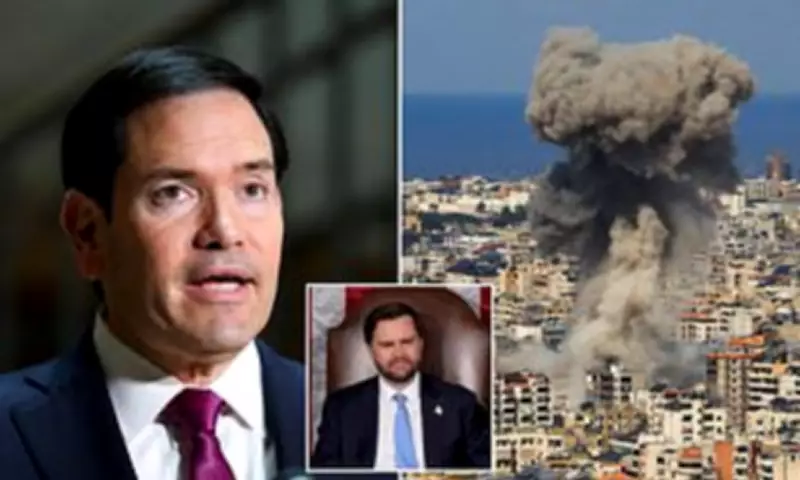
Secretary of State Marco Rubio's honeymoon period as a star member of Donald Trump's cabinet appears to be drawing to a close, with his net approval numbers taking a significant hit in the wake of recent US strikes in Iran. According to an exclusive new Daily Mail/JL Partners poll conducted after the military operations began, Rubio's approval rating has fallen from a February high of 40 percent to just 36 percent as of Friday.
Polling Data Reveals Shifting Public Sentiment
The survey of 1,020 registered voters, conducted between March 2 and March 3 with a 3.1 percent margin of error, shows that 34 percent of respondents now disapprove of Rubio's performance. An additional 17 percent offered a neutral position, while another 14 percent remained unsure about their assessment of the Secretary of State.
This marks a notable reversal from Rubio's previously strong standing with the American public. Prior to the conflict with Iran, Rubio had earned widespread support from voters as he took on additional responsibilities beyond his role as Secretary of State, including serving as the president's national security advisor.

Presidential Praise Contrasts with Declining Numbers
President Trump had specifically recognized Rubio's service during his recent State of the Union address, earning the Secretary of State a standing ovation from the rest of the cabinet. 'People like you!' Trump remarked to Rubio during the event. 'You have done a great job, great Secretary of State. I think he'll go down as the best ever.'
Despite this presidential endorsement, the military action in Iran has affected public perception of the entire administration. President Trump's own approval rating now stands at 44 percent, down four points since the conflict began and marking the lowest rating recorded in Daily Mail tracking to date.
Administration Figures Defend Military Decisions
Both Rubio and Vice President JD Vance have publicly defended Trump's decision to launch military strikes against Iran, which began with punishing air operations early Saturday morning. Vance repeated on Fox News on Monday that the mission was part of the president's efforts to prevent Iran from obtaining nuclear weapons, even after last June's 12-day conflict aimed at destroying Iranian nuclear enrichment facilities.
Rubio told reporters that the military strikes represented preemptive action designed to prevent United States casualties in the Middle East. 'We knew that there was going to be an Israeli action. We knew that that would precipitate an attack against American forces,' Rubio explained. 'And we knew that if we didn't preemptively go after them before they launched those attacks, we would suffer higher casualties.'
Political Fallout and Future Implications
Critics of Trump's Iran policy have seized on Rubio's comments as evidence that the United States was drawn into the conflict by Israeli Prime Minister Netanyahu's actions. Rubio has since clarified his position, insisting that the military strikes 'had to happen' and that the president made the decision to attack first.
'That's what I said yesterday, and you guys need to play it,' Rubio told reporters. 'If you're going to play these statements, you need to play the whole statement, not flip it to reach a narrative that you want to.'
Despite Rubio's defense of administration policy, voters continue to view Vice President Vance as the most influential figure in Trump's inner circle. Prior to the conflict, 19 percent of respondents identified Vance as the most influential member of Trump's team, with Rubio placing second at 12 percent, followed by Donald Trump Jr. and Steven Miller tied for third place.
Vance also maintains a commanding lead in early speculation about the 2028 Republican presidential nomination, with 53 percent support among potential candidates. Rubio occupies second place with 14 percent support, followed by Ron DeSantis at a distant third with seven percent and Senator Ted Cruz at three percent.

Currently, Vice President Vance holds a 37 percent approval rating among all voters, remaining slightly more popular than Rubio overall. Among Republican voters specifically, Vance enjoys an 85 percent approval rating, while Rubio maintains an 82 percent approval rating within his own party.