



Romford's Reform Referendum: Inside the Borough That Could 'Brexit from London'
After their MP pledged a vote on whether to remain part of the capital, Bryony Gooch and Shaheena Uddin meet Havering locals, who are deeply divided on the idea. Saturday 07 March 2026 13:05 GMT.
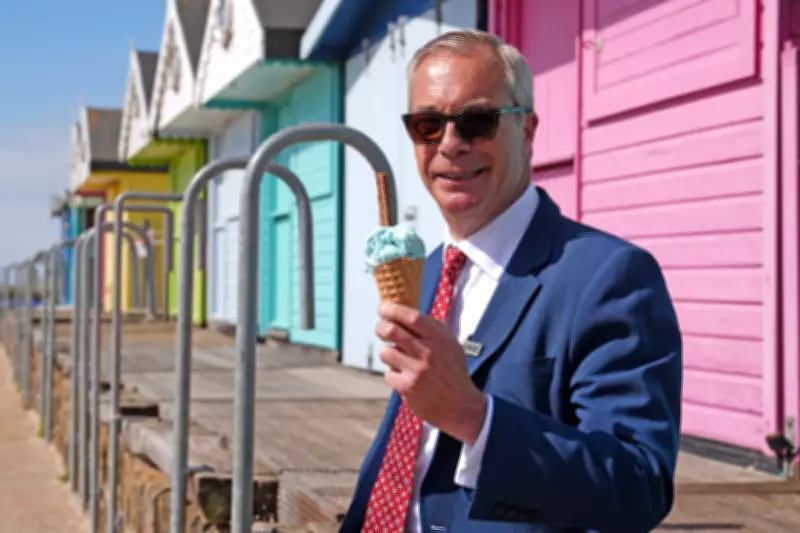
Tory defector Andrew Rosindell received rapturous applause when he promised his Romford constituents a referendum to leave Greater London and rejoin Essex at a Reform UK rally. Just 20 minutes from central London, Romford, in the borough of Havering, was part of Essex until 1965—a decision that still sparks debate nearly five decades later.
'You Will Know in Your Heart That Romford Is Essex'
"You will know in your heart that Romford is Essex," Rosindell declared. "Yet decisions affecting your streets, your transport, your policing, your housing are decided miles away by a Greater London Authority that neither understands our community nor represents the people of this area."
His argument for leaving the capital sounded eerily similar to points made during the Brexit referendum, where almost 70 percent of his constituents voted to leave the European Union.
Romford resident Colin, who has lived in Havering for 45 years, identifies the town as part of London but sees no issue with rejoining Essex—so long as he doesn't lose the benefits of being in the capital.
Local Perspectives on the Proposal
"As long as we've got the benefits of coming out of Ulez, but not losing the Freedom Bus pass, I think it'd be a good job, yeah," Colin says. While central London bustles with workers on a Tuesday morning, Romford is quieter, with pensioners and pram pushers strolling around its multiple shopping centres or stopping in greasy spoon cafes on the high street.
Other parts of east London are now hotspots for trendy pubs and coffee shops associated with gentrification, but Havering clings to remnants of old east London—there's still a thriving pie and mash shop in central Romford, an increasingly rare sight across the city.
Havering is also the second-least diverse borough in the capital. Nearby Newham and Redbridge both have non-white populations exceeding 60 percent, according to the 2021 Census, while Havering's non-white population stands at just 24.7 percent.
Concerns About Decline and Ulez
The area is known for its bustling market on Wednesdays, Fridays, and Saturdays, although licensed traders have gradually decreased over the years. Linda, 71, a Havering resident for 60 years, said: "It's like a ghost town sometimes, and even the market—how busy it used to be here. My goodness, it's gone downhill."
"If you come up tomorrow on a market day, the stalls aren't like they used to be," she added. "The difference is the people, the shops—the towns are just shutting down."
Linda considers Romford part of Essex and was particularly critical of the Ultra Low Emission Zone (Ulez), which prompted backlash after Mayor Sadiq Khan extended it to the M25 boundary in 2023. "When he brought that Ulez thing, we had to get rid of our car," she says. "So that turned us against him."
Opposition and Brexit Parallels
Not all residents support a return to Essex. Hope Cafe worker Mark said: "I hope we don't leave London because we get loads out of it. I think it's just people still wishing it was the 1970s."
"Romford voted quite overwhelmingly for Brexit, and like Brexit, everyone voted for it, and then afterwards people are surprised it didn't work out," they added. "It strikes me as the same kind of populism, but targeted more locally, which is kind of sad really."
Robert Wilkinson, a Romford resident for 13 years and pro-Brexit voter, doesn't think the borough should leave London. "This idea of a referendum to separate ourselves from London doesn't make much sense to me," he said. "Being part of London is an important part of what Havering is."
Business and Practical Implications
Ediz Sahin, manager of Cafe Bueno on the High Street, thought leaving might boost local businesses. "I think it might be a good thing to escape the taxes from London," he said. "If it reduces business rates, good, why not? If it helps reduce Ulez, I know for sure there will be more footfall in Romford."
Rosindell told The Independent that if Havering left the Greater London Authority and became a unitary authority, the borough could buy into services like the Freedom Pass. "We would only pay for what we get," he said. "We wouldn't be paying exorbitant sums for it to be used in Lambeth and Southwark. We would buy the service we require, so we'd no longer be subsidising inner London."
Political Reactions and Analysis
Reflecting on Brexit parallels, Rosindell said: "Some people have called it 'Hexit,' which is 'Havering Exit.' In many ways, it's different than the EU, but there are parallels because we're part of a Greater London Authority that's opaque. We don't have any real say over it. The Greater London Assembly is a waste of time; they have no power."
Keith Darvill, lead councillor for Havering's Labour group and former MP for Upminster, called the idea "nonsense." "It can't just happen overnight. There would have to be a change in legislation," he said. On retaining the Freedom Pass, he added: "I don't think Rosindell understands how that works. That's an agreement between London councils collectively. Each borough pays into a pool, so you'd need cooperation from all other London boroughs."
He noted that the government, London councils, and Havering Council—which no party has controlled since 2014—would have to approve a referendum. "I don't know anyone, even in the local Conservative Party, that would want to do that."
Mayoral Response and Expert Insight
A spokesperson for Mayor Sadiq Khan said: "Sadiq was re-elected for a historic third term as Mayor for all Londoners and has vowed to work tirelessly for each borough, including Havering. Residents benefit from the 60+ Oyster card and free school meals. The Mayor will continue to work closely with local government to build a fairer, safer, greener London for everyone."
Professor Colin Copus, visiting fellow at local politics think-tank Localis, described Havering leaving Greater London as "unusual," given local government's trend toward expansion. "I can already see 'Roxit—take back control from Sadiq Khan' being a slogan," he joked.
"The difference from Brexit is that once we left the EU, the idea was EU rules would no longer apply—an idea soon dumped by governments. If you create another council, it's still bound by all legislation controlling local government."
But he acknowledged merit in bringing government closer to communities. "We've been conned by the technocratic idea that bigger is always better, more efficient, and cheaper—it simply isn't. From my research, anything that takes local government closer to people, based on genuine localities, is better than huge unitary councils nobody identifies with."