Republican Leaders Agree to Advance Funding Deal to End DHS Shutdown
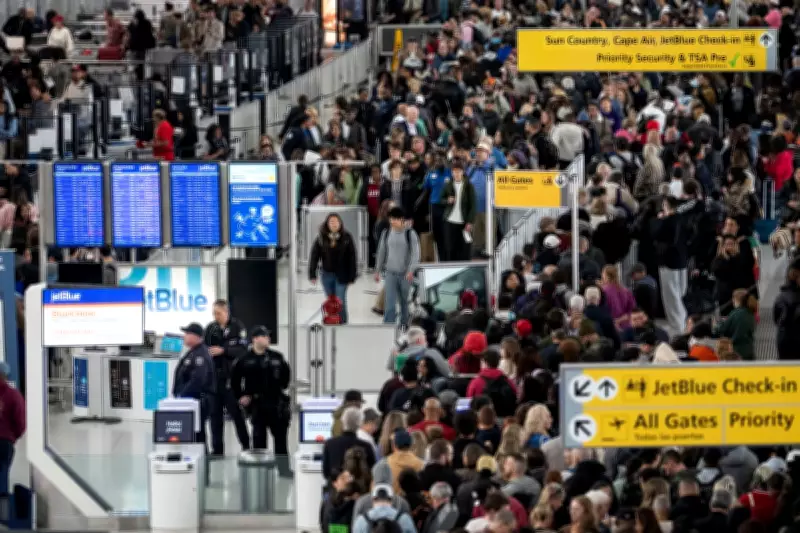
An end to the partial shutdown of the Department of Homeland Security (DHS) may be imminent, as Congressional Republican leaders have agreed to advance legislation that would fund most of the agency's operations, with the notable exception of immigration enforcement activities. This move could conclude the longest funding lapse in US history, which has caused significant disruptions, including extended security lines at airports nationwide.
Impact on Airport Security and TSA Employees
The shutdown, which began last month, led to severe delays at airports as Transportation Security Administration (TSA) employees, a subagency of DHS, faced weeks without pay, resulting in many quitting or calling out of work. Wait times at security checkpoints stretched for hours, creating chaos for travelers. Earlier this week, wait times eased after former President Donald Trump signed an order for TSA employees to receive their paychecks, providing temporary relief.
Details of the Funding Agreement
In a joint statement, House Speaker Mike Johnson and Senate Majority Leader John Thune announced they would move to pass a measure that was unanimously approved by the Senate last week. This bill would fund DHS while excluding money for Immigration and Customs Enforcement (ICE) and certain parts of Customs and Border Protection. Additionally, they abandoned a House Republican push to fund the entire DHS for 60 days, which Senate Democrats had vowed to block with a filibuster.

Democrats have opposed funding ICE and related agencies involved in Trump's mass deportation campaign unless new rules are implemented, such as banning agents from wearing masks and requiring judicial warrants before entering residences. To circumvent these objections, Thune and Johnson endorsed a plan from Senate Budget Committee Chair Lindsey Graham to use the budget reconciliation procedure, allowing a measure funding ICE to pass with Republican votes alone.
Political Reactions and Negotiations
Republican leaders expressed appreciation for Graham's initiative, stating it would ensure border security and immigration enforcement funding for the remainder of the Trump administration, insulating these agencies from future Democratic attempts to defund them. However, it remains unclear when the Senate and House, currently on recess, will pass the DHS funding bill. Johnson and Thune hope to resolve the matter "in the coming days," potentially during brief ceremonial sessions scheduled for Thursday morning.
For Democrats, the outcome is mixed. They initially held up the annual appropriations bill for DHS in January after immigration agents killed two US citizens during a crackdown in Minneapolis. Their demand for reforms led to the partial shutdown in mid-February, but ICE continued operations using funds from the One Big Beautiful Bill Act (Obbba). The new funding measure lacks the reforms Democrats sought.
In a statement, Democratic Senate Minority Leader Chuck Schumer accused Republicans of prolonging the shutdown due to internal divisions, referencing Johnson's earlier rejection of the Senate bill under pressure from the rightwing House Freedom Caucus. Schumer emphasized that Democrats remained united in their stance to fund critical security without providing a blank check for ICE enforcement.
House Minority Leader Hakeem Jeffries signaled Democratic support for the Senate bill, stating that Republicans have realized Democrats will not compromise on their principles. He called for paying TSA agents, ending airport chaos, and fully funding DHS components unrelated to Trump's deportation efforts.
Future Challenges and Broader Implications
Republicans now face weeks of tough negotiations over the reconciliation bill, which would be the second such measure passed since Trump's return to the White House, following the Obbba. Graham indicated that the bill might also include funding for conflicts with Iran and elements of the Save America Act, introducing new voter identification requirements. This development highlights ongoing partisan tensions and the complexities of policymaking in a divided government.