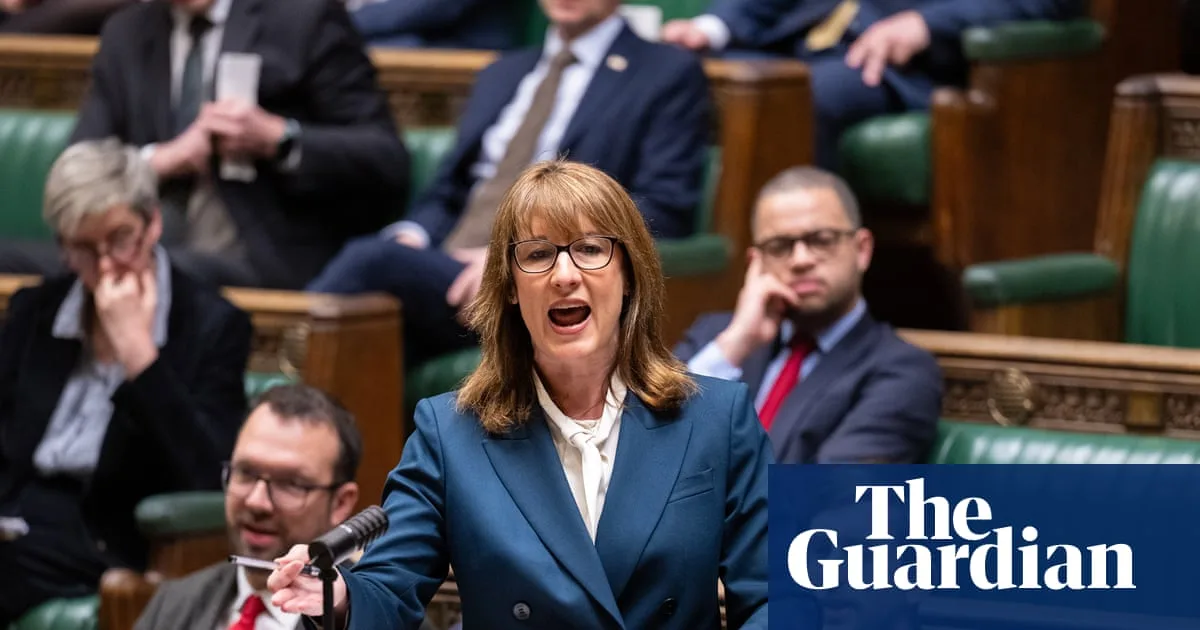
Chancellor Rachel Reeves Faces New Tax Hike Pressure Amid Middle East Crisis
Reeves Under Pressure for More Tax Hikes as Middle East Crisis Bites

Chancellor Rachel Reeves Confronts Fresh Tax Hike Demands as Middle East Unrest Escalates

Chancellor Rachel Reeves could be compelled to implement additional tax increases as the escalating crisis in the Middle East threatens to inflict further damage on the UK economy. The Chancellor has already imposed a staggering £75 billion per year in extra taxes on British citizens, with yesterday's Spring Statement confirming that the overall tax burden is climbing toward an unprecedented record high.

Spiralling Welfare Costs and Fiscal Vulnerabilities

A significant portion of this increased taxation has been allocated to cover rapidly rising welfare expenditures. Labour MPs have pressured the government into abandoning efforts to control spending and scrap the controversial two-child benefits cap. Although Chancellor Reeves publicly celebrated improvements in the government's financial position, the Treasury's independent Office for Budget Responsibility (OBR) watchdog clarified that she is balancing the books primarily through a tax windfall generated by surging stock markets.

The OBR issued a stark warning that a 35 percent market correction would add £26 billion to public borrowing, effectively eliminating the Chancellor's crucial 'headroom' for meeting her primary fiscal targets. The FTSE 100 has already surrendered approximately one month of gains in recent days following global market panic triggered by Donald Trump's military strikes against Iran.

Record Tax Burden and Economic Consequences

Documents released alongside Chancellor Reeves' Spring Statement revealed that even before the current Middle East crisis, the UK's tax burden was projected to reach an unprecedented 38.5 percent of GDP by 2030-31. This figure exceeds the previous November forecast of 38.3 percent from the fiscal watchdog. Approximately one million pensions now risk being drawn into the tax system due to the 'stealth raid' created by prolonged freezing of tax thresholds.

The OBR expressed serious concerns that the government is becoming overly dependent on a narrow base of higher-income taxpayers for the majority of revenue, while the threshold freeze strategy remains highly sensitive to fluctuations in inflation and earnings. David Miles of the OBR confirmed this morning that the watchdog is investigating the extent of economic damage caused by elevated taxation levels.

Miles told BBC Radio 4's Today programme: "It's extremely challenging to increase taxes at a faster rate than GDP growth—which is essentially required to restore fiscal stability—without negatively impacting incentives to invest, work, and save." He added that the OBR already believes high taxation is "somewhat eroding the productive capacity of the UK" and that such fiscal policies likely have "negative knock-on effects on employment and the economy's productive potential."

Middle East Crisis Compounds Economic Pressures

Paul Dales, chief UK economist at Capital Economics, noted that while OBR forecasts superficially provided the Chancellor with "a bit more money to play with" for the autumn Budget, "that could be completely overwhelmed by events in the Middle East." He cautioned that "economic conditions could therefore point toward additional tax increases."

During a subdued parliamentary update yesterday, Chancellor Reeves insisted that Labour had "restored economic stability" and was finally gaining control over inflation—a priority she emphasized has become even more critical given the Middle East situation. In what appeared to be a warning against leftward political shifts following Labour's recent by-election defeat to the Greens, she urged her party to resist "the temptation of easy answers and reckless borrowing."

Reeves defended her unprecedented tax increases, asserting that Labour was ensuring "those with the broadest shoulders pay higher taxes." However, the OBR delivered another pessimistic assessment, forecasting that unemployment will rise to 5.3 percent—matching the worst levels witnessed during the pandemic. The watchdog noted that "worrying" youth unemployment figures, partially driven by higher minimum wages discouraging employers from hiring younger workers, still have "a little way further to run."

Political Criticism and Historical Context

Ministers continue to deliberate whether to proceed with manifesto plans to equalize the minimum wage for under-21s with the main adult rate, despite warnings this could exacerbate the employment crisis. Former chancellor Sir Jeremy Hunt argued that taxation levels have already been pushed so high they are actively harming the economy.

Sir Jeremy highlighted that the £66 billion in tax increases implemented by Chancellor Reeves during her first eighteen months in office equates to approximately £2,300 per household. Urging her to prioritize welfare reductions instead, he challenged: "If the cost of living is the genuine concern, isn't the biggest mistake raising taxes by £66 billion—equivalent to nearly £2,300 per household? If that money is required for public services, nearly all of it—£54 billion, in fact—could be obtained by reducing welfare expenditure to 2019 levels. Is it sustainable to keep increasing taxes on working people to fund ever-growing benefits for those not working?"

The Treasury has emphasized that no new tax or spending measures were announced in the Spring Statement, consistent with the government's commitment to holding only one major fiscal event annually—the autumn Budget. According to the OBR's historical database of budget measures, Chancellor Reeves has been recorded as adding £75.1 billion annually to the tax burden since assuming office in July 2024.

Unprecedented Tax-Raising Chancellor

This staggering total establishes Chancellor Reeves as the most significant tax-raising Chancellor in the past six decades, substantially surpassing her nearest competitor for this dubious distinction. That previous record was held by fellow Labour politician Gordon Brown, whose fiscal statements accumulated £62.1 billion in additional taxation.

Rishi Sunak ranked third with £54.9 billion of announced tax increases as he contended with the economic fallout from COVID-19 and the Ukraine conflict. Norman Lamont's 1990s tax rises were assessed at £41.7 billion, while George Osborne's amounted to £41.6 billion. The OBR maintains adjusted figures for all tax policies recorded at fiscal events since 1970, normalized for GDP growth to present-day values.

While these numbers do not account for measures that ultimately raised more or less revenue than initially projected—and exclude some minor changes prior to the watchdog's establishment in 2010—they provide the most reliable available indication of the scale of taxation packages announced by successive Chancellors.

Beyond taxation concerns, British citizens face daunting increases in energy bills, while persistent inflationary pressures now appear likely to prevent the Bank of England from cutting interest rates this month. The combination of Middle East instability, fiscal vulnerabilities, and domestic economic challenges creates a perfect storm that may force Chancellor Reeves toward further difficult taxation decisions in the coming months.