
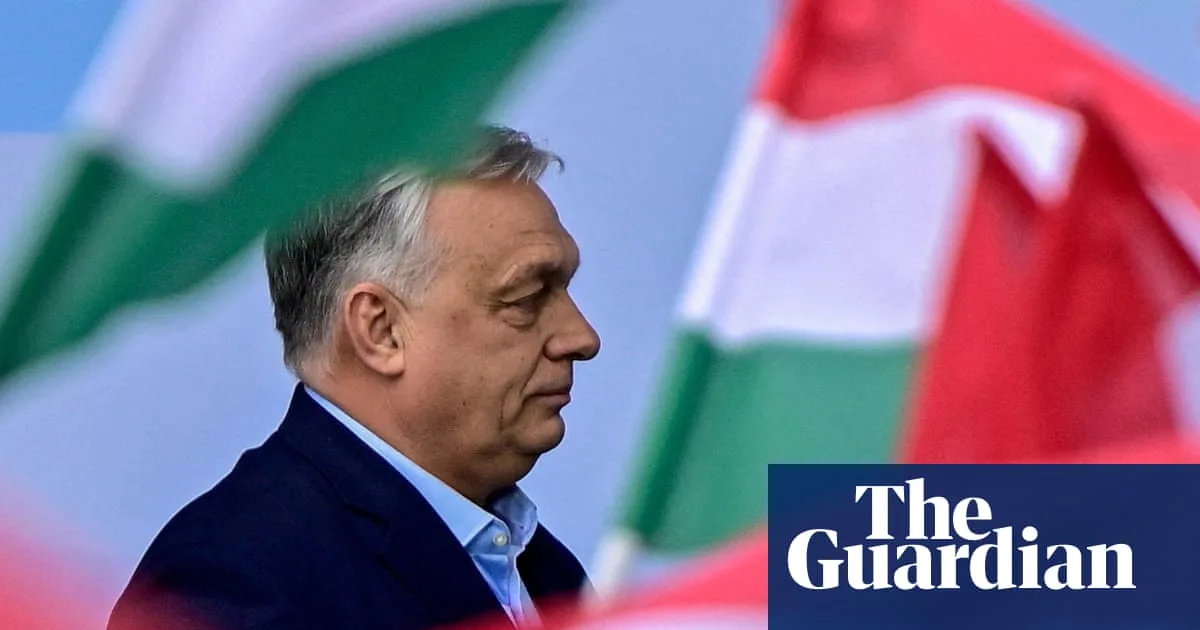
The Kremlin has sought to downplay the significance of Viktor Orbán's election defeat in Hungary, with spokesperson Dmitry Peskov stating on Tuesday that Moscow was pleased the incoming prime minister, Péter Magyar, appeared open to pragmatic dialogue. However, Peskov also made clear that Hungary no longer enjoys special status and now falls into the category of 'unfriendly countries' alongside the rest of Europe.
Orbán, long considered Russia's closest ally in Europe, was ousted in a shock election result that has forced the Kremlin to reassess its relationships with non-autocratic states. 'We were never friends with Orbán,' Peskov said, striking a tone reminiscent of Moscow's messaging after the fall of Bashar al-Assad in Syria.
Magyar, in his first statements, signalled that a dramatic rupture with Russia should not be expected. He acknowledged Hungary's heavy dependence on Russian energy, which supplies more than 80% of its fossil gas and crude oil, and said the country would maintain pragmatic foreign policy, including continued purchases of Russian oil. 'We cannot change geography,' he told reporters.
However, Magyar made clear he sees Russia as the aggressor in the conflict with Ukraine, marking a notable break from Orbán's rhetoric. 'If Vladimir Putin calls, I'll pick up the phone,' he said. 'If we did talk, I could tell him that it would be good to end the killing after four years and end the war.'
Analysts suggest the election result reinforces a view among hawkish Kremlin elites that only truly authoritarian systems are reliable partners. Alexander Baunov of the Carnegie Endowment for International Peace said, 'In Moscow, the takeaway is that hopes that the west might one day resemble Russia are illusory.'
The loss of Orbán as an ally is a significant blow to Moscow, as Hungary had systematically worked to blunt the EU's response to Russia's war in Ukraine, including lobbying to weaken sanctions and blocking aid to Kyiv. The result was celebrated in Budapest with chants of 'Ruszkik, haza' (Russians, go home), a slogan rooted in the 1956 Hungarian Revolution.




