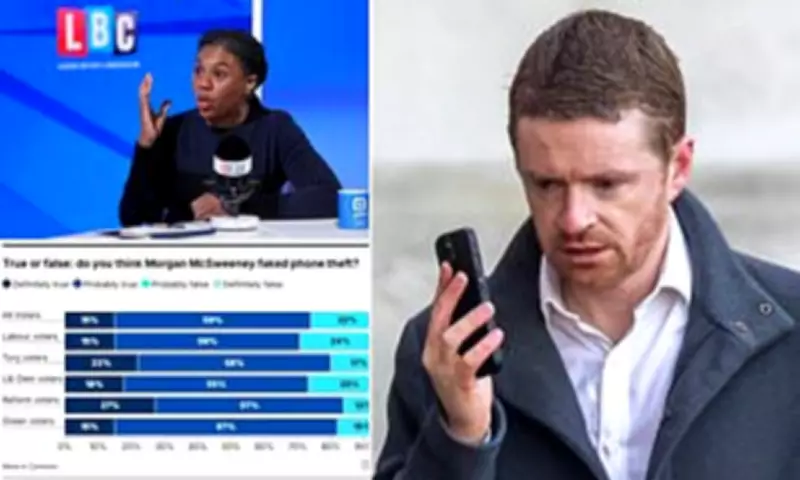
An overwhelming majority of British voters express profound skepticism about the reported theft of a mobile phone belonging to Keir Starmer's former chief aide, according to new polling data. The survey indicates that three-quarters of the population believe the incident was likely fabricated to prevent the disclosure of sensitive communications.
Widespread Public Distrust
The polling, conducted by More in Common, reveals a striking lack of public faith in the official account. A mere fraction of respondents accept that Morgan McSweeney was genuinely mugged on a London street on October 20 of last year. This incident resulted in the loss of his device, which contained discussions between McSweeney and the controversial peer Peter Mandelson.
Cross-Party Consensus of Doubt
Remarkably, this skepticism transcends traditional political divides. The data shows that 80 percent of Conservative voters, 73 percent of Liberal Democrat supporters, and 74 percent of Reform UK backers all share the belief that the theft probably never occurred. Even among Labour's own voter base, a significant 70 percent express doubts about the veracity of the reported mugging.

This widespread disbelief emerges amidst ongoing political tensions. The loss of the mobile phone means that potentially crucial exchanges between McSweeney and Mandelson—who was later dismissed from his diplomatic role over his association with convicted sex offender Jeffrey Epstein—cannot be examined by investigators or the public.
Political Figures Clash Over Credibility
The controversy has sparked heated exchanges between senior political figures. Conservative leader Kemi Badenoch has publicly characterized the situation as "extremely fishy," highlighting that McSweeney failed to disclose his governmental role when initially reporting the theft to police authorities.
In contrast, Cabinet Minister Bridget Phillipson has dismissed such criticisms as veering into "conspiracy theory territory." During a recent television interview, Phillipson asserted that McSweeney followed all proper procedures after the incident and emphasized that he is cooperating fully with any required disclosures.
Parliamentary Pressure for Transparency
This dispute occurs against a backdrop of increasing parliamentary pressure for greater transparency. In February, Members of Parliament moved to compel the publication of tens of thousands of documents aimed at uncovering how much was known about Lord Mandelson's connections to Jeffrey Epstein before his appointment to a Washington-based diplomatic position.
Badenoch has maintained that legitimate questions remain unanswered, stating: "This is not a conspiracy theory. Questions need to be answered and he should come into Parliament and explain what happened." She further noted McSweeney's advisory role in Mandelson's controversial appointment, which she described as part of a "huge cover-up."
The polling data suggests that regardless of political affiliation, most British voters share significant reservations about the official narrative surrounding this high-profile incident, reflecting broader concerns about governmental transparency and accountability in contemporary politics.