
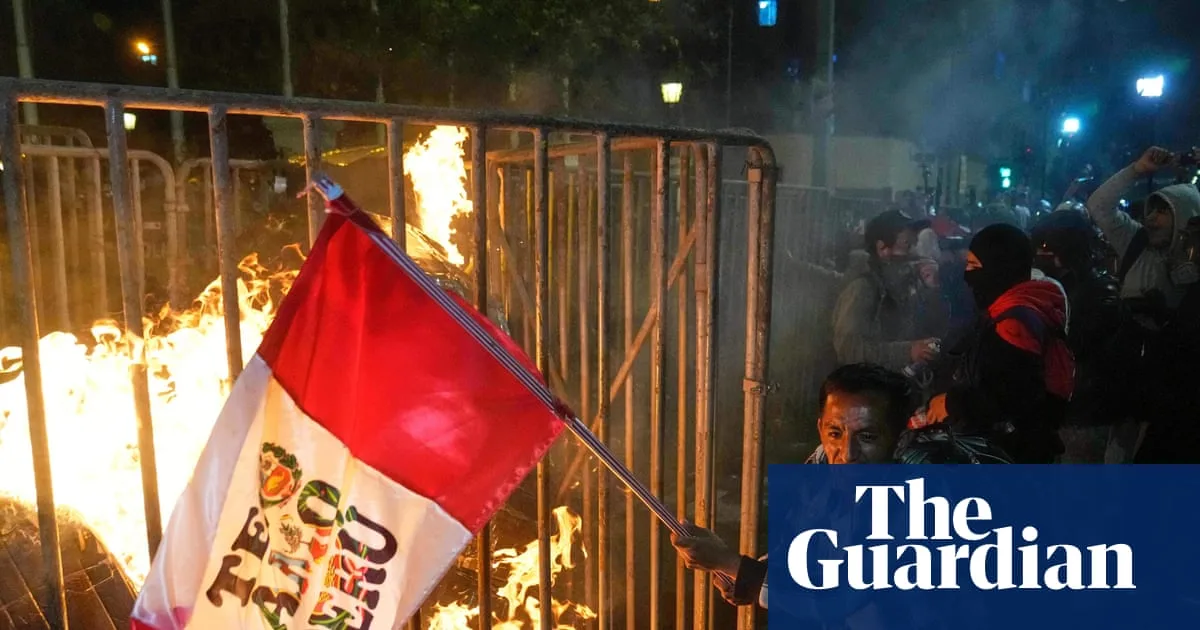
Peru is set to declare a state of emergency after at least one person was killed and dozens of police officers were injured in widespread protests against President José Jerí, who assumed power just days ago. Prime Minister Ernesto Alvarez said late on Thursday that the government would declare the state of emergency in Lima within hours and is preparing a package of measures to tackle rising insecurity.
The protest on Wednesday night, called by Gen Z protesters, transport workers and civil groups, was the latest in a series of demonstrations against corruption and rising crime, which led to the dramatic midnight ouster of former president Dina Boluarte last Thursday. Thousands of protesters amassed around the country, with hundreds clashing with police outside congress in Lima. Police fired teargas while some protesters hurled fireworks, rocks and burning objects.
A 32-year-old man, Eduardo Mauricio Ruiz, was killed during the protest and his death would be investigated, said Fernando Losada, a representative from the country’s ombudsman’s office. Peru’s prosecutor’s office said Ruiz died after being shot. Jerí expressed regret over Ruiz’s death in a post on X, saying the death would be “objectively” investigated. He blamed violence on “delinquents who infiltrated a peaceful demonstration to sow chaos”.
After attending a meeting about the protests at congress on Thursday afternoon, Jerí said he would ask congress for “authority to legislate on public safety issues”, with one focus being prison reform. Speaking to the unicameral congress soon after, the newly appointed interior minister, Vicente Tiburcio, said the government would push for comprehensive reform to the national police, adding that 89 police and 22 civilians had been injured during the protest and 11 people were detained.
Jerí, 38, has promised to make crime his top priority but has faced a number of scandals, including corruption allegations and a now-shelved investigation for sexual assault. Jerí has denied wrongdoing in both cases. Congress, which was headed by Jerí before he became president, is almost equally unpopular, with a single-digit approval rating. The protests underscore the challenges facing Jerí’s presidency, which ends next July due to scheduled elections.




