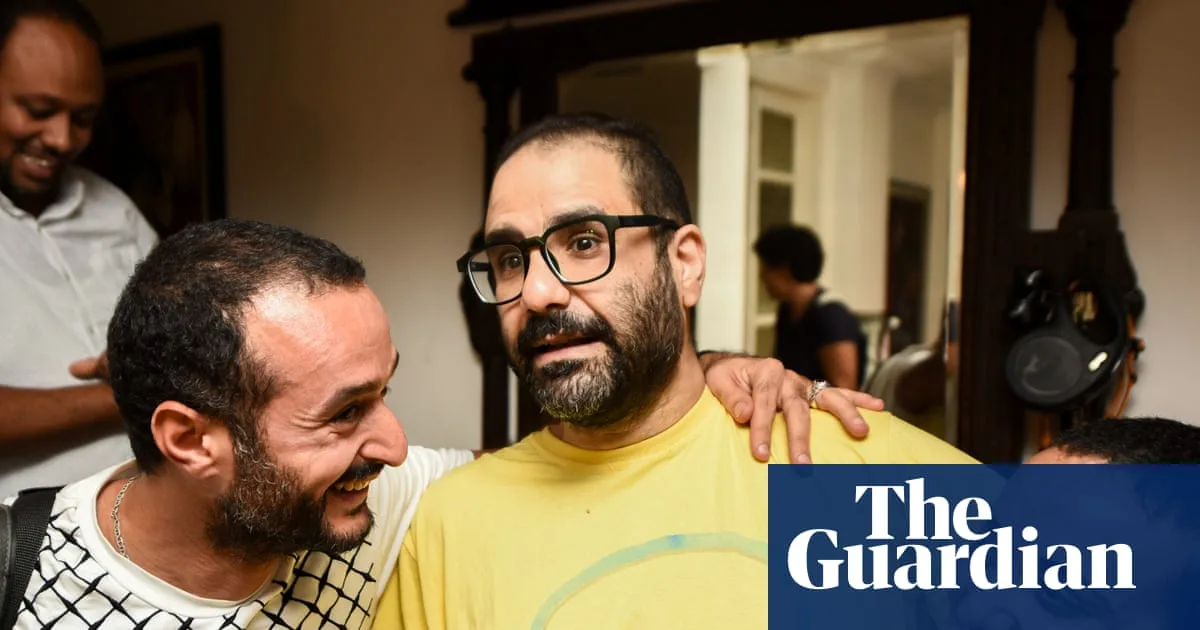
British-Egyptian Activist Alaa Abd el-Fattah Apologises for Decade-Old 'Hurtful' Tweets
Alaa Abd el-Fattah apologises for decade-old tweets

The British-Egyptian human rights campaigner Alaa Abd el-Fattah has issued an unreserved apology for what he describes as shocking and hurtful social media posts written more than a decade ago. The activist, recently released from an Egyptian prison, made the statement after facing intense political scrutiny in the United Kingdom.

Political Backlash and a Frantic Response

The controversy erupted after shadow ministers highlighted the old tweets to challenge Labour leader Sir Keir Starmer's support for Abd el-Fattah. The campaigner had been freed by the Egyptian government and travelled to the UK after spending over ten years behind bars.

The fallout was swift. There have been calls from some quarters, including within the Conservative Party, for Abd el-Fattah's British citizenship – granted in 2021 – to be revoked. Meanwhile, Labour figures have expressed regret that more thorough checks on his past were not conducted.

Following a day of frantic consultations, Abd el-Fattah released a statement in the early hours of Monday morning addressing the storm.

A Full Apology and Context of 'Heated Online Battles'

In his detailed apology, Abd el-Fattah stated he was shaken by the criticism. He acknowledged the offensive nature of the posts, which included language describing the killing of Zionists as heroic and referring to British people in derogatory terms.

"Looking at the tweets now – the ones that were not completely twisted out of their meaning – I do understand how shocking and hurtful they are, and for that I unequivocally apologise," he wrote.

He contextualised the messages as the product of a younger man's anger during a period of regional crises, including the wars on Iraq, Lebanon, and Gaza, and a rise in police brutality in Egypt. "They were mostly expressions of a young man’s anger and frustrations," he explained, adding particular regret for tweets written during "online insult battles."

Defending His Record and Clarifying Misinterpretations

While apologising, Abd el-Fattah also defended his lifelong activism and claimed some tweets had been deliberately misconstrued. He stressed that a tweet cited to allege homophobia was actually mocking homophobia, and another misinterpreted as Holocaust denial was clearly ridiculing such denial.

"I take accusations of antisemitism very seriously," he asserted, pointing to his record of defending religious minorities in Egypt, including Christians, for which he faced imprisonment.

He appealed for people to judge him by his real-world actions, highlighting his advocacy for LGBTQ rights, freedom of speech, and secular democracy in Egypt – stances for which he was repeatedly incarcerated. "My freedom was stripped from me for these defences of human rights," he stated.

Political Reactions and the Path Forward

The political reaction in the UK has been sharp. Conservative leader Kemi Badenoch demanded his deportation, stating, "I do not want people who hate Britain coming to our country." Reform UK's Nigel Farage claimed to have reported Abd el-Fattah to counter-terrorism police.

Abd el-Fattah revealed he believed the issue of his tweets had been addressed years earlier, after his nomination for the Sakharov prize was withdrawn in 2014. He had written a chapter in a book of essays explaining his views on armed struggle against Israel, which was sent to MPs, including the Prime Minister and Foreign Secretary David Lammy. However, this did not fully cover the volume and aggressive tone of the tweets now under scrutiny.

The activist concluded by reflecting on his personal sacrifice, noting the recent weekend was the first time he had celebrated his son's birthday with him since 2012. "I have been imprisoned in Egypt for almost his entire life," he wrote, framing his past decade through the lens of his pro-democracy activism.




