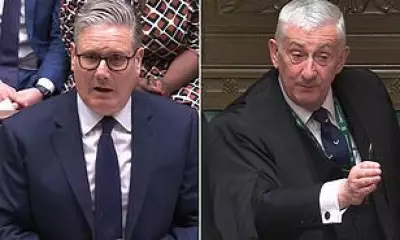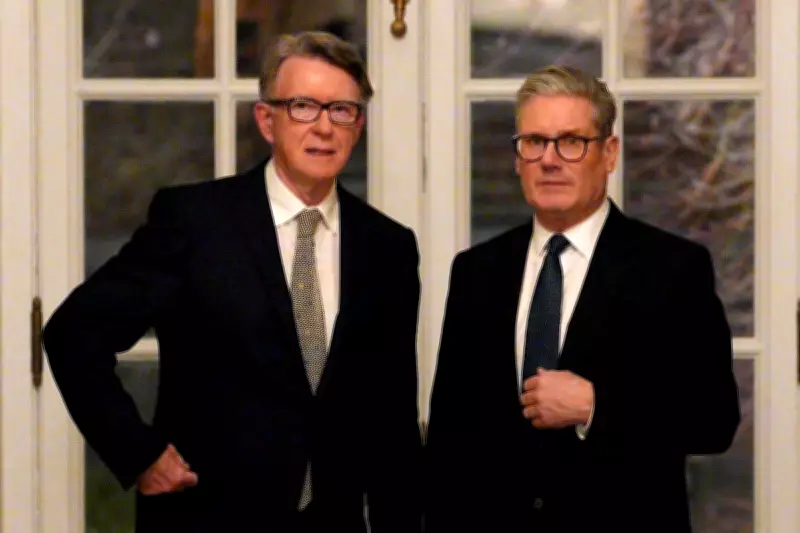
Downing Street has repeatedly declined to state whether Prime Minister Sir Keir Starmer will formally correct the parliamentary record after telling MPs that full due process was followed in appointing Lord Mandelson as ambassador to the United States. The Prime Minister is preparing to battle for his political survival in an address to the House of Commons later on Monday, following extraordinary revelations that the disgraced peer assumed the prestigious Washington role despite failing essential security vetting procedures.
Security Vetting Scandal Fuels Resignation Calls
No 10 has insisted that red flags regarding Lord Mandelson's security clearance were not disclosed by the Foreign Office, with Sir Keir blaming officials for withholding critical information while he publicly assured Parliament that proper protocols had been observed. When questioned directly about whether the Prime Minister accepted he had misled Parliament, his official spokesman stated: "The Prime Minister would never knowingly mislead Parliament or the public."
The spokesman elaborated: "He's clear though, that this information should have been provided to him... so he will obviously update the House with the full information." Pressed on whether this constituted correcting the record, the spokesman indicated Sir Keir would be "updating with information" that should have been available previously.

Mounting Political Pressure
The escalating scandal has intensified calls for Sir Keir's resignation, emanating not only from opposition parties but also from critics within his own Labour movement. These internal detractors already fear an electoral catastrophe for the party in May's upcoming contests across English councils and the Scottish and Welsh parliaments.
Further complicating matters, questions persist regarding a letter from former cabinet secretary Lord Simon Case dated November 11, 2024. The correspondence appears to advise Sir Keir that security clearances should be completed before confirming Lord Mandelson's appointment. The note explicitly stated that for political appointments, "you should give us the name of the person you would like to appoint and we will develop a plan for them to acquire the necessary security clearances and do due diligence on any potential conflicts of interest or other issues of which you should be aware before confirming your choice."
Foreign Office Fallout and Procedural Changes
No 10 declined to comment on whether ignoring this advice constituted an error, noting that the "normal thing" had been for civil servants to undergo security clearance after appointment but before signing contracts—a procedure the Government has since revised. Sir Keir effectively dismissed the Foreign Office's top official Sir Olly Robbins last week after it emerged Lord Mandelson had been granted developed vetting (DV) status despite failing checks conducted by the agency responsible for security assessments.
Whitehall veteran Sir Olly is scheduled to present his own account to MPs on Tuesday during a Foreign Affairs Committee hearing. A statement issued by No 10 on Sunday night clarified that while civil servants rather than ministers make final decisions on vetting and clearance, nothing in existing legislation prevents ministers from being informed of relevant concerns.
Prime Minister's Position and Opposition Criticism
Sir Keir told the Mirror he would make it "crystal clear" to MPs that he had been deliberately kept uninformed, describing the Foreign Office's failure to notify him as "unforgivable" after he had publicly guaranteed proper process had been followed. The Prime Minister stated: "The fact that I wasn't told that Peter Mandelson had failed his security vetting when he was appointed is astonishing. The fact that I wasn't told when I said to Parliament that due process had been followed is unforgivable."
He emphasized his intention to establish "full transparency" regarding the matter during his parliamentary address. According to the Prime Minister, he was only informed about the vetting issue on Tuesday evening, after information was uncovered during document gathering related to Lord Mandelson's appointment—a process initiated to comply with a parliamentary order to release all relevant files.

Allies of Sir Keir maintained that Monday represented his first opportunity to present the complete facts to Parliament, despite his appearance in the Commons last Wednesday for regular Prime Minister's Questions. Lord Mandelson was dismissed last year, merely nine months into his Washington posting, after additional details surfaced regarding his association with convicted paedophile financier Jeffrey Epstein.
Broader Implications and National Security Concerns
Tory leader Kemi Badenoch delivered a scathing assessment: "This has been a tawdry and shaming affair for you and your party, and for this country. Not only have you damaged our relationship with the United States and insulted the victims of the paedophile Jeffrey Epstein, but you have also undermined our national security by giving the highest diplomatic post to an individual that the security services found to be of 'high concern'."
Scottish Secretary Douglas Alexander told Sky News he anticipated Sir Keir would survive to lead Labour into the next general election, but cautioned that "there are no certainties" in contemporary politics. The UK Security Vetting's privacy notice outlines that there are "limited circumstances in which relevant vetting information can be shared" if "a security risk has been identified," adding another layer of complexity to the unfolding controversy.