Nick Timothy's Public Prayer Remarks Ignite Political Firestorm
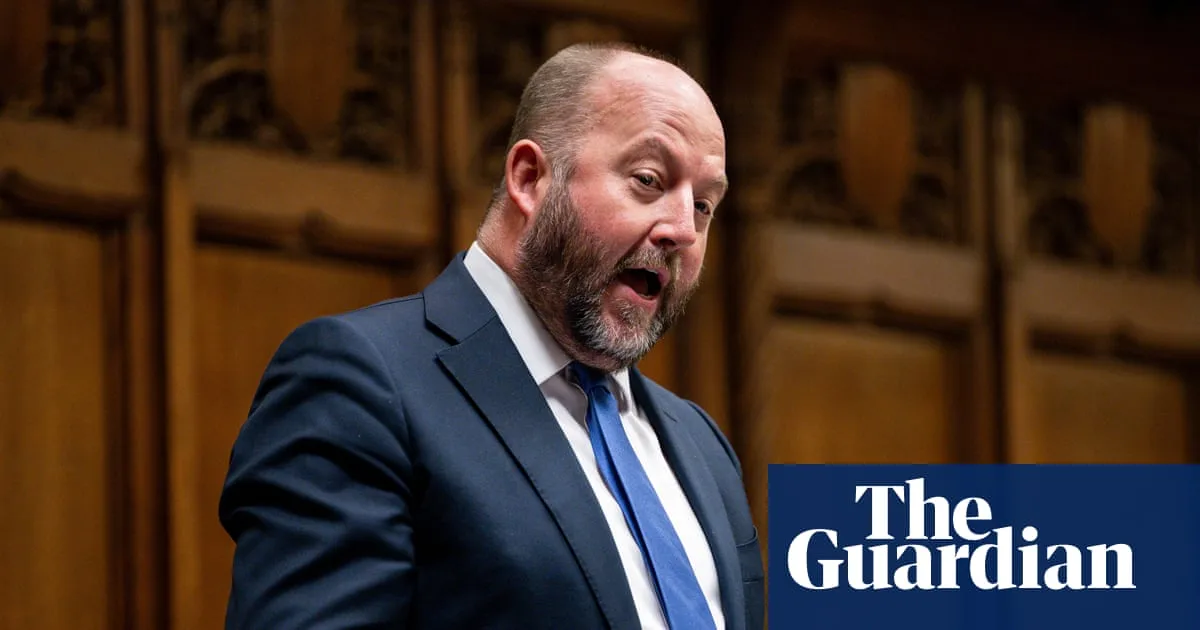
In contemporary Britain, certain topics appear to be off-limits for honest discussion without triggering immediate outrage. The latest figure to experience this reflexive indignation is Shadow Lord Chancellor Nick Timothy. His transgression? A concise post on social media platform X, where he asserted: 'Mass ritual prayer in public places is an act of domination.' He further stated: 'Perform these rituals in mosques if you wish. But they are not welcome in our public places and shared institutions.'
The Trafalgar Square Prayer Event
The ritual Timothy referenced was a gathering in London's Trafalgar Square, where approximately 3,000 Muslims assembled for a mass prayer event on Monday, marking the conclusion of Ramadan. Organized by the charity Ramadan Tent Project, this highly visible act in the heart of the capital prompted Timothy's questioning. Notably, he did not criticize Muslims as individuals, nor did he challenge their right to worship or advocate for restrictions on private belief. Instead, he raised concerns about the suitability of large-scale religious rituals in shared civic spaces.
Political Backlash and Accusations
Within hours, a wave of outrage emerged, led by Sir Keir Starmer, who described Timothy's words as 'utterly appalling' and demanded that Conservative Party leader Kemi Badenoch dismiss him. The Prime Minister suggested, controversially, that the Conservative Party has a 'problem with Muslims.' Labour chair Anna Turley labeled the comments 'despicable,' while London Mayor Sir Sadiq Khan, who participated in the prayer event, expressed being 'heartbroken' and claimed British Muslims might feel 'scared' and 'singled out.'
As a former Muslim, I must emphasize that Islam does not mandate mass public prayer in civic squares. In London's Trafalgar Square, around 3,000 Muslims gathered for the Ramadan event, but such displays are not religious necessities. Men are instructed to pray in mosques, and women typically at home, making this a deliberate public statement rather than a requirement.
Gender Segregation and Feminist Silence
Commentators have noted that women were relegated to the back rows during the event, placed literally behind men. This practice aligns with what I witnessed growing up in a Muslim household in Pakistan, where gender inequality was evident. Remarkably, many Western feminists, usually vocal against sexism, remain silent in such contexts. This silence reflects a broader reluctance to engage honestly with complex issues of religion, culture, and integration, often dismissed as bigotry when raised, particularly regarding Islam.
Broader Context and Double Standards
This incident is not isolated. It follows patterns seen in the grooming gangs scandal, where authorities hesitated to act against Muslim perpetrators due to fears of racism accusations. It echoes the case of a Religious Studies teacher in Batley, Yorkshire, forced into hiding after showing a caricature of Mohammed. Additionally, last year, authorities permitted a Muslim-organized charity run in a London park that excluded women and girls over 13.
Imagine the reaction if a Christian event in a major public square enforced visible gender segregation. Contrast this with last year's arrest of a Christian pastor in Bristol for preaching on gender and religion, despite not breaking the law, or arrests for silent prayer near abortion clinics. Yet, the Government recently announced special legal protections for 'anti-Muslim hostility,' a vaguely defined concept risking blasphemy laws, and appointed a new Islamophobia tsar.
Political Opportunism and Hypocrisy
The message seems clear: in modern Britain, some beliefs face relentless scrutiny, while others are shielded from criticism. This creeping sectarianism in public life was courageously highlighted by Conservative leader Kemi Badenoch earlier this year. Nick Timothy merely questioned the appropriateness of large-scale religious rituals in shared spaces, yet faced calls for his dismissal.
We are often told these concerns are exaggerated and that voicing them fuels division. However, ignoring them breeds resentment and mistrust. The performative outrage by Labour's apparatchiks reeks of opportunism, especially as Labour faces declining support among Muslim voters. Independent pro-Gaza MPs challenge former strongholds, and the Green Party candidate in the Gorton and Denton by-election campaigned in Urdu.
It does not require cynicism to suspect that calls for Timothy's defenestration relate to efforts to regain Muslim support. The hypocrisy is staggering: five years ago, Keir Starmer withdrew from a Ramadan Tent Project event due to links between its founder and controversial group CAGE, aiming to woo Jewish voters. Now, his concerns shift with the declining Muslim vote.
The attempt to hound Nick Timothy is not about defending communities; it is pure politicking. All participants should feel shame. As a former Muslim, I stress that Islam does not require mass public prayer in civic squares, making such displays deliberate statements worthy of public discourse.