MPs Consider Formal Inquiry Into Andrew's Trade Envoy Tenure Following Arrest
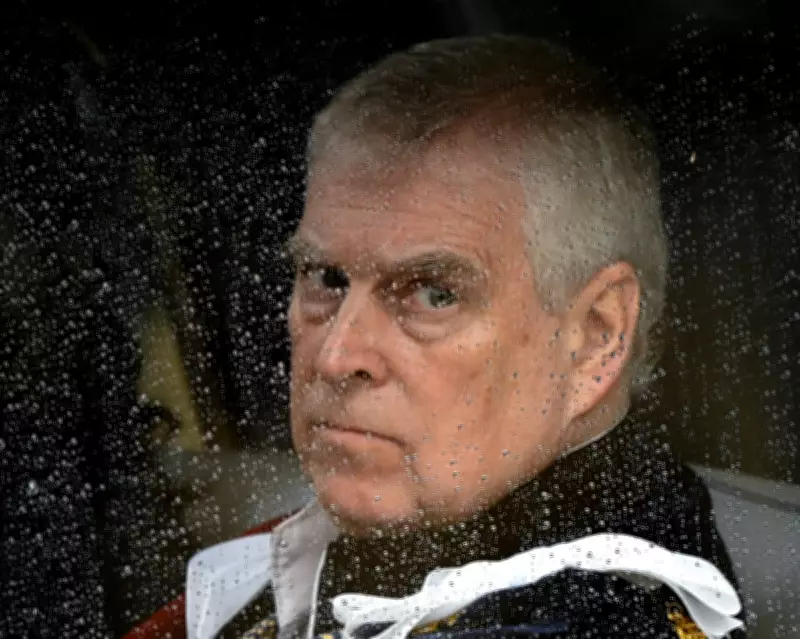
The influential cross-party business and trade committee will convene next Tuesday to deliberate on launching a formal investigation into Andrew Mountbatten-Windsor's controversial decade-long tenure as the UK's special representative for international trade and investment. This development follows his arrest on Thursday on suspicion of misconduct in public office, casting a harsh new light on his government role that spanned from 2001 to 2011.
Former Royal's Persistent Lobbying for Expanded Government Role Revealed
According to senior government figures who interacted with Mountbatten-Windsor during his time with UK Trade and Investment (UKTI), the disgraced former royal repeatedly approached ministers personally, requesting a more significant position within government. "He approached ministers personally, saying 'Can you find a bigger role for me?'" revealed one senior official familiar with the matter. "Trade envoys are not considered a very important part of the state, they are mainly tokenistic. Andrew seemed to feel he had no real role in life, but had something to offer in terms of contacts around the world, particularly royalty."
Widespread Government Concerns About Conduct and Effectiveness
Multiple sources within government during his tenure described Mountbatten-Windsor as widely regarded as a liability, both due to his personal conduct and questionable effectiveness in the role. "The classic thing would be for him to turn up – and being a royal would get access in some countries – do a lunch meeting but then disappear for six hours and come back with two new Rolexes," another senior figure recounted. "What I saw was a rather unpleasant, arrogant, entitled person who was on the hustle and couldn't tell the difference between the public interest and his private interests."

Government insiders expressed particular frustration about financial arrangements surrounding his official trips, with confusion over whether the Foreign Office, business department, or royal household would cover expenses. "It created quite a sense of general distaste. It was always never completely clear who would pay for his trips – the Foreign Office, business department or the palace. And it wasn't cheap. He went to Davos one year and insisted on the most expensive chalet."
Lack of Coordination and Communication With Government
Another significant area of concern was Mountbatten-Windsor's failure to coordinate with government officials. In a notable example, weeks before then-Prime Minister David Cameron led a high-level delegation to Beijing in late 2010, Andrew conducted his own trade mission to China without informing relevant government departments. "Before they went they found out Andrew had already been there and they hadn't been told," a government figure disclosed.
Committee to Examine Whether Concerns Were Adequately Addressed
The business and trade committee's potential inquiry is expected to focus on whether sufficient measures were taken during Andrew's tenure to address concerns about his conduct, and specifically whether there were apprehensions that his actions might cross legal boundaries. While some officials suggest few in government took his role seriously enough to anticipate legal issues, others point to excessive deference shown by the Labour governments of Tony Blair and Gordon Brown, which governed during most of his tenure.
"I don't think anyone could have predicted anything about allegations of misconduct in public office, not least as it's not clear if this was even a public office," one source commented. "But this was, absolutely, a government of some people who loved tugging their forelock, and who enjoyed the company of rich people."
Links to Controversial Figures and Ongoing Investigations
The committee's deliberations come amid broader scrutiny of connections between government figures and Jeffrey Epstein, the late convicted sex offender. Peter Mandelson, the former business secretary who reportedly advocated for Andrew's appointment as trade envoy, is himself under police investigation for allegedly leaking market-sensitive information to Epstein. Downing Street is currently reviewing numerous documents related to Mandelson's brief tenure as ambassador to Washington in late 2024, which ended following revelations about his Epstein connections.
A first batch of these documents, ordered released by a parliamentary vote, may become public next week as Parliament reconvenes following recess. The potential inquiry into Andrew Mountbatten-Windsor's trade envoy role represents a significant escalation in parliamentary scrutiny of royal involvement in government affairs and raises fundamental questions about accountability and oversight mechanisms for special envoy positions.