UK Minister Rejects Trump's 'No Churchill' Jibe at Starmer Over Iran Stance
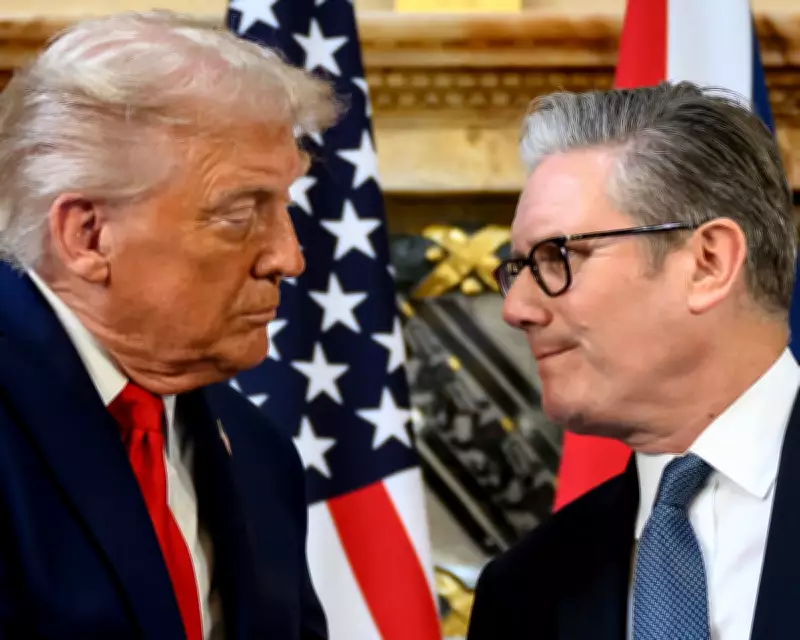
A senior government minister has robustly dismissed former US President Donald Trump's claim that Prime Minister Keir Starmer is "no Winston Churchill," defending Starmer's "cool-headed" approach to recent military decisions involving Iran.
Defending the National Interest
Chief Secretary to the Treasury, James Murray, told Times Radio that the Prime Minister acted with "a real clarity of purpose" and "a determination to do the right thing for the British people" in refusing to join initial US-led offensive strikes against Iranian missile facilities over the weekend. Murray emphasised that Starmer's decision was taken squarely in the national interest.
"The prime minister took the decision he did in the national interest," Murray stated. "He's approached this with a cool head, with a real clarity of purpose, with a real focus and a determination to do the right thing for the British people."

Murray clarified that while the UK declined to participate in the initial offensive actions, it subsequently stepped up for defensive measures to protect British citizens, authorising the use of the UK base at Diego Garcia for US strikes.
Trump's Repeated Criticism
Trump's comments, made in interviews with The Sun and The Telegraph, marked the third time in 24 hours he had criticised Starmer. The former president expressed frustration that the "relationship is obviously not what it was" due to the UK's initial refusal and claimed Starmer took "far too long" to grant base access.
This public rebuke underscores Trump's ongoing dissatisfaction with Western allies who did not unequivocally back the US action, despite Starmer having previously been praised for managing relations with the volatile former leader.
Commitment to the Special Relationship
When questioned on the significance of Trump's remarks, Murray downplayed their importance, focusing instead on policy continuity and bilateral cooperation.
"The president has expressed himself using his words, but what's important for me is that the prime minister is taking the right decisions for the UK, and, of course, that the special relationship between the US and the UK continues," Murray said. "We work together with the US, day in, day out."
In the House of Commons, Starmer himself had previously expressed doubts about the legality and nature of the US action in Tehran, signalling a more cautious diplomatic stance.
Broader Security and Political Developments
The diplomatic exchange occurs alongside several significant developments:
- A Royal Navy destroyer is scheduled to deploy to Cyprus next week following Prime Minister Starmer's announcement, aimed at defending the country and British bases after hostile drones targeted RAF Akrotiri.
- Foreign Secretary Yvette Cooper confirmed the UK government will charter a flight from Oman in the coming days to prioritise evacuating vulnerable British nationals from the region, describing the situation as "fast-moving" due to closed airspace and ongoing Iranian retaliatory threats.
- Chancellor Rachel Reeves presented a spring forecast downgrading UK growth expectations for the year, insisting Labour has "the right economic plan" for an increasingly uncertain global landscape, with projections indicating weaker economic growth and higher unemployment.
- A new YouGov poll revealed a surge in support for the Green Party, which climbed to second place behind Reform UK, as Labour's support fell to its lowest recorded level.
The government's response highlights a strategic balancing act: asserting independent, principled decision-making on national security while striving to maintain the foundational US-UK alliance amidst public criticism from a key former ally.