Massive 'No Kings' Rallies Sweep Across United States in Historic Protest
Millions of Americans took to the streets in a sweeping display of dissent on Saturday, March 28, 2026, as the third major No Kings protest unfolded across all 50 states and in 16 countries worldwide. The massive demonstrations, organized by a coalition of anti-authoritarian groups, labor unions, and grassroots organizations, represented what organizers called potentially the largest protest in American history, directly challenging the Trump administration's policies.
Protesters Target Multiple Administration Policies
Participants in the nationwide rallies voiced strong opposition to three key areas of Trump administration policy:
- Military intervention in Iran: The president's decision to enter into armed conflict with Iran served as a primary catalyst for the protests.
- Federal immigration enforcement: Demonstrators protested what they described as harsh immigration policies and enforcement measures.
- Rising living costs: Economic concerns, including inflation and affordability issues, formed another major focus of the demonstrations.
Organizers reported more than 3,000 separate protest events nationwide, with the coalition including prominent groups such as Indivisible and 50501. "I would expect March 28 to be the biggest protest in American history," declared Ezra Levin, co-founder of Indivisible, prior to the day's events. This followed previous No Kings rallies in October that had already drawn an estimated 7 million participants across the country.

Specialized Demonstrations Highlight Specific Concerns
While the main protests focused on broad administration policies, specialized gatherings addressed particular issues. Approximately one thousand demonstrators assembled outside the National Institutes of Health headquarters in Bethesda, Maryland, carrying signs reading "No kings, just vaccines!" to protest cuts to medical research funding and the administration's healthcare policies.
Political Context and Related Developments
The protests occurred against a backdrop of significant political tension in Washington. On Friday, March 27, the US Treasury Department formally demanded that the Financial Times retract a story about Treasury Secretary Scott Bessent's views on Federal Reserve oversight, accusing the publication of making "false claims" in a complaint escalated to the newspaper's parent company, Nikkei Inc.
Meanwhile, congressional Republicans in the House rejected a bipartisan Senate deal to fund the Department of Homeland Security, instead passing their own stopgap funding measure late Friday. The House bill, which passed by 213 to 203 votes, proposed full DHS funding for eight weeks but excluded the Senate deal's provisions that would have denied money to Immigration and Customs Enforcement and border patrol operations.
Other developments on Saturday included a Michigan student reaching a settlement with their school after being disciplined for protesting against the war in Gaza, analysis of how Trump's deportation campaign has shifted tactics following widespread unpopularity, and growing anger in Canada as Trump administration policies squeeze US border businesses.
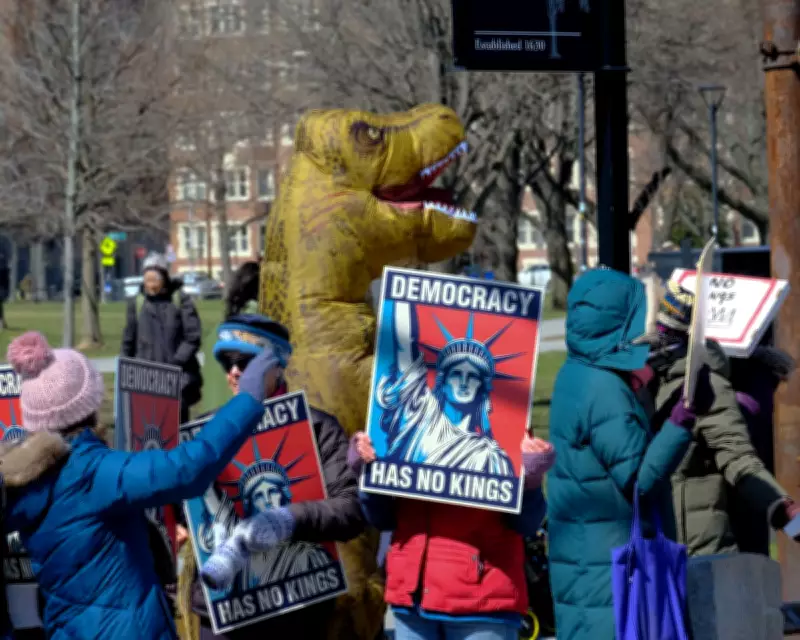
The No Kings movement, with its central slogan "Democracy has no kings" prominently displayed on posters at rallies like one in Cambridge, Massachusetts, continues to represent a significant organized resistance to the Trump administration, drawing unprecedented numbers to public demonstrations focused on multiple policy areas simultaneously.