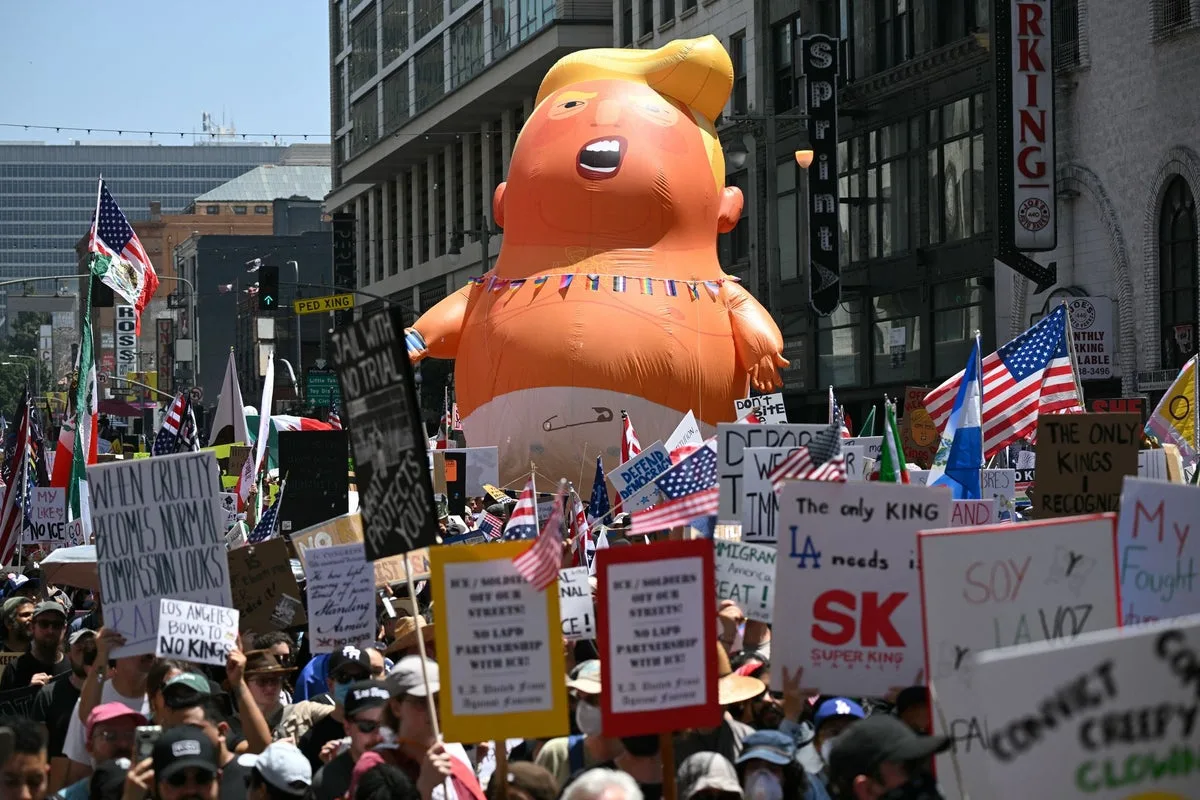
More ‘No Kings’ protests targeting Donald Trump are planned nationwide this weekend, with organisers expecting massive crowds to speak out against what they see as the president’s authoritarianism. The demonstrations follow a series of protests last year, including an October event that drew millions from New York to California.
Protest organisers are asking people across the country to join the demonstrations on Saturday to continue opposing Trump administration policies. More than 3,100 individual protests are planned, according to USA TODAY, including over 40 events in Los Angeles County and a mass march in New York City near Central Park.
In Chicago, several protests are set to take place, including one downtown at Butler Field Grant Park. The first wave of ‘No Kings’ protests broke out last June during Trump’s military parade in Washington, which coincided with his 79th birthday. Organisers estimated millions participated across every state and worldwide.

For the second wave on 18 October 2025, organisers estimated more than seven million Americans joined over 2,700 protests. Saturday’s events will highlight grievances including the administration’s immigration crackdown, which organisers say involves ‘sending masked agents into our streets’.
The fatal shootings of US citizens Renee Good and Alex Pretti by federal immigration agents in Minneapolis in January caused public uproar, leading Democratic lawmakers to refuse funding for the Homeland Security Department without reform. Organisers also cited the Iran war launched by the US and Israel a month ago, accusing Trump of spending billions on missile strikes while driving up living costs and giving tax breaks to billionaires.
Trump has dismissed the protests as ‘very small’ and ‘very ineffective’, telling reporters last October: ‘I’m not a king. I work my a** off to make our country great.’