Schiaparelli: The 'Ugly' Designer Who Rivaled Chanel Gets V&A Spotlight
Elsa Schiaparelli, one of the most pioneering designers of her generation, never achieved the household name status of Christian Dior or her fierce rival, Coco Chanel. However, a new exhibition at the Victoria and Albert Museum, alongside a star-studded awards season, is poised to change that perception dramatically.
A Fiery Rivalry and Surrealist Flair
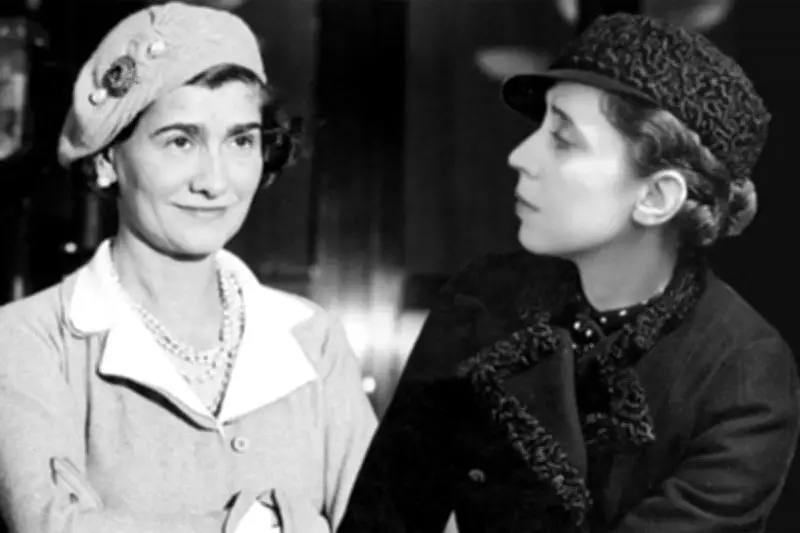
How intense must a rivalry be to allegedly steer someone into a candlelit chandelier? According to 1940s Vogue editor Bettina Ballard, Coco Chanel did exactly that to Elsa Schiaparelli at a pre-World War II costume ball. Dressed as a surrealist tree, Schiaparelli reportedly caught fire, with guests using soda water to extinguish the flames. This incident epitomizes the epic proportions of their conflict, marked by exchanged insults and contrasting philosophies.
Chanel dismissed Schiaparelli as "that Italian artist who makes clothes," while Schiaparelli retorted by calling Chanel "that dreary little bourgeoisie." Ironically, Chanel's backhanded moniker aligned with Schiaparelli's self-view: she saw dress designing as an art, not merely a profession. This perspective fueled her close collaborations with surrealist artists like Salvador Dalí, Jean Cocteau, and Meret Oppenheim.

Distinctive Design and Unconventional Beauty
Sonnet Stanfill, senior curator of fashion and textiles at the V&A, notes that Chanel and Schiaparelli didn't need to compete because their styles were so distinct. Chanel championed minimalist elegance in neutral colours, designed for everyday modern life. In contrast, Schiaparelli embraced bold, eye-catching creations, such as dresses adorned with Dalí's lobsters or gowns with quilted padding mimicking human bones.
Born in Rome to an intellectual family, Schiaparelli faced childhood taunts of being "ugly" compared to her sister. Yet, she defied conventional beauty standards, appearing in Vogue and challenging norms throughout her career. Her innovative use of colour, unusual buttons, and vibrant embroidery made her designs instantly recognizable.
Rise, Fall, and Revival
Schiaparelli's career began in earnest in 1927 with a trompe-l'oeil sweater that garnered attention at a society luncheon. She soon opened a Paris salon, featuring shocking pink accents and surrealist decor. By the 1930s, she was pioneering trends like trousers, oversized shoulder pads, and decorative zips, earning Vogue's praise as "the designer of the most exciting clothes in Paris."
However, post-World War II, her fantastical designs fell out of favour, leading to bankruptcy in 1954 and the closure of her fashion house after 27 years. The brand lay dormant for decades until Italian luxury mogul Diego Della Valle acquired it in 2006, reviving it in 2012. Under creative director Daniel Roseberry, Schiaparelli has embraced a spirit of disobedience, with collections featuring 3D lace, airbrushed feathers, and playful accessories.
Modern Influence and Cultural Impact
Today, Schiaparelli's legacy thrives on red carpets, worn by celebrities like Bella Hadid, Margot Robbie, and Bad Bunny. Roseberry describes the brand as helping "the woman to meet the moment," often through high-profile appearances that make a lasting impression. The V&A exhibition, "Schiaparelli: Fashion Becomes Art," opening on 28 March, aims to secure her recognition, paralleling the success of the museum's 2019 Dior show.
With over half a million visitors for Dior, this retrospective could finally cement Schiaparelli's place in fashion history, highlighting her role as an image-maker and culture creator rather than just a dressmaker.