Mary Trump Sounds Alarm Over Uncle's 'Extremely Dangerous' Behaviour Pattern
Donald Trump's niece, prominent critic Mary Trump, has issued a stark warning that a fundamental character flaw in her uncle could precipitate global disaster as military actions intensify in the Middle East. Speaking on her YouTube channel, Mary Trump Media, she described his tendency to escalate confrontations when unchallenged as "extremely dangerous behaviour" for a world leader.
European Resistance to Hormuz Strait Call Highlights Broader Pattern
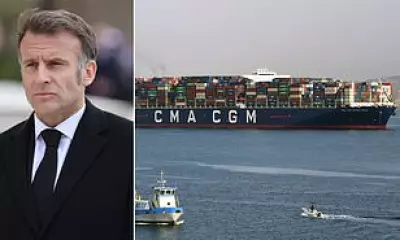
The warning comes amid European resistance to President Trump's recent call for international aid to counter Iran's blockade of the strategically vital Strait of Hormuz. Trump publicly urged the United Kingdom and other nations to join efforts against what he termed Iranian asymmetric warfare, but this demand has met with notable pushback from European allies.
Mary Trump asserts this international resistance isn't the only development "rattling Donald's cage" recently. She pointed specifically to a Supreme Court ruling that declared many of his signature presidential tariffs illegal. Rather than adjusting course, Trump responded by imposing sweeping new global tariffs of 15%.

The Escalation Cycle: From Envelope-Pushing to Quadrupling Down
Mary Trump outlined a concerning behavioural pattern she claims has characterised her uncle's entire career. "When nobody stops him, he pushes the envelope further and gets away with more," she explained. "When somebody finally does stop him, he doesn't course correct like a mature human being. He doesn't come up with a different strategy."
Instead, she warned, "he doubles down. He quadruples down." This escalation becomes particularly perilous given Trump's current position of power. "Especially when we're talking about somebody who has the power to bring this world to the brink of economic chaos and a war nobody but him wants," she cautioned.
Geopolitical Stakes Heighten Amid Hormuz Tensions
The Strait of Hormuz represents one of the world's most critical maritime choke points, with approximately 20% of global oil and liquefied natural gas passing through its narrow waters. The strategic waterway lies off Iran's southern coast, connecting the Persian Gulf with the Gulf of Oman.
Since the outbreak of renewed hostilities, at least 21 vessels have reportedly been hit, targeted, or come under attack. Iran has conducted countermeasures including drone strikes on Gulf neighbours in retaliation against the US-led Operation Epic Fury.
In a pointed social media post targeting what he called "non-responsive" allies, President Trump mused: "I wonder what would happen if we 'finished off' what's left of the Iranian Terror State, and let the Countries that use it, we don't, be responsible for the so called 'Straight?' That would get some of our non-responsive 'Allies' in gear, and fast!!!"
The Psychology of Backing Down and Emboldenment
Mary Trump described how initial resistance that eventually crumbles only strengthens her uncle's resolve. "The person who initially stands up to him eventually backs down," she noted. "That gives him more room, more power, more oxygen."
This dynamic creates a dangerous feedback loop. When challengers retreat, it "emboldens" Trump to pursue riskier actions, inflict greater consequences, accumulate more wealth and power, and continue until the next opposition emerges. "To be fair, though, those moments are rare," she acknowledged. "Rarely has somebody stood up and said no in a way that sticks. But things may finally be shifting."
The psychological pattern Mary Trump identifies suggests that current international resistance, combined with judicial pushback, might represent a critical juncture. Whether this leads to dangerous escalation or meaningful constraint remains uncertain, but the stakes involve both global economic stability and potential military conflict in one of the world's most volatile regions.