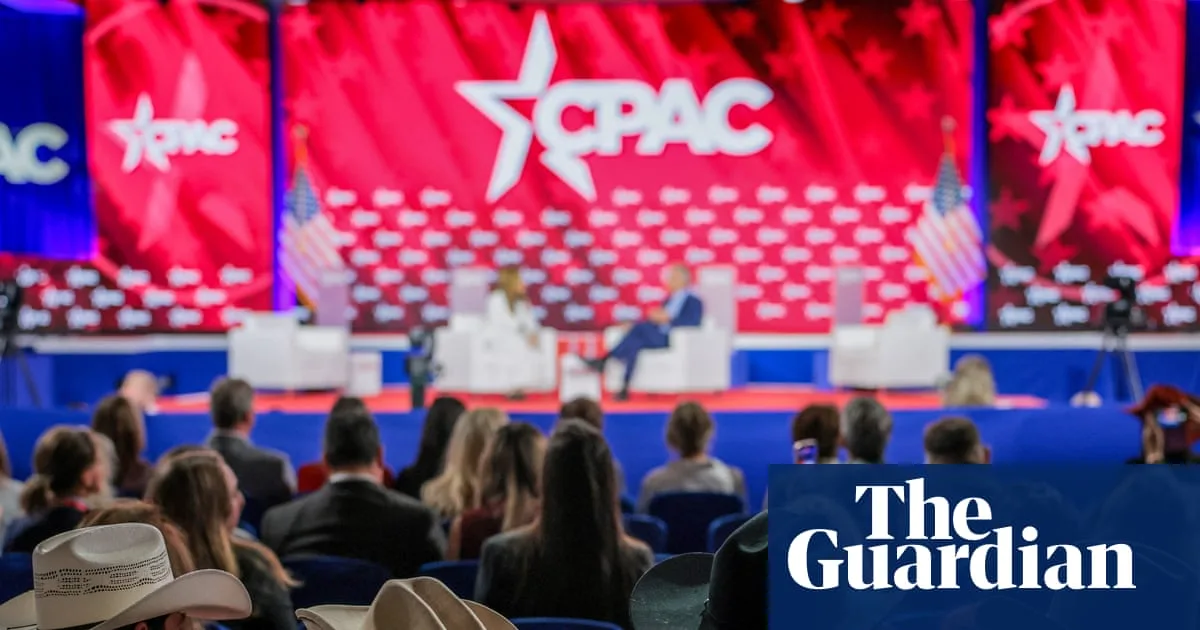
The annual Conservative Political Action Conference, typically a bastion of triumphalist energy for the Republican right, unfolded this year under a cloud of palpable anxiety. For the first time in a decade, former President Donald Trump was absent, reportedly consumed by the escalating military conflict with Iran. In his stead, the movement's faithful gathered in a cavernous Texas ballroom, where a stark rift over foreign policy was on full display.
A Movement Divided Over War
The core tension revolved around a president who campaigned on ending foreign entanglements now contemplating a ground invasion of Iran. This contradiction sparked heated debate among the MAGA figures present.
Voices of Caution and Confrontation
Erik Prince, founder of the former Blackwater security firm, delivered a stark warning from the stage. "I counseled as loud as possible against doing this in the first place," Prince stated, predicting dire consequences: "you will see imagery of burning American warships in the next couple of weeks."
Seated nearby, former Navy SEAL Jason Redman struck a more hawkish tone, insisting to the audience, "The American people have to understand we can't stop now that we've started." He framed the conflict in generational terms, expressing a desire to prevent his future grandchild from having to fight Iran in twenty years.
Administration Praise and Political Warnings
Trump administration veteran Ric Grenell avoided invasion specifics, instead praising the president's decision-making. "We're going to look back in a couple of months and say, thank God that we fixed this problem," Grenell asserted optimistically.
Contrasting this view, Republican former congressman Matt Gaetz forecasted the previous day that "a ground invasion of Iran will make our country poorer and less safe," highlighting the internal GOP discord.
The Absence of the Standard-Bearer
With Trump not present to deliver his characteristic closing argument, the audience was left to navigate these conflicting perspectives. Longtime Trump adviser Steve Bannon issued a plea for unity, urging attendees to back the MAGA project unconditionally. "We have the right policies. We just need the resolve to see it through," Bannon declared in a well-attended speech, dismissing concerns over who did or did not attend.
External Realities and Political Stakes
Outside the Grapevine, Texas venue, the national mood appeared considerably less sympathetic. Trump's approval ratings remain low, with the Iran conflict polling poorly. Economically, average gasoline prices have surged to four-year highs, while stock markets have experienced sustained sell-offs.
The political stakes for Republicans are immense, with the party defending control of Congress in upcoming midterm elections where the incumbent party historically struggles. Early signs suggest Democratic voters are mobilizing, evidenced by a recent Florida state house seat victory in a district encompassing Trump's Mar-a-Lago estate.
Attendee Perspectives: From Biblical Zeal to Youthful Fear
The conference floor revealed a spectrum of opinion, often divided along generational lines. Supporters of Iran's former crown prince, Reza Pahlavi, were highly visible, lining approaches with flags and receiving rapturous applause.
Older attendees frequently framed support in stark, sometimes religious terms. "I love it. It's biblical," stated 87-year-old Deanna Averett, viewing the conflict as a divinely ordained struggle. Others, like 65-year-old James Bosler, saw it as a long-overdue reckoning stemming from the 1979 hostage crisis, with potential benefits for oil control.
Among younger participants, anxiety was pronounced. Eighteen-year-old Gary Polakoff expressed fear over a potential draft and worsening economic conditions, noting the historical disadvantage for Republicans in midterms. Nineteen-year-old student John Christy voiced sympathy for Iranians but deep wariness of embarking on another "forever war," a concept Trump had long campaigned against.
After hearing the debates, 21-year-old Stephan Norquist found Prince's caution more convincing, arguing against committing fully to a "bad idea." Yet some, like 60-year-old Lisa Musket, expressed surprise at the war but maintained faith in Trump's leadership. "I know Trump will do the right thing," she concluded.
The 2024 CPAC ultimately served as a stark snapshot of a movement at a crossroads, unified in loyalty but deeply conflicted over the path forward in a volatile global conflict, all while its most iconic figure remained notably absent.