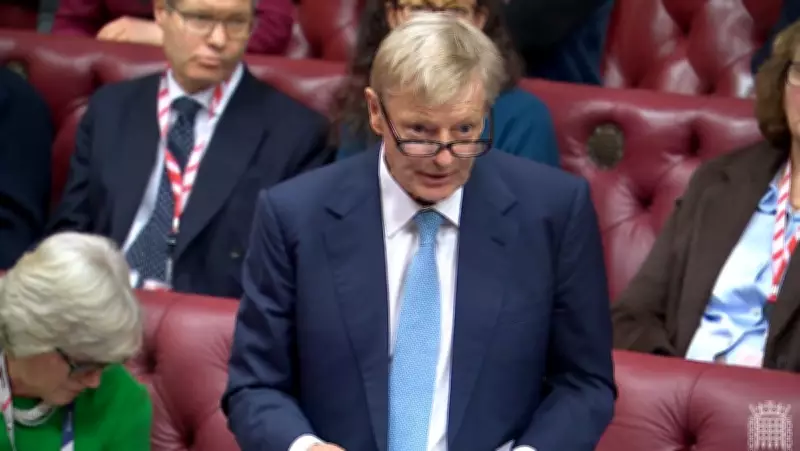
The House of Lords has delivered a decisive vote in favour of implementing an Australian-style social media ban for individuals under the age of 16, marking a significant move in the ongoing debate over online safety for young people. Peers rejected proposals from Labour leader Keir Starmer for a public consultation on the matter, with a vote of 266 to 141, underscoring a growing urgency among legislators to address the perceived harms of social media platforms.
Unambiguous Message to the Government
Conservative former minister Lord Nash, a leading advocate for the ban, stated that the vote sent an "unambiguous message" to Starmer's government. He emphasised that "hollow promises and half-measures are not enough" when it comes to protecting teenagers from the dangers of social media. This is the second time Nash has pushed for such a ban, following a previous rejection by MPs earlier this month. He noted that the increased support in the Lords sends a clear signal that the government must act promptly to raise the age limit for access to harmful social media sites to 16.
Emotional Impact and Parental Testimonies
During the vote, peers were acutely aware of bereaved parents watching from the gallery, including George and Areti Nicolaou, who held a photo of their son Christoforos, who tragically took his own life after engaging with an online forum. Lord Nash highlighted that "delay has consequences," pointing to the real-world impacts of social media addiction and mental health struggles among young users. The presence of over 20 family members in the gallery added a poignant layer to the proceedings, reinforcing calls for immediate action.

Influence of US Legal Rulings
The vote comes in the wake of a landmark jury decision in Los Angeles, where Meta, the owner of Facebook, and Google's YouTube were found to have designed deliberately addictive products that harmed a 20-year-old woman's mental health. The court ruled that the companies must pay at least $3 million in damages, a case that could influence thousands of similar lawsuits in the United States. Nash cited this judgment as evidence that social media platforms have been engineered to be addictive, urging MPs to seize the opportunity for regulatory change.
Criticism of Government Approach
Crossbench peer Lady Cass, a paediatrician, criticised the government for "failing to understand the impact of social media on our children." She argued that officials are taking a narrow view, focusing overly on psychological aspects while neglecting wider direct harms reported by professionals in schools, clinics, and affected families. Cass described government efforts as "disrespectful" and "cheap," suggesting that pilot programmes are insufficient to address the crisis.
Call for Leadership and Action
Lord Nash accused "techies" of adopting a "cavalier approach" to content damaging to children and called for decisive leadership. He asserted, "We will not accept half-measures or further delay. We need leadership so that we can give our children their childhood back." The vote reflects mounting pressure on policymakers to implement stricter regulations, with over 100,000 people having urged MPs to ban social media for under-16s in the UK.
As the debate intensifies, the House of Lords' stance sets the stage for further political and public discourse on balancing internet freedoms with child protection, highlighting the complex challenges of regulating digital spaces in an increasingly connected world.