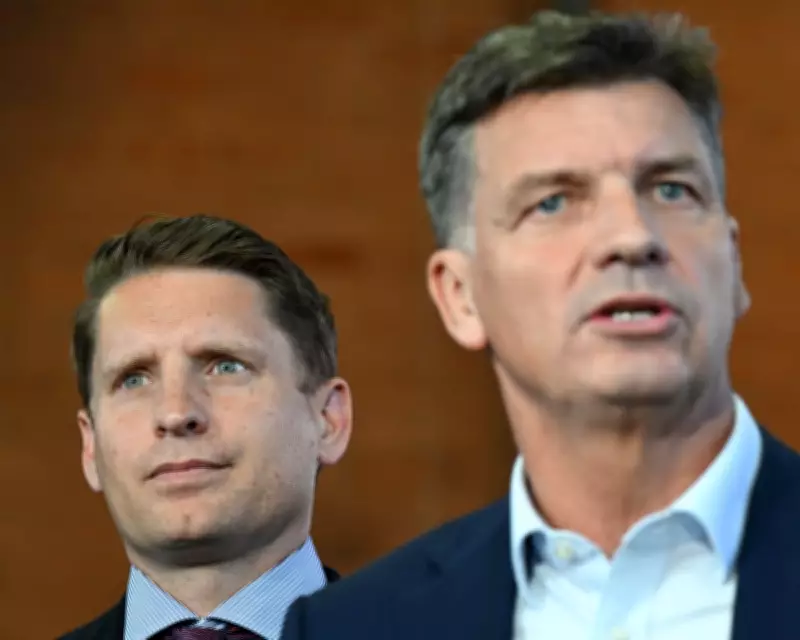
Liberal Party Rift Widens as Hastie and Taylor Clash Over Tax Policy
Angus Taylor has publicly rebuked Andrew Hastie for urging the Liberal Party to adopt an "open-minded" approach to increasing taxes on gas companies and winding back concessions for property investors. This confrontation highlights a significant philosophical clash between the opposition leader and his potential future rival, with implications for the party's direction and leadership.
A Deepening Philosophical Divide
The split emerged after Hastie, the shadow industry minister, argued that the Liberals must move beyond their traditional neo-liberal economic mindset to win back voters disillusioned with mainstream politics and shifting to parties like One Nation. In an interview with ABC's Insiders program, Hastie confirmed his openness to raising taxes on gas exports and reducing capital gains tax discounts and negative gearing concessions.
"I just think we need to overhaul the whole system. We either fix the system, or it's torn down by people like Pauline Hanson," Hastie stated, adding that "no one's going to reward us for a final last stand for neo-Liberal politics."

Taylor's Firm Rejection
In response, Taylor dismissed the prospect of supporting such tax changes, reiterating his long-held economic principle: "If you whack a tax on something, you get less of it." Speaking to reporters in Canberra, he emphasised, "It's pretty straightforward for me. And I think that is a longstanding understanding of the economics profession in the Liberal party. So if we want more of something, let's not tax it more."
This disagreement is not merely about tax policy but reflects a broader ideological rift. Taylor, an Oxford-educated politician, is viewed as a classic free-market Liberal, while Hastie advocates for a more interventionist approach aimed at "re-industrialising" Australia.
Leadership Tensions and Party Dynamics
The tax clash has sparked discussions among Liberal MPs about the party's future leadership. Some colleagues believe this philosophical divide could evolve into a broader conversation about who is best positioned to lead the party, especially in light of the rising threat from One Nation. Hastie had previously considered challenging Sussan Ley for leadership earlier this year but withdrew in favour of Taylor, who later reinstated him to the frontbench.
Internally, there is growing sentiment that the Coalition must at least consider softening its hostility to new taxes. Anne Ruston, a Liberal frontbencher and shadow health minister, remarked, "We should have everything on the table." She added, "We haven't had an honest conversation in this country about issues around taxation for a very long time because the conversation always gets shut down."
Broader Implications and Political Context
The Albanese government is currently modelling a new windfall profits tax on gas companies and potential changes to capital gains tax and negative gearing ahead of the May budget. This development could force the opposition to solidify its stance on these issues in the coming months, potentially exacerbating the internal rift.
Additionally, Hastie has become increasingly vocal in his criticism of Donald Trump and the war in Iran, diverging from colleagues who have offered full-throated support for the conflict. When asked about his stance on Trump's war, Taylor avoided direct endorsement, instead focusing on the need to reopen the Strait of Hormuz to alleviate the global fuel crisis.
As the Liberal Party grapples with these divisions, the outcome of this philosophical clash could shape its electoral strategy and internal cohesion in the face of mounting political challenges.