Liberal Democrats Face Existential Crisis Amid Stagnant Polling and Rising Rivals
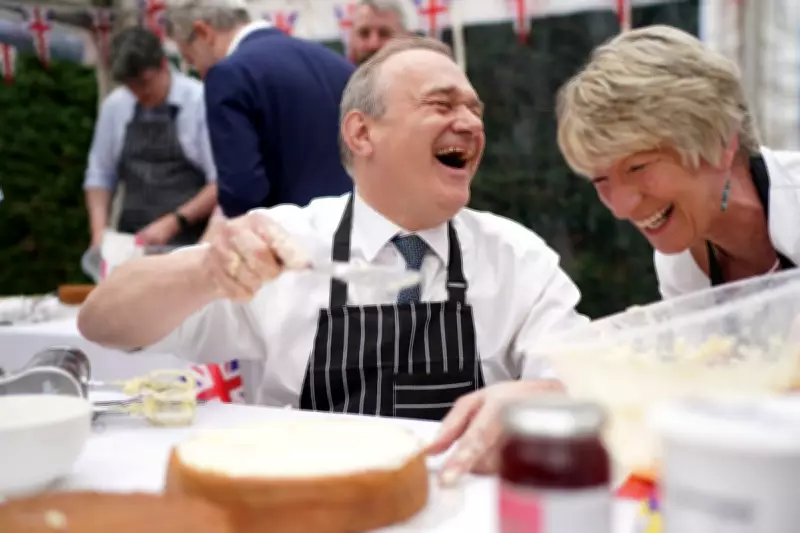
In a characteristically unconventional move, Liberal Democrat leader Ed Davey has launched his party's campaign for the May local elections by participating in a baking demonstration. The spectacle featured what appeared to be a Victoria sponge cake, complete with jam and cream filling pressed between two substantial cake layers. This visual metaphor proved particularly apt, as Davey and his party find themselves increasingly squeezed by more radical political forces reshaping the British landscape.
How Are the Liberal Democrats Performing?
The Liberal Democrats' current position can best be described as stable but stagnant. While their main national competitors have experienced dramatic shifts since the last general election—with Reform UK and the Greens surging, the Conservatives slipping, and Labour collapsing—the Lib Dems remain almost exactly where they stood on election day in July 2024. Current polling places them at approximately 13 percent, mirroring their performance during what was actually a strong election for the party, their best result since 1923.
Davey and his team can take some comfort in retaining the 72 MPs secured in that election, and they have been spared the complete displacement from their traditional heartlands in the West Country and home counties by the rise of Green Party co-leader Zack Polanski. However, there is undeniable disappointment at their current lack of momentum and failure to capitalize on the political turbulence affecting their rivals.

Concerns Over May Council Elections
The upcoming local elections present legitimate cause for concern. Projections suggest the Lib Dems will secure roughly the same share of the vote as in previous local elections—around 17 percent—which should allow them to hold their ground or make modest gains. Davey launched the campaign in Surrey, where the party hopes to exploit Conservative weakness and declining Labour support to make further inroads.
In certain constituencies, Liberal Democrats may benefit from tactical voting as the perceived best option to block Reform UK candidates. However, the novel challenge facing Davey's party is convincing voters that they, rather than the Greens or Labour, represent the most effective vehicle for this strategy. The recent Gorton and Denton by-election illustrates their difficulties: in previous decades when both major parties were unpopular, the centrist Lib Dems typically thrived, but today they face intense competition from newer challengers.
Political polarization and vigorous campaigning by the Greens and Reform UK have squeezed the "mainstream" Liberal Democrats to such an extent that they lost their deposit in Gorton and Denton, as they have in several other by-elections during the last parliament. Furthermore, the party's participation in the Conservative-led coalition government from 2010 to 2015—which implemented austerity measures and sparked controversy over tuition fees—has damaged their claim to represent a clean break from the Westminster establishment, a claim that Nigel Farage and Polanski can still credibly make.
Davey's Strategic Options
Ed Davey continues to position himself as an "anti-Trump" figure, challenging the government from a progressive perspective on issues including reversing Brexit, public services, migration, environmental protection, water purity, and localism. However, these positions increasingly overlap with Green Party talking points, creating an identity crisis.
To differentiate his party, Davey has criticized the Greens on defense policy—particularly regarding NATO and nuclear deterrence—and questioned their fiscal discipline. He emphasizes localism and "community politics," telling voters: "We don't do division. We do potholes, police officers, GP appointments, clean rivers. If you vote Liberal Democrat on 7 May, you'll get a local champion who will be fixing things for your community."

Yet Davey's once eye-catching publicity stunts appear to be suffering from diminishing returns, attracting derision rather than admiration. His most viable strategy may be to persist with current attack lines until the next general election, then leverage the party's parliamentary presence to become a partner in or supporter of a probable minority Labour administration—though entering another coalition remains highly risky given the disastrous consequences of their previous experience.
Leadership Questions and Electoral Prospects
Theoretically, a different leader might improve the party's fortunes if they could command media attention like Farage or Polanski, but the fundamental dilemmas would persist. British party politics has become more competitive than ever, especially when considering the Scottish National Party and Plaid Cymru. Moreover, no obvious successor appears capable of transforming the party's prospects, though Daisy Cooper and Layla Moran would likely emerge as contenders if discontent grows or Davey decides to step down.
Regional Challenges in Scotland and Wales
In Scotland, the Liberal Democrats are expected to retain their handful of seats in the Scottish Parliament and might exert some influence on a likely SNP administration, particularly given the recent falling out between the Greens and nationalists. The situation in Wales is more precarious.
The party should welcome the Welsh Parliament's introduction of a fully proportional voting system this year—a reform they have advocated for over a century. However, according to Wales Online, any party seeking representation in the Welsh Parliament must surpass a de facto threshold of 12 to 14 percent of the vote. With current polling placing the Lib Dems at around 5 percent, the party of historic figures like David Lloyd George, Emlyn Hooson, and Lembit Opik faces potential extinction from Wales's national parliament, potentially replaced by a "radical" administration formed by Plaid Cymru and the Greens. The disappearance of Liberals from this traditional stronghold would represent both a sad historical moment and another source of disquiet for the party.