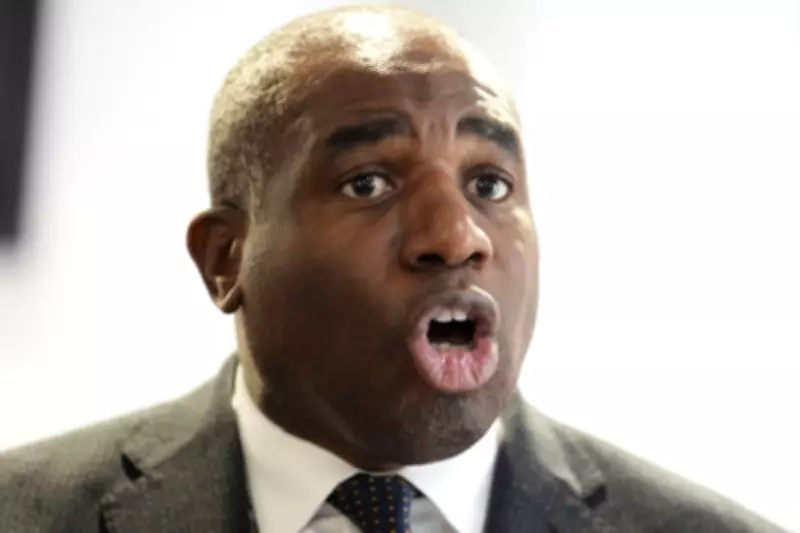
David Lammy's Court Reforms Pass First Commons Hurdle Despite Labour Backlash
Deputy Prime Minister and Justice Secretary David Lammy's controversial reforms to the courts system have cleared their first parliamentary hurdle, with MPs voting to support the legislation despite fierce criticism from within his own party. The Commons passed the Courts and Tribunals Bill at second reading by 304 votes to 203, a majority of 101, even as Labour backbenchers accused the government of using victims as a political "cudgel" to push through the changes.
Contentious Proposals on Jury Trials
The most controversial aspect of the legislation involves limiting jury trials to cases where defendants face a likely sentence of three years or more. Under the proposed reforms, cases with sentences below this threshold would instead be heard by a single crown court judge. Additionally, magistrates' courts would gain expanded jurisdiction to handle cases with likely sentences of up to two years, representing a significant shift in how justice is administered.
During the parliamentary debate, Labour MP Charlotte Nichols spoke publicly for the first time about being raped as she delivered a powerful critique of the government's approach. "Experiences like mine feel like they've been weaponised and are being used for rhetorical misdirection," she told the Commons, arguing that the government's framing had pitted survivors against defendants in a damaging way.
Backbench Rebellion and Personal Testimonies
A significant number of Labour backbenchers voiced opposition to the reforms during Tuesday's debate. Karl Turner, MP for Kingston upon Hull East, branded the changes "unworkable, unpopular, unjust and unnecessary" in a particularly strong condemnation. According to parliamentary records, 10 Labour MPs ultimately voted against the Bill, while 90 had no vote recorded, indicating substantial unease within the party.
Ms Nichols shared her personal experience of waiting 1,088 days for her case to reach court, describing the process as "agony" compounded by her public role. "It is because I have been raped that I am as passionate as I am about what it means for a justice system to be truly victim-focused," she argued, challenging the government's narrative that critics of the Bill don't care about rape victims.
Government's Urgent Case for Reform
Opening the debate, Mr Lammy had warned MPs of a "stark" choice, arguing that "we cannot continue with this rising backlog." He painted a dire picture of the current system, stating: "Victims are currently worn down, people simply give up, cases collapse and offenders remain free. Free to roam the streets, free to commit more crimes, free to create more victims."
The Justice Secretary told Parliament that without action, court backlogs could reach 200,000 cases within a decade. He described the proposals as "progressive" and essential for restoring "swift and fair justice," emphasizing that both investment and modernization were necessary alongside legislative reform.
Supportive Voices and Efficiency Arguments
Not all Labour MPs opposed the legislation. Natalie Fleet, MP for Bolsover, spoke in support of the government, arguing it was "stepping up for victims." Having previously spoken about her own experience of being groomed and raped, she told the Commons: "I can tell you from personal experience, you know what's worse than being raped? Facing years of waiting to see if people believe you."
Ms Fleet emphasized that the reforms were "not about denying anybody justice" but rather "enabling victims and innocent parties to have a more efficient path to getting that justice." She acknowledged that "trials by jury are part of our history" but argued that adaptation was necessary when "trials are taking twice as long as they did in the year 2000."
Criticism of Government's Approach
Ms Nichols challenged the government's claims that the Bill would help rape victims specifically, pointing to demands from Rape Crisis England and Wales outlined in their "Living in Limbo" report. "Don't say that this Bill helps deliver justice for rape victims, until it actually, materially does," she urged ministers.
The Warrington North MP revealed that the man who raped her was acquitted in a criminal court, though she later received compensation after a civil case found she had been raped. She argued there were many other measures the government could take to help rape victims that didn't involve using them "as a cudgel to drive through reforms that aren't directly relevant to them."
The legislation now proceeds to committee stage, where detailed scrutiny and potential amendments will determine its final form before returning to the Commons for further debate.